

What is backend as a service: the startup founder’s guide
Backend-as-a-service, commonly called BaaS, is a cloud model that gives developers pre-built backend infrastructure through a set of managed APIs and SDKs. Instead of standing up your own server, writing your own authentication logic, or managing your own database, you connect your frontend to a platform that handles all of that out of the box.
For a startup founder, the translation is simple: you ship faster, spend less on infrastructure engineering, and keep your team focused on the product itself.
Why backend infrastructure is the wrong place to start from scratch
Most early-stage startups do not have a backend problem. They have a time problem.
Building a production-grade backend from scratch means setting up a server, choosing and configuring a database, writing authentication and authorization logic, handling file storage, setting up real-time data sync, and making all of it secure before a single user ever touches your product.
That work can take weeks. In a startup environment, weeks are expensive.
BaaS platforms eliminate that entire setup phase. Authentication, databases, storage, and serverless functions come pre-built and ready to connect. You define your data structure, configure your access rules, and start building the features that actually matter to your users.
What a backend as a service platform actually gives you
When you sign up for a backend-as-a-service platform, you are not renting a blank server. You are getting a pre-assembled toolkit with specific building blocks that would otherwise take a backend team months to build and maintain.
Here is what most BaaS platforms include:
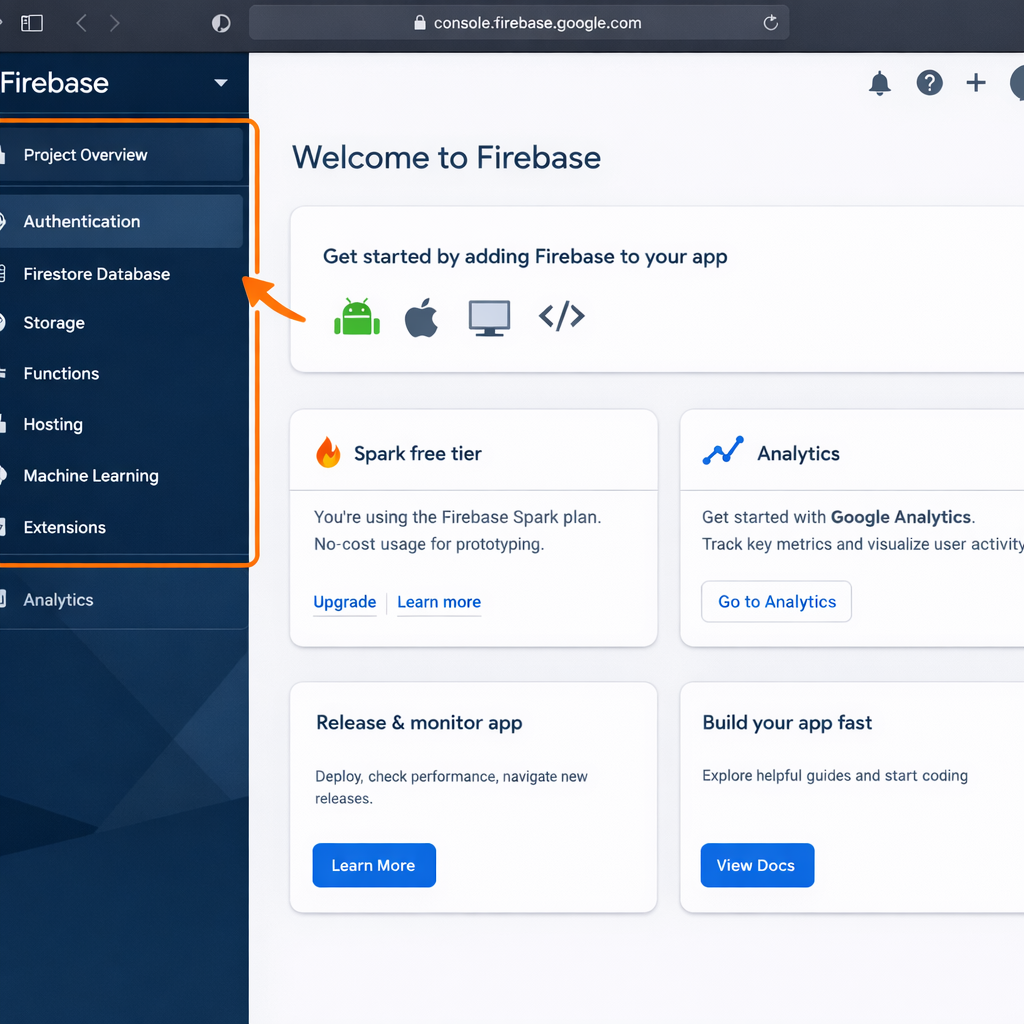
Authentication — User sign-up, login, password reset, and OAuth providers like Google or GitHub are handled by the platform. You connect it to your frontend with a few lines of code.
Database — Most platforms give you either a hosted NoSQL database like Firestore, or a relational SQL database like Supabase’s Postgres instance. You query it directly from your frontend using the platform’s SDK.
File storage — Uploading and serving images, documents, and media files is managed for you, including access control rules so only the right users can access the right files.
Serverless functions — When you need custom backend logic, you write small functions that run in the cloud without managing a server. These handle things like sending emails, processing payments, or running scheduled jobs.
Real-time sync — Some platforms, particularly Firebase and Supabase, offer real-time listeners that push database changes to connected clients instantly. This is essential for apps like chats, dashboards, or collaborative tools.
How BaaS Is Different from a Traditional Backend
If you’re exploring what is backend as a service, the key difference starts with architecture: a traditional backend is a fully custom-built server application that sits between your frontend and database. Your engineering team writes every line of code, deploys servers, maintains infrastructure, scales manually, and builds new API endpoints for each feature — every update means a full deployment cycle.
Backend as a service (BaaS) replaces that entire custom layer with a standardized, fully managed platform. The provider handles servers, scaling, security patches, and uptime; you configure auth, databases, storage, and logic through their dashboard, SDKs, and APIs — often with zero server management.
The main tradeoff? Flexibility vs speed. A traditional backend gives total control over logic, architecture, performance tuning, compliance (e.g., HIPAA/GDPR data residency), and long-term cost optimization. BaaS delivers rapid development, lower upfront costs, and built-in features (realtime sync, auth, file storage) — but at the expense of some customization headroom and potential vendor lock-in at massive scale.
For most startups at pre-product-market-fit or early traction stage in 2026, what is backend as a service answers the question perfectly: that tradeoff favors speed and simplicity over total control. Ship faster, validate your idea, and switch to custom only when complex business rules or strict compliance demand it.
Who actually benefits from using a BaaS platform
BaaS is not the right fit for every product or every team. But it is extremely well suited to a specific type of startup situation.
Solo founders and small teams — When you are a one or two-person team, you cannot afford to split attention between product and infrastructure. BaaS lets a frontend-focused founder ship a fully functional product without a dedicated backend engineer.
MVPs and early prototypes — If you are validating an idea, the goal is not perfect architecture. The goal is a working product in front of users as fast as possible. BaaS accelerates that timeline significantly. For a deeper look at how this plays out in practice, the breakdown of the best Backend as a service platforms for building an MVP fast covers the specific platforms that work best at that stage.
Products with standard backend needs — If your app needs auth, a database, file uploads, and maybe some serverless logic, BaaS covers that stack cleanly. You only run into limits when your requirements become genuinely unusual.
Teams without backend specialists — If your team is strong on design and frontend but lacks backend experience, BaaS closes that gap without a hiring round.

The real cost of building your own backend at an early stage
If you’re still asking “what is backend as a service” in the context of early-stage development, the hidden cost of a custom backend goes far beyond engineering hours. It’s the massive opportunity cost of what your team isn’t building while they maintain infrastructure.
Every hour spent on server configuration, database migrations, or debugging auth logic is an hour not spent on the features your users are actually asking for. For pre-seed or Series A startups, that delay compounds fast — turning weeks into months of lost momentum.
This is exactly why understanding what is backend as a service matters so much: BaaS platforms reduce your infrastructure attack surface dramatically. Security patches, database scaling, uptime monitoring — these are handled by the provider. You still own thoughtful data modeling and access rules, but you’re no longer on-call for a 2 a.m. server outage.
Of course, backend as a service has its own costs. Pricing is usage-based, and once traffic scales, monthly bills can climb quickly. Model this early: our Backend as a Service pricing breakdown shows real projections across major platforms (Supabase, Firebase, Appwrite, etc.) at different growth stages, so you’re not surprised when users flood in.
A note on when to grow out of BaaS
BaaS is a starting point, not necessarily a permanent architecture. Some products scale comfortably on BaaS infrastructure for years. Others hit a ceiling where custom backend logic, performance tuning, or cost efficiency require a migration to a dedicated server setup.
That ceiling is further away than most founders assume. Companies have scaled to hundreds of thousands of users on Firebase and Supabase before ever needing to move off platform. But it is worth knowing the signals that suggest you are approaching that threshold. The dedicated page on when BaaS is not the right choice walks through those scenarios in detail.
The bottom line for startup founders
What is backend as a service? At its core, backend as a service (BaaS) exists because the majority of startup backends need the same foundational pieces: user authentication, a scalable database, file storage, and some custom business logic. Leading BaaS platforms have productized this common layer so you never have to rebuild it from scratch every time you launch a new product.
If you’re pre-launch or early-stage, the real question is rarely whether backend as a service is “good enough.” The smarter question is: which BaaS platform best fits your tech stack, your team’s skills, and your 2026 product roadmap?
Understanding what is backend as a service gives you the clarity to ship faster, iterate quicker, and focus on what truly differentiates your startup — the user experience and core innovation.