

Backend as a service limitations often surprise growing startups. While adopting BaaS is one of the best decisions a startup can make at the early stage — it removes infrastructure complexity, accelerates time to market, and lets small teams compete with larger ones — every platform has a ceiling. Some products hit backend as a service limitations sooner than others. If you’re still evaluating whether BaaS is the right starting point for your product despite these backend as a service limitations, our complete guide to the best backend-as-a-service for startups gives you the full picture before you commit to any direction.
Backend-as-a-service limitations: when to move on and what to use instead
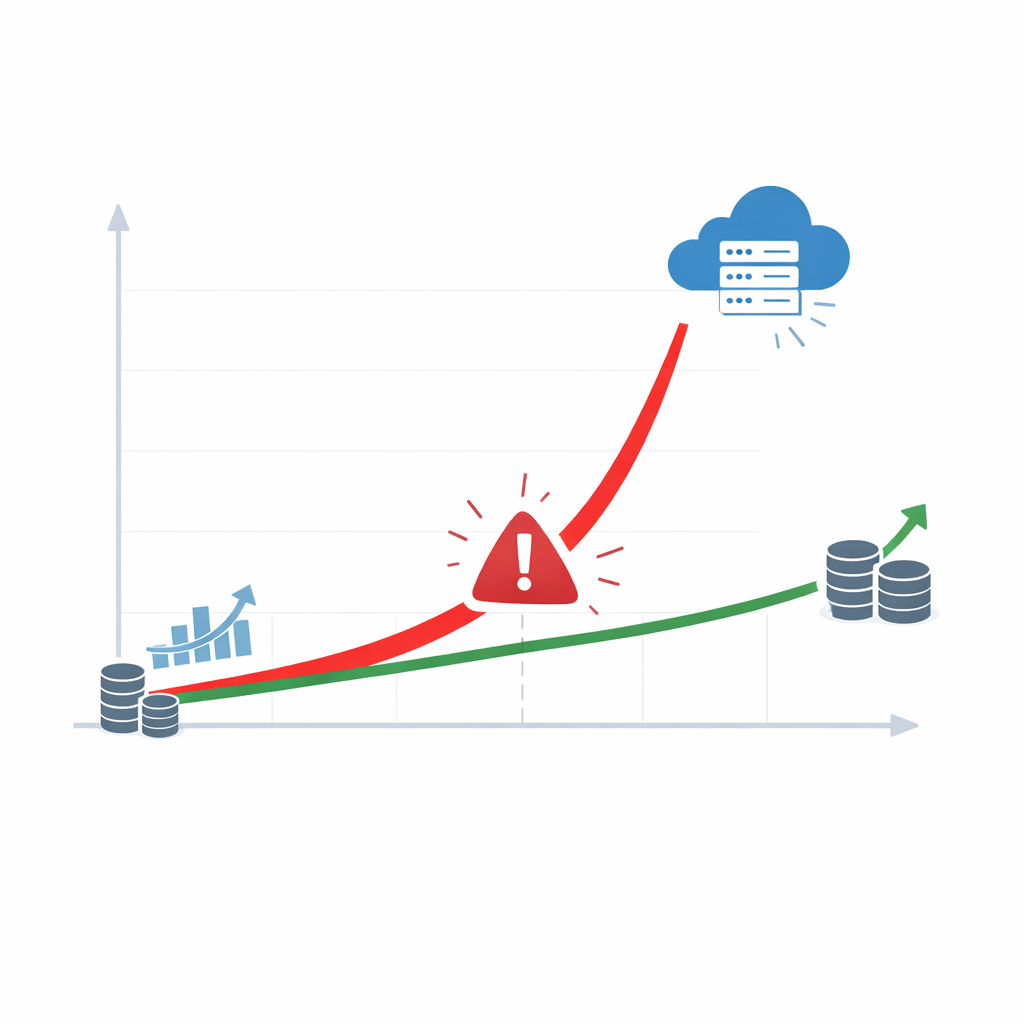
BaaS platforms are built for speed and simplicity. That is their strength and their constraint. The same abstractions that let a solo founder ship a working product in a day are the same abstractions that can limit a scaling product’s performance, flexibility, and cost efficiency.
Knowing when to move on from a BaaS platform is as important as knowing when to adopt one. The decision is not binary — you rarely migrate everything at once — but recognizing the signals early gives you time to plan a thoughtful transition instead of reacting to a crisis.
The case for BaaS at the early stage
Before discussing limitations, it is worth being precise about what BaaS does well. The managed infrastructure model is genuinely excellent for a specific set of conditions backend as a service limitations.
When your team is small, your product is unvalidated, and your primary constraint is speed, BaaS removes every infrastructure decision that would otherwise slow you down. Authentication, databases, storage, and serverless functions are pre-built and pre-scaled. You configure behavior through a dashboard and SDK rather than writing and maintaining a custom backend codebase.
For most startups, this is the right starting point. The limitations only become relevant when the product has grown beyond its initial scope — when the abstractions that simplified early development start creating friction against the complexity of a maturing product.
Signal 1: your database queries are hitting structural limits
The most common reason startups outgrow a BaaS platform is database architecture. This happens in two distinct ways depending on which platform you are using.
On Firebase, the NoSQL document model becomes limiting when your data relationships grow complex. Firestore does not support joins. If you need to query data across multiple collections simultaneously — for example, fetching a user’s profile, their organization, their active projects, and their recent activity in a single request — you are either making multiple separate queries or duplicating data across documents to avoid them.
Data duplication is a valid Firebase pattern, but it creates a maintenance burden. When a piece of data changes, you update it in every location where it is stored. At small scale this is manageable. At large scale it becomes a source of inconsistency bugs that are difficult to track down.
On Supabase, the Postgres foundation handles relational complexity well, but the managed instance has resource limits tied to your pricing tier. A high-throughput product with complex analytical queries may find that the managed Postgres instance cannot be tuned to the degree a self-hosted or dedicated database server can. Connection pooling, query optimization, and index configuration are available but constrained by the platform’s managed environment.
If you find yourself working around your database model rather than with it, that is a meaningful signal. It does not always mean leaving BaaS entirely — sometimes it means migrating your database to a dedicated managed service like PlanetScale, Neon, or Amazon RDS while keeping other BaaS services in place.
Signal 2: your costs are scaling faster than your revenue
BaaS pricing is designed to be affordable at low usage and proportionally more expensive as usage grows. For most startups, the cost curve is acceptable through the early growth phase. The signal that something needs to change is when infrastructure costs begin consuming a disproportionate share of revenue.
A healthy SaaS product typically targets infrastructure costs between 5% and 20% of revenue at early stages. If your BaaS bill is trending above that range — or if you are modeling future costs and seeing a trajectory that will make the platform economically unviable at your target scale — that is worth acting on before it becomes urgent.
The most common culprit on Firebase is read-heavy workloads with unoptimized queries. The BaaS pricing breakdown covers exactly how Firebase’s per-operation billing behaves at scale, and the patterns that cause costs to accelerate faster than user growth. If your cost curve is steeper than expected, that page is worth revisiting before assuming you need to migrate entirely.
On Supabase, the cost signal is less about per-operation charges and more about whether the Pro tier’s included resources are sufficient. A product that has outgrown 8GB of database storage or needs more compute than the managed instance provides is facing a resource constraint rather than a pricing model problem. The solution is often a larger Supabase tier or a migration to a dedicated Postgres host — not a full platform departure backend as a service limitations.
Signal 3: you need custom backend logic that serverless functions cannot handle efficiently
Serverless functions — Firebase Cloud Functions, Supabase Edge Functions — are designed for short, stateless operations. They handle tasks like sending emails, processing webhooks, running scheduled jobs, and executing custom business logic that cannot live on the frontend.
The limitation appears when your backend logic becomes stateful, long-running, or requires persistent connections. Examples include:
Real-time data processing pipelines — If your product ingests continuous data streams and processes them in real time, serverless functions are poorly suited. Each invocation is independent and short-lived. A persistent worker process on a dedicated server handles this workload more efficiently.
Machine learning inference — Running model inference on every user request through serverless functions is expensive and slow. Dedicated inference infrastructure with warm model loading is significantly more performant for this use case.
Complex background jobs — Multi-step background processes that run for minutes rather than seconds are awkward to architect in a serverless model. Cold start times, execution time limits, and stateless architecture create friction that a traditional background job queue on a dedicated server does not have.
Persistent WebSocket connections — BaaS real-time features use managed connection infrastructure. If your product requires custom WebSocket logic — multiplayer game state, collaborative editing with complex conflict resolution, high-frequency trading feeds — you will eventually need to own that connection layer.
None of these requirements are common at the MVP stage. They become relevant when a product has scaled and its feature set has grown specific enough to push against the edges of what serverless architecture can handle cleanly.
Signal 4: vendor lock-in is becoming a strategic risk
BaaS platforms are managed services. You do not own the infrastructure, and migrating away from it later requires meaningful engineering effort. For most startups at the early stage, this tradeoff is acceptable — the speed benefits outweigh the lock-in risk.
The calculus changes when your product reaches a scale where infrastructure decisions have strategic implications. If your BaaS provider changes pricing, deprecates a feature, or experiences a service disruption, your product is directly affected and your options are constrained.
Supabase partially mitigates this risk through its open-source architecture. Because the underlying technology — Postgres, GoTrue for auth, Storage API — is open-source, a migration to a self-hosted setup is feasible without a complete rewrite. Firebase and AWS Amplify offer no equivalent escape hatch.
If vendor dependency has become a concern for your board, your enterprise customers, or your own risk assessment, that is a signal worth taking seriously. The path forward is usually not an immediate migration but a progressive decoupling — moving your most critical data layer to infrastructure you own while keeping BaaS services that still provide clear value.
What to use instead: the migration paths worth considering
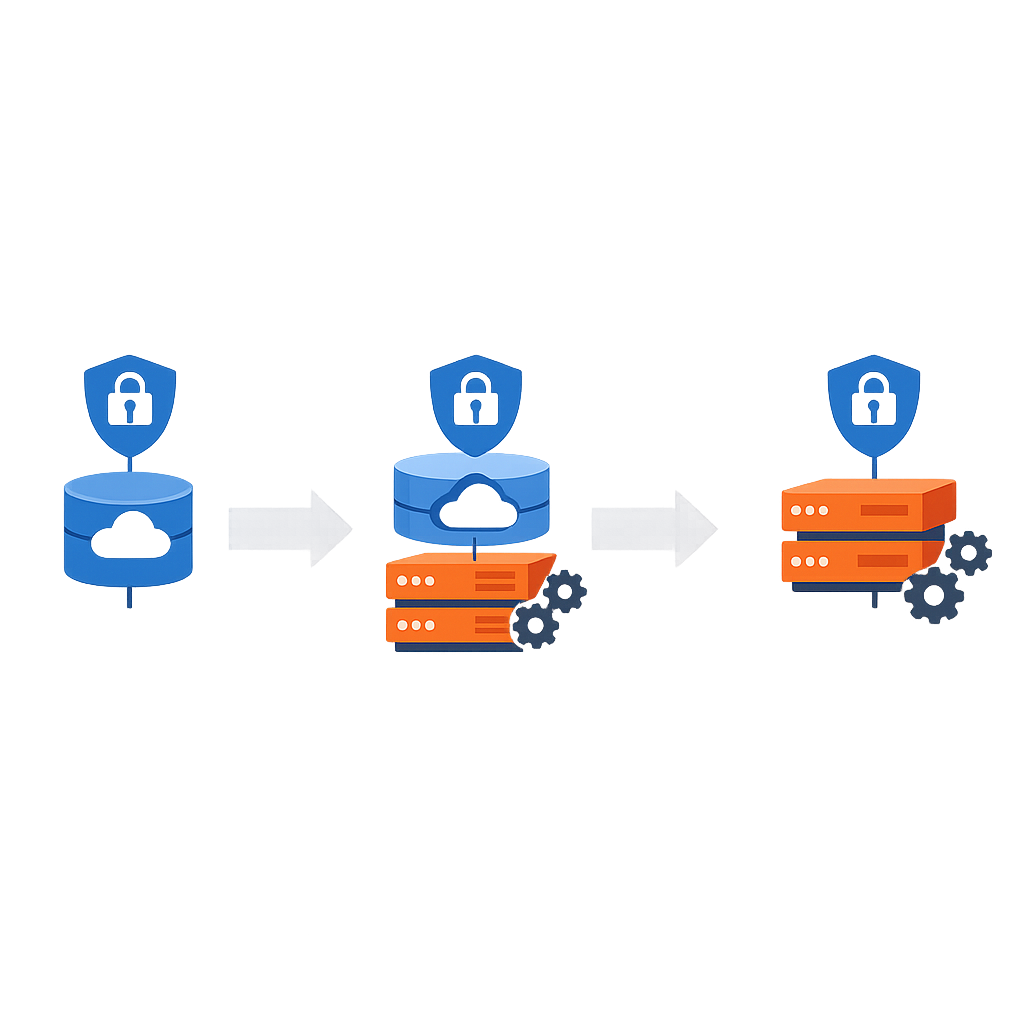
Outgrowing BaaS does not mean rebuilding everything at once. Most successful migrations happen incrementally, replacing the components that are causing friction while retaining the ones that still provide value.
Replace the database first — If your primary limitation is the database model or cost, migrating to a dedicated managed database is usually the first and most impactful change. PlanetScale offers a serverless MySQL platform with a branching workflow designed for teams. Neon provides serverless Postgres with autoscaling. Amazon RDS gives you a fully managed relational database with more configuration control than any BaaS option.
Move custom logic to a dedicated backend — If serverless functions are hitting their limits, introducing a lightweight backend service — a Node.js or Python API deployed on Railway, Render, or Fly.io — gives you the flexibility of custom server logic without the operational overhead of managing your own infrastructure from scratch. These platforms abstract deployment and scaling while giving you more control than BaaS functions allow.
Keep BaaS for what it does well — Authentication is one of the hardest things to build and maintain well. If your BaaS platform’s auth layer is working, there is often no compelling reason to replace it even as you migrate other components. The same applies to file storage. A hybrid architecture — custom backend for business logic, BaaS for auth and storage — is a legitimate long-term setup for many products.
Evaluate a full custom backend when the math justifies it — A full migration to a custom backend makes sense when the cumulative cost of BaaS services exceeds the cost of dedicated infrastructure by a meaningful margin, and when your engineering team has the capacity to own and maintain that infrastructure. This is rarely the right move before Series A and almost always worth considering before Series B if your product is data-intensive.
For founders who are not yet sure whether they have reached this threshold, the best BaaS platform for MVPs covers which platforms offer the most graceful scaling path, so you can factor migration effort into your initial platform decision.
How to plan a migration without breaking your product
The worst migrations happen reactively — when a cost spike, a performance crisis, or a platform deprecation forces a rushed decision. The best migrations happen proactively, with a clear plan and enough runway to execute without pressure.
A practical migration framework for startup founders:
Audit before you act — Before migrating anything, understand exactly which BaaS services your product uses, which are causing friction, and which are working well. A targeted migration is faster and less risky than a wholesale platform replacement.
Migrate in parallel — Run your new infrastructure alongside the existing BaaS setup before cutting over. This lets you validate that the new system handles your real workload correctly before any user is affected.
Start with the lowest-risk component — File storage is usually the easiest BaaS component to migrate because it is stateless and the data is straightforward to transfer. Start there to build confidence in the process before touching the database or auth layer.
Establish a rollback plan — Define in advance what a failed migration looks like and how you return to the previous state. This is the difference between a recoverable incident and a production outage.
The bottom line
BaaS is not a permanent commitment. It is a starting point designed to let you move fast before you know exactly what you are building. The platforms that serve you best at the MVP stage — Firebase, Supabase, and their peers — are built with the understanding that successful products eventually grow beyond them.
The goal is not to stay on BaaS forever. The goal is to use BaaS long enough to validate your product, generate revenue, and accumulate the engineering resources to make infrastructure decisions from a position of strength rather than urgency.
Recognize the signals early. Plan the migration thoughtfully. And resist the temptation to optimize infrastructure before you have validated the product that infrastructure supports.