

Finding the best BaaS platform for your MVP can save months of development time. When you’re building an MVP, every week spent on infrastructure is a week not spent validating with real users. The best BaaS platform for your situation is the one that delivers the least friction to get a working product in front of customers fast. Before diving into specific platforms like Supabase, Firebase, or Xano, if you’re still exploring how these tools work, our complete guide to the best backend-as-a-service for startups provides the full context to choose the best BaaS platform confidently.
Best BaaS platform for MVPs: ship faster in 2025
An MVP, minimum viable product, is not about cutting corners. It is about isolating the smallest version of your product that lets you test a real assumption with real users. The infrastructure underneath that product should not be the thing that slows you down.
That is exactly where BaaS platforms earn their place in a startup’s stack. But not every BaaS platform is optimized for speed. Some are powerful but complex. Some are simple but too limited for anything beyond a prototype. The platforms worth considering at the MVP stage hit a specific balance: fast to set up, stable enough to put in front of users, and scalable enough that you are not forced into a migration the moment you get traction.
What makes a BaaS platform right for an MVP
Before comparing platforms, it helps to define what you actually need at the MVP stage. The requirements are different from what you would optimize for at Series A.
Speed of setup — You should be able to go from zero to a working backend in hours, not days. This means good documentation, a clean SDK, and sensible defaults that do not require deep configuration before you can start.
Authentication out of the box — User login is almost always the first feature a product needs. The platform should handle email/password auth, OAuth providers, and session management without custom code.
A usable free tier — At the MVP stage, you are not generating revenue yet. The platform should let you build, test, and launch without a monthly bill until you have real usage to justify it.
A clear scaling path — The worst outcome is validating your idea on a platform and then discovering it cannot handle growth. The best BaaS platforms for MVPs are also viable for the next stage of your product.
Minimal DevOps overhead — You should not need to manage servers, configure deployments, or monitor infrastructure. The platform handles that. You handle the product.
Firebase: still the fastest starting point for consumer apps
Firebase remains one of the fastest platforms to get a working product off the ground. The combination of Firestore’s real-time database, built-in authentication, and Firebase Hosting means you can have a fully functional, deployed product running in a single day if you know what you are building.
The free Spark plan is genuinely useful. It covers enough reads, writes, and storage to carry a typical MVP through early user testing without cost. The SDK is mature, well-documented, and supported by a massive community of tutorials, Stack Overflow answers, and open-source starter templates.
For consumer-facing MVPs — apps with social features, real-time interactions, or user-generated content — Firebase’s real-time sync gives you a feature that would take weeks to build from scratch. You configure a listener on your frontend and the database pushes updates to every connected client automatically.
The caveat worth keeping in mind at this stage: Firebase’s NoSQL data model, which organizes data into collections of documents rather than relational tables, is fast to start with but can become limiting as your product grows more complex. If you know your product will have intricate data relationships, plan for that early. The detailed Firebase vs Supabase vs AWS Amplify comparison breaks down exactly where that ceiling appears and how each platform handles data complexity differently.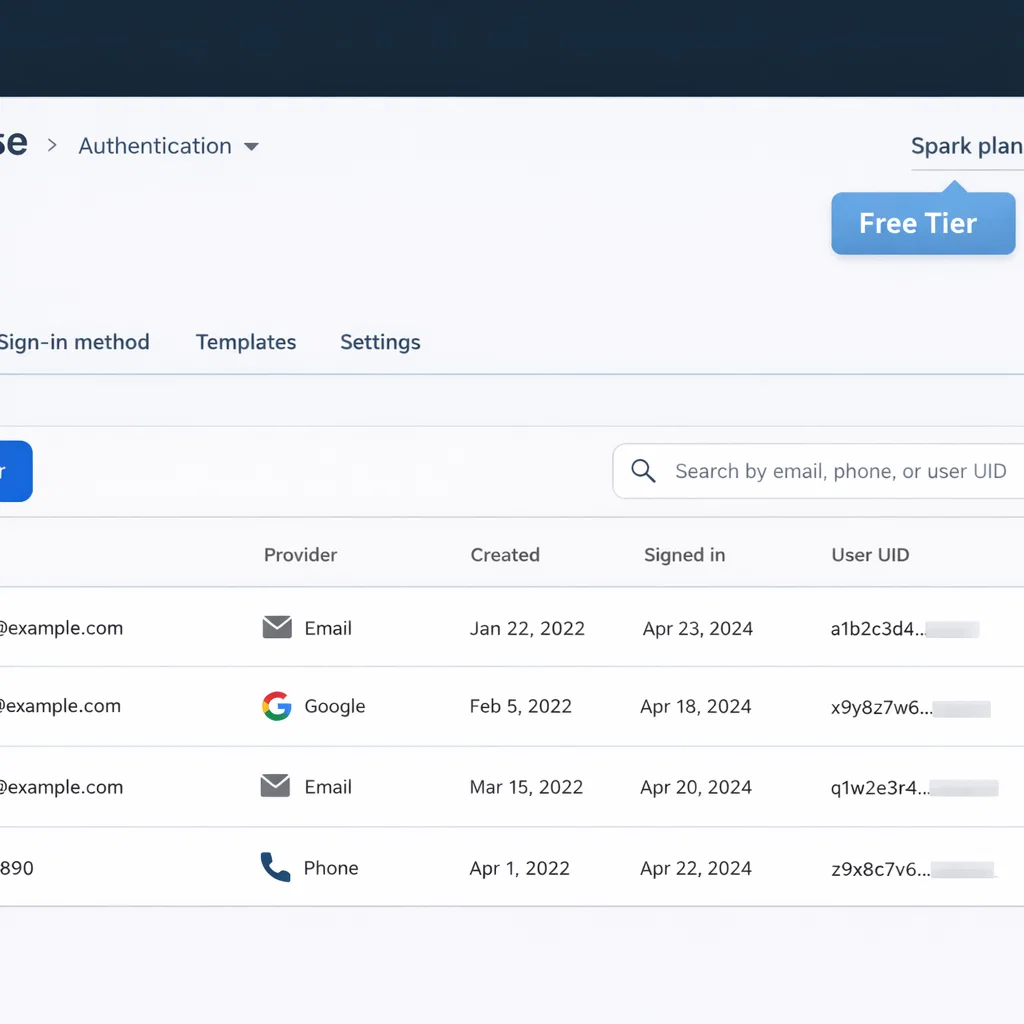
Supabase: the best BaaS platform for SaaS MVPs with structured data
If you are building a SaaS product — something with organizations, user roles, subscription plans, or any meaningful data relationships — Supabase is the stronger MVP choice in 2025.
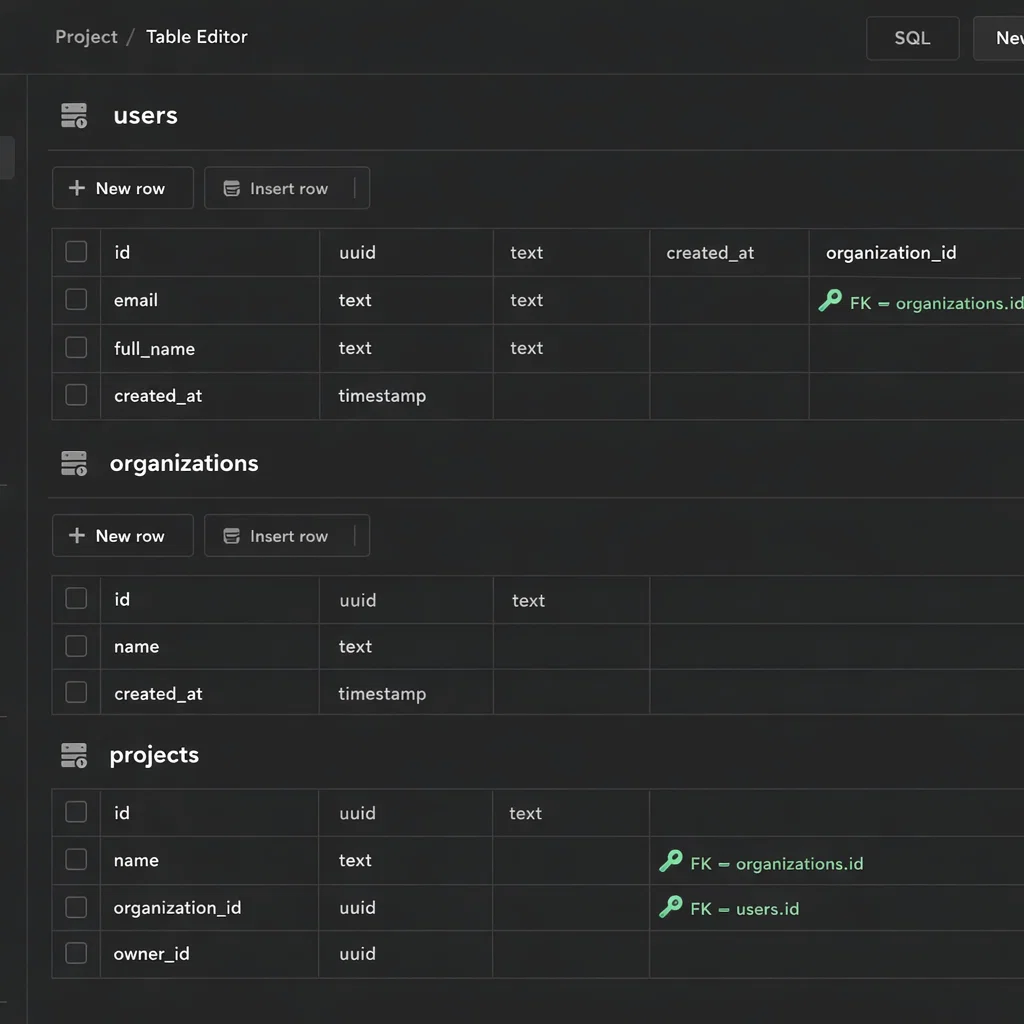
The Postgres foundation means your data model is relational from day one. You define tables, set up foreign keys, and write SQL queries. If your product has users who belong to organizations, who create projects, who have different permission levels, Supabase handles that data structure cleanly. Firebase would require significant workarounds to model the same relationships.
Supabase’s table editor lets non-backend engineers manage the database visually, which matters on a small team where everyone wears multiple hats. The auto-generated API, which creates REST and real-time endpoints directly from your database schema, removes the need to write backend routes manually. You define the data structure and the API appears.
The free tier includes 500MB of database storage, 1GB of file storage, and 50,000 monthly active users — enough to run a real MVP with actual paying customers before you need to upgrade.
For solo founders building SaaS products, Supabase has become the default recommendation precisely because it is fast to start and genuinely scales with you. The data model you build at the MVP stage is the same one you will be working with when you hit a thousand users.
Pocketbase: the overlooked option for solo founders who want everything local
Pocketbase is not as well known as Firebase or Supabase, but it deserves a mention for a specific type of founder: someone building a focused, lightweight product who wants a single binary that runs the entire backend.
Pocketbase is an open-source BaaS that ships as a single executable file. You run it locally during development and deploy it to any VPS for production. It includes authentication, a SQLite database, file storage, and a real-time API. The admin dashboard is clean and functional. Setup takes under 30 minutes.
The limitation is scale. SQLite is not designed for high-concurrency production workloads. If your MVP gets serious traction, you will need to migrate. But for a founder who wants to validate an idea with a working product and zero monthly infrastructure cost, Pocketbase is a legitimate tool.
Appwrite: the open-source Firebase alternative worth knowing
Appwrite is an open-source BaaS platform that positions itself as a Firebase alternative with more flexibility. It supports multiple database adapters, has a clean REST and GraphQL API, and can be self-hosted or used through Appwrite Cloud.
For MVPs, Appwrite’s strength is its breadth of features relative to its complexity. Authentication, databases, storage, functions, and real-time subscriptions are all included and configured through a single unified console. The self-hosting option gives you data ownership from day one, which matters in regulated industries like healthcare or finance.
The tradeoff is a smaller community than Firebase or Supabase. When you hit an edge case, the documentation and community support are thinner. For most standard MVP use cases this is manageable, but it is worth factoring in if your team is new to backend development.
How to choose the right BaaS platform for your specific MVP
The decision framework is straightforward once you know your product type.
Building a consumer app with real-time features — Firebase is still the fastest path. The real-time sync, generous free tier, and massive community make it hard to beat for this specific use case.
Building a SaaS product with structured data and user roles — Supabase is the stronger choice. The SQL foundation scales better with product complexity and the open-source exit option reduces long-term lock-in risk.
Building a lightweight internal tool or niche product on a zero budget — Pocketbase is worth evaluating seriously. The operational simplicity and zero cost make it a strong choice for constrained situations.
Building in a regulated industry or needing full data ownership from day one — Appwrite’s self-hosted option is worth the additional setup complexity.
Once your MVP is live and users are engaging, the infrastructure conversation shifts from setup speed to cost and scale. That is when the BaaS pricing breakdown becomes the most important read — knowing what your monthly bill looks like at 1,000, 10,000, and 100,000 users changes how you evaluate the platform you chose at the start.
The bottom line
The best BaaS platform for your MVP is the one that removes the most friction between your idea and your first user. Firebase and Supabase cover the vast majority of startup use cases. Firebase wins on real-time simplicity and community depth. Supabase wins on data model flexibility and long-term portability.
Pick based on your product type, not on what is trending. Ship the MVP. Then optimize the infrastructure once you know what you are actually building.