

Firebase vs Supabase remains one of the most debated backend choices for startups in 2026. Choosing between Firebase vs Supabase (or even AWS Amplify) is a consequential early decision that shapes your database structure, pricing curve, scalability path, and team velocity. If you’re building context around this critical infrastructure call — especially in the Firebase vs Supabase debate — our complete guide to the best backend-as-a-service for startups breaks down every major option worth considering before you commit.
Firebase vs Supabase vs AWS Amplify: which BaaS wins for startups
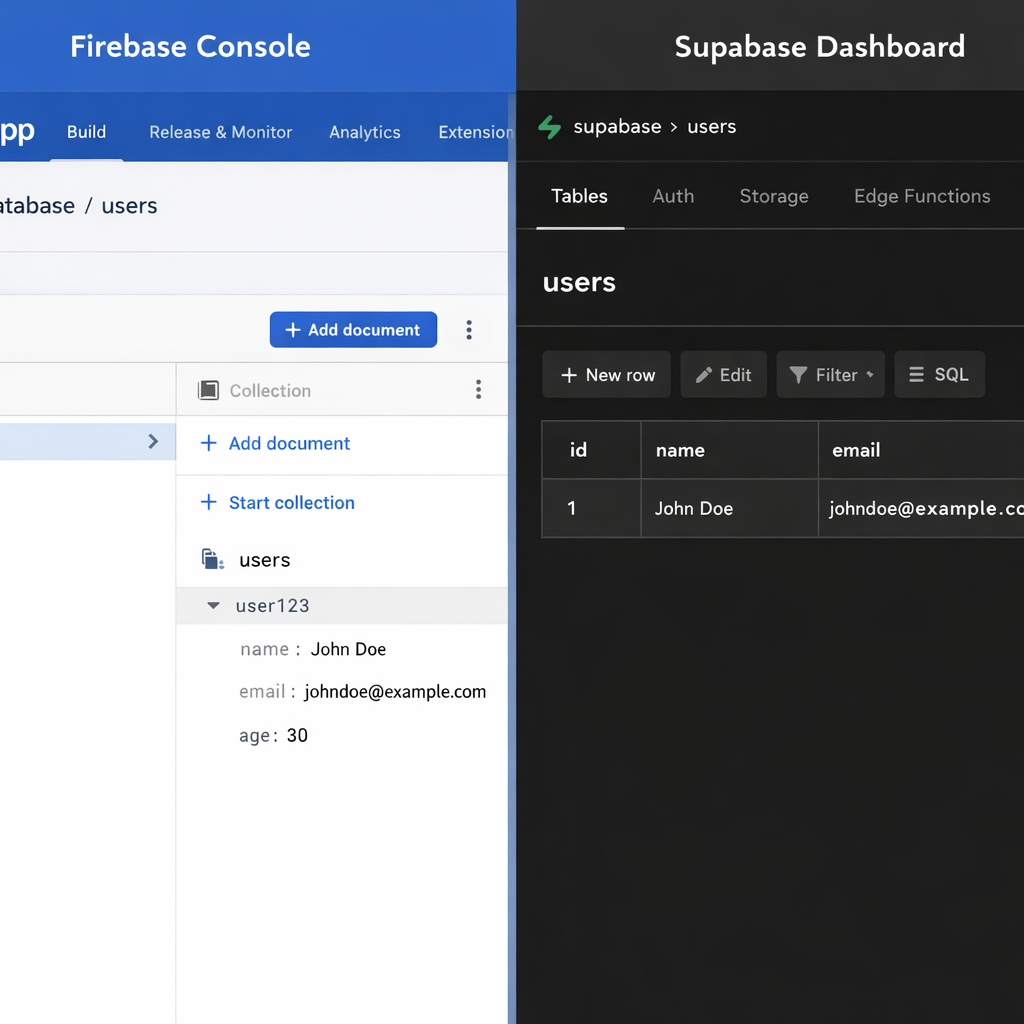
Three platforms dominate the BaaS conversation for startups right now. Firebase has been the default choice for nearly a decade. Supabase has emerged as the open-source alternative with serious momentum. AWS Amplify sits in a different weight class, leaning toward teams already inside the Amazon ecosystem.
Each one solves the same core problem — giving you a managed backend without building one from scratch — but they solve it differently. The right choice depends on your database preference, your team’s technical depth, and where you expect to be in 18 months.
firbas: the established default and what it actually costs you
Firebase, owned by Google, is the platform most founders encounter first. It has the largest community, the most tutorials, and the most battle-tested real-world usage of any BaaS platform available today.firebase vs supabase
What Firebase does well
Firebase’s Firestore database is a NoSQL, document-based system that syncs data in real time across connected clients. For consumer apps — chats, social feeds, collaborative tools — this is genuinely powerful out of the box. Authentication is arguably the easiest to implement of any platform on this list. And the free tier, called the Spark plan, is generous enough to carry a product through early validation without touching a credit card.
Firebase also integrates deeply with Google Analytics, Google Cloud Functions, and Firebase Hosting, giving you a tightly connected ecosystem if you are building in that direction.firebase vs supabase
Where Firebase creates friction
The NoSQL data model is fast to start with and difficult to refactor later. As your product grows and your data relationships become more complex, Firestore’s document structure can start working against you. Queries are limited compared to SQL. Joins do not exist in the traditional sense. Founders who come from a relational database background often find themselves fighting the data model rather than working with it.
Pricing is the other friction point. Firebase charges based on reads, writes, and deletes — not just storage or bandwidth. At scale, those per-operation costs accumulate faster than most founders model in advance. The BaaS pricing breakdown covers exactly how Firebase billing behaves at different growth stages, which is worth reading before you commit to the platform for a data-heavy product.firebase vs supabase.
Supabase: the open-source challenger built on Postgres
Supabase launched in 2020 and has grown faster than almost any developer tool in recent memory. The core pitch is direct: everything Firebase does, but with a real SQL database underneath.
What Supabase does well
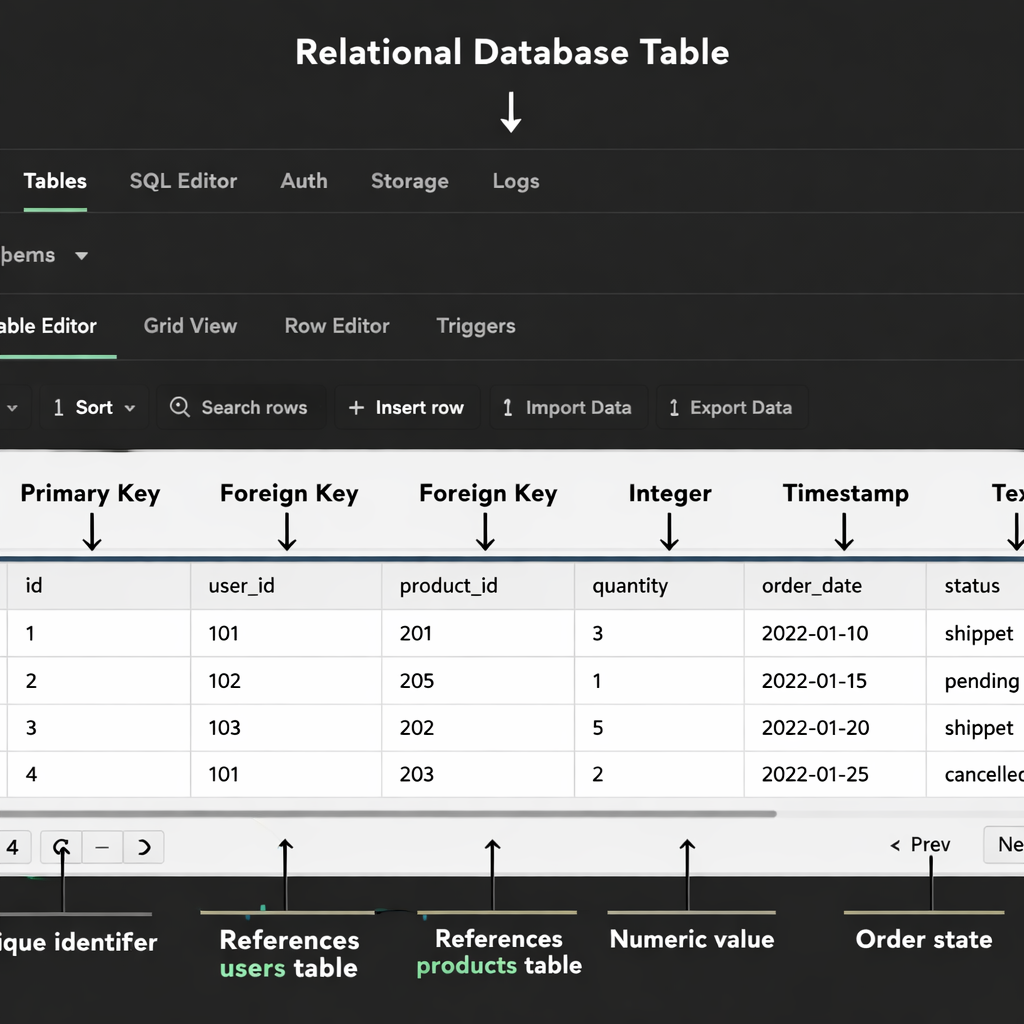
Supabase is built on Postgres, one of the most trusted relational databases in the world. This means you get full SQL query support, proper foreign keys, joins, and a data model that scales gracefully as your product grows more complex. If you have any background in relational databases, Supabase feels immediately familiar.
The platform also includes authentication, file storage, real-time subscriptions, and edge functions — matching Firebase’s feature set almost point for point. Because it is open-source, you can self-host the entire stack if you ever need to migrate off the managed platform. That exit option matters to founders who are thinking about long-term infrastructure ownership.
Supabase’s dashboard is one of the cleanest in the BaaS space. The table editor, SQL editor, and API documentation are all surfaced in a single interface that non-backend engineers can navigate without much friction.
Where Supabase creates friction
Supabase is younger than Firebase, and that shows in edge cases. Some advanced features are still maturing. The ecosystem of third-party integrations is smaller. Real-time performance at very high concurrency is an area Firebase currently handles more reliably at scale.
The self-hosted option sounds appealing but adds operational complexity most early-stage startups do not actually want. Managed Supabase is the right default for most founders until there is a specific reason to consider self-hosting.
For teams deciding between these two at the MVP stage specifically, the best BaaS platforms for building an MVP fast breaks down which platform ships faster for common startup product patterns.firebase vs supabase
AWS Amplify: the enterprise on-ramp disguised as a startup tool
AWS Amplify is Amazon’s answer to the BaaS space. It sits on top of the broader AWS infrastructure — meaning your backend is ultimately powered by DynamoDB, Cognito, S3, Lambda, and API Gateway — with Amplify acting as a configuration and deployment layer on top.
What AWS Amplify does well
If your startup is already running infrastructure on AWS, Amplify is a natural fit. It integrates cleanly with the services your team is already using, and the deployment pipeline through AWS Amplify Hosting is fast and reliable.
For teams with backend engineers who are comfortable with AWS, Amplify unlocks a level of customization and scalability that Firebase and Supabase do not match. You are not working with an abstraction layer — you are working with production-grade AWS services configured through a higher-level interface.
Where AWS Amplify creates friction
Amplify is not designed for founders who are new to cloud infrastructure. The configuration process is more involved than either Firebase or Supabase. The documentation is dense. The local development experience has historically been inconsistent. And the billing model, inherited from AWS itself, is more complex to predict than either competitor.
For a solo founder or a small team building an MVP, Amplify introduces more cognitive overhead than it saves. It is a platform that rewards teams who already know AWS, not teams who want to avoid infrastructure complexity. If your situation fits the latter, the guide to connecting a BaaS platform to your frontend in under a day focuses on the platforms that minimize that setup friction.
Head-to-head comparison: the decision matrix
Here is how the three platforms compare across the dimensions that matter most to an early-stage startup:
| Factor | Firebase | Supabase | AWS Amplify |
|---|---|---|---|
| Database type | NoSQL (Firestore) | SQL (Postgres) | NoSQL (DynamoDB) |
| Real-time support | Excellent | Good | Limited |
| Free tier | Generous | Generous | Limited |
| Pricing predictability | Low | Medium | Low |
| Setup speed | Fast | Fast | Slow |
| SQL support | No | Yes | No |
| Open-source | No | Yes | No |
| Best for | Consumer apps, MVPs | SaaS products, data-heavy apps | AWS-native teams |
How to make the actual decision
The comparison matrix is useful, but the real decision comes down to two questions.
What does your data look like? If your product has complex relationships between entities — users, organizations, projects, permissions — Supabase’s relational model will serve you better long-term. If your data is document-shaped and speed of initial setup matters most, Firebase is still a strong choice.
What is your team’s background? A frontend-focused founder with no SQL experience will move faster with Firebase. A founder who has worked with relational databases before will feel more at home in Supabase. A team already running AWS workloads should evaluate Amplify seriously.
There is no universally correct answer. But for most startup founders building a SaaS product in 2025, Supabase has become the default recommendation — not because Firebase is bad, but because the SQL foundation and open-source exit option reduce long-term risk without sacrificing early-stage speed.
The bottom line
Firebase, Supabase, and AWS Amplify are all capable platforms. The difference is in fit, not quality. Firebase wins on ecosystem maturity and real-time simplicity. Supabase wins on data model flexibility and long-term portability. AWS Amplify wins when your team already lives in the AWS ecosystem.
Pick the platform that matches your current team’s skills and your product’s data structure. You can always migrate later — but choosing the right starting point means fewer painful refactors down the road.