

A project management plan fails not because it’s too simple but because it’s built for the person writing it, not the team executing it — and that disconnect shows up fast once work begins. A plan your team will actually follow is clear about ownership, realistic about timelines, and flexible enough to absorb the surprises that every project brings. It sits at the operational core of everything covered in the complete guide to project management for small businesses, and getting it right from day one removes most of the friction that derails small business projects mid-execution. This guide walks you through each component so you build something functional, not just thorough.
Project management plan: build one that your team will actually follow
Most project failures are not execution failures. They are planning failures that show up during execution. The team did not miss the deadline because they worked too slowly — they missed it because the timeline was built on optimistic assumptions, ownership was ambiguous, and nobody identified the risks that eventually materialized and consumed two weeks of buffer that was never there to begin with.
A project management plan is the document that prevents those failures before they happen. Not by predicting every obstacle — that is impossible — but by creating enough structure around the work that your team can recognize when something is going wrong early enough to correct it.
What a project management plan actually is
A project management plan is a formal document that defines how a project will be executed, monitored, and controlled from start to finish. It is not a task list, though it contains one. It is not a timeline, though it includes one. It is the complete operational blueprint for a project — the single source of truth that everyone on the team refers to when they need to understand what they are doing, why, and by when.
The distinction between a project management plan and a simple to-do list matters because a to-do list tells you what needs to happen. A project management plan tells you what needs to happen, in what order, who is responsible, what resources are required, what could go wrong, and how decisions will be made when circumstances change.
For entrepreneurs managing client work or internal initiatives, the project management plan is also a communication tool. A well-structured plan shared with a client at the start of an engagement sets expectations clearly, reduces the frequency of check-in requests, and creates a shared reference point for scope conversations throughout the project.
The core components of a project management plan
A functional project management plan for a small business does not need to be a forty-page document. It needs to cover seven components clearly and concisely. Each one addresses a specific category of project failure.
Project scope and objectives
The scope section defines what the project includes, what it explicitly excludes, and what success looks like when the project is complete. The objectives should be specific and measurable — not improve the website but launch a redesigned website with a new navigation structure, updated service pages, and a functional contact form by a specific date.
The exclusions section is as important as the inclusions. Documenting what the project does not cover gives you a clear reference point when a client or stakeholder requests additions mid-project. Without it, every new request feels like a reasonable extension of the original agreement even when it is not.
Work breakdown structure
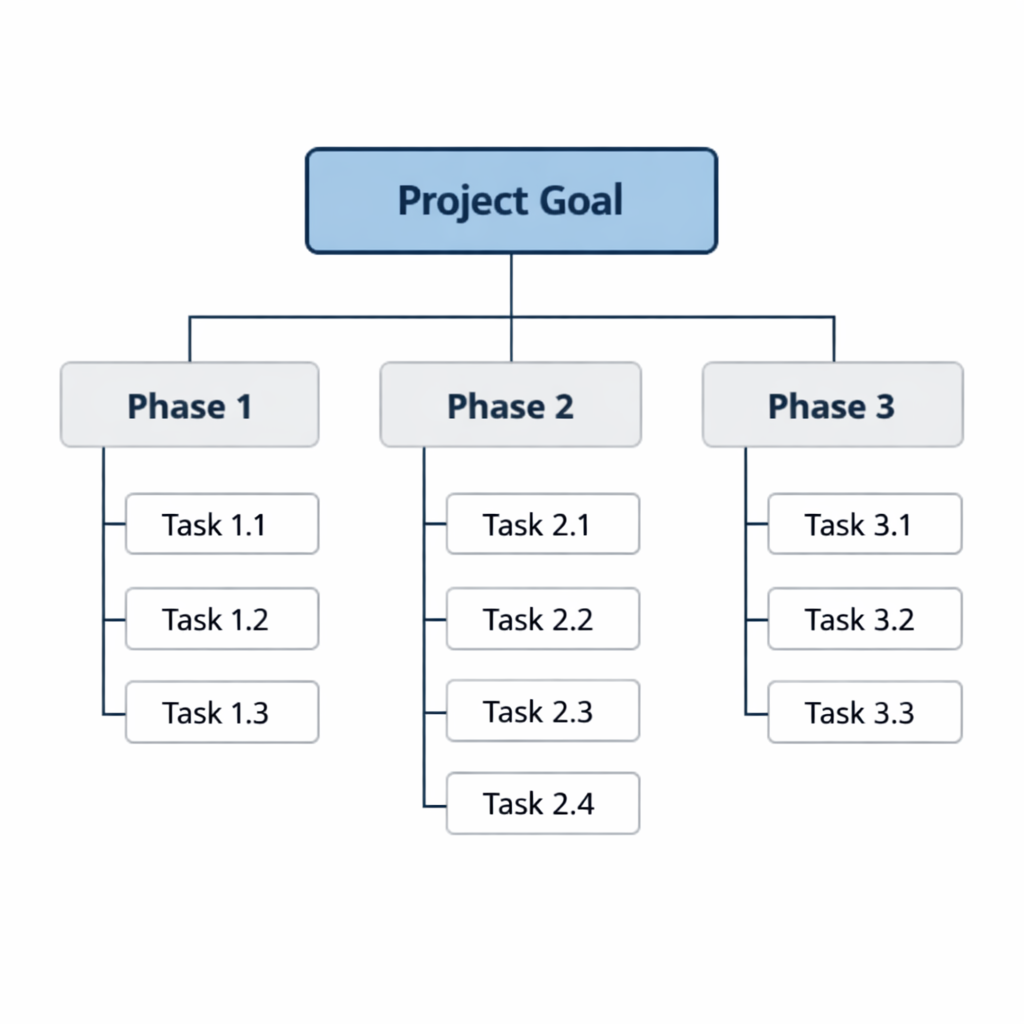
A work breakdown structure, commonly abbreviated as WBS, is the process of decomposing the project objective into progressively smaller units of work until each unit is small enough to assign to one person with a realistic timeline. It is the bridge between the high-level project goal and the daily task list your team works from.
The rule of thumb for task sizing is that no individual task should take more than two days to complete. Tasks larger than that are usually phases or milestones in disguise — they need to be broken down further before they can be assigned and tracked meaningfully.
Building a WBS forces you to think through the full scope of the project before work begins, which is where most planning gaps get caught. The templates that support this process are covered in detail in project management templates that cut planning time in half, where each planning document is broken down into its essential components.
Timeline and milestones
The timeline section converts the work breakdown structure into a schedule. Each task gets a start date, an end date, and a position in the sequence relative to the tasks that must happen before it and the tasks that depend on it.
Milestones — significant checkpoints that mark the completion of a phase or the delivery of a major output — should be identified separately from individual tasks. A milestone is not a task with a deadline. It is a marker that signals a meaningful transition in the project, like client approval of a design concept or completion of the development phase.
The most common timeline mistake is building a schedule with no buffer. Real projects encounter delays from external dependencies, client feedback cycles, and unexpected complexity. A timeline built with zero slack — the term for unallocated time between dependent tasks — has no capacity to absorb those delays without pushing the final deadline.
A practical rule is to build your task-level timeline, identify the critical path — the sequence of dependent tasks that determines the earliest possible project completion date — and then add a ten to fifteen percent buffer to the overall duration before committing to a delivery date.
Resource allocation
The resource section defines who is doing what and confirms that the people assigned to the project have the capacity to deliver it within the proposed timeline. This is where many small business project plans fail silently — the right people are assigned on paper, but nobody checked whether those people are already committed to three other projects running simultaneously.
Resource allocation also includes budget. Each phase of the project should have an estimated cost attached to it, and the total should be tracked against the approved budget throughout execution. A project management plan that does not address budget is incomplete regardless of how detailed the task list is.
Risk register
A risk register is a structured log of potential events that could affect the project negatively, along with an assessment of how likely each one is and how severe the impact would be if it occurred. For each identified risk, the plan should include a mitigation strategy — a specific action that reduces either the probability of the risk occurring or the impact if it does.
For small business projects, a risk register does not need to be exhaustive. Five to ten risks, honestly assessed and paired with concrete responses, is more valuable than a comprehensive list that nobody reads or updates.
Common project risks for small businesses include client delays in providing feedback or approvals, third-party dependencies like vendor deliveries or platform integrations, key person risk where a single team member holds critical knowledge, and scope creep from stakeholders who were not fully aligned at the start.
Understanding how to manage these risks within an iterative workflow connects to the approach covered in agile project management: why most small teams get it wrong, where adaptive planning is positioned as a practical alternative to trying to predict every variable upfront.
Communication plan
The communication plan defines how information will flow throughout the project — who receives updates, how frequently, in what format, and through which channel. It sounds like a minor administrative detail until you have managed a project where a client felt uninformed and started sending daily check-in messages, or where a team member made a significant decision without realizing it required stakeholder approval first.
A simple communication plan for a small business project covers four things: the weekly status report format and delivery schedule, the escalation path for decisions that fall outside the project manager’s authority, the meeting cadence for internal and client-facing check-ins, and the documentation standard for decisions made outside of formal meetings.
Change management process
Every project encounters change requests. Clients change their minds. Market conditions shift. New information surfaces that makes the original plan less relevant. A change management process does not prevent change — it creates a structured way to evaluate and incorporate change without destabilizing the project.
A minimal change management process for small business projects includes three steps: a written change request that describes what is being changed and why, an impact assessment that documents the effect on scope, timeline, and budget, and a formal approval or rejection from the relevant decision-maker before any work on the change begins.
How to write a project management plan your team will actually use
The gap between a plan that looks thorough and a plan that gets used daily is almost always a usability problem. Plans fail adoption when they are stored in the wrong place, written in the wrong level of detail, or never formally introduced to the team.
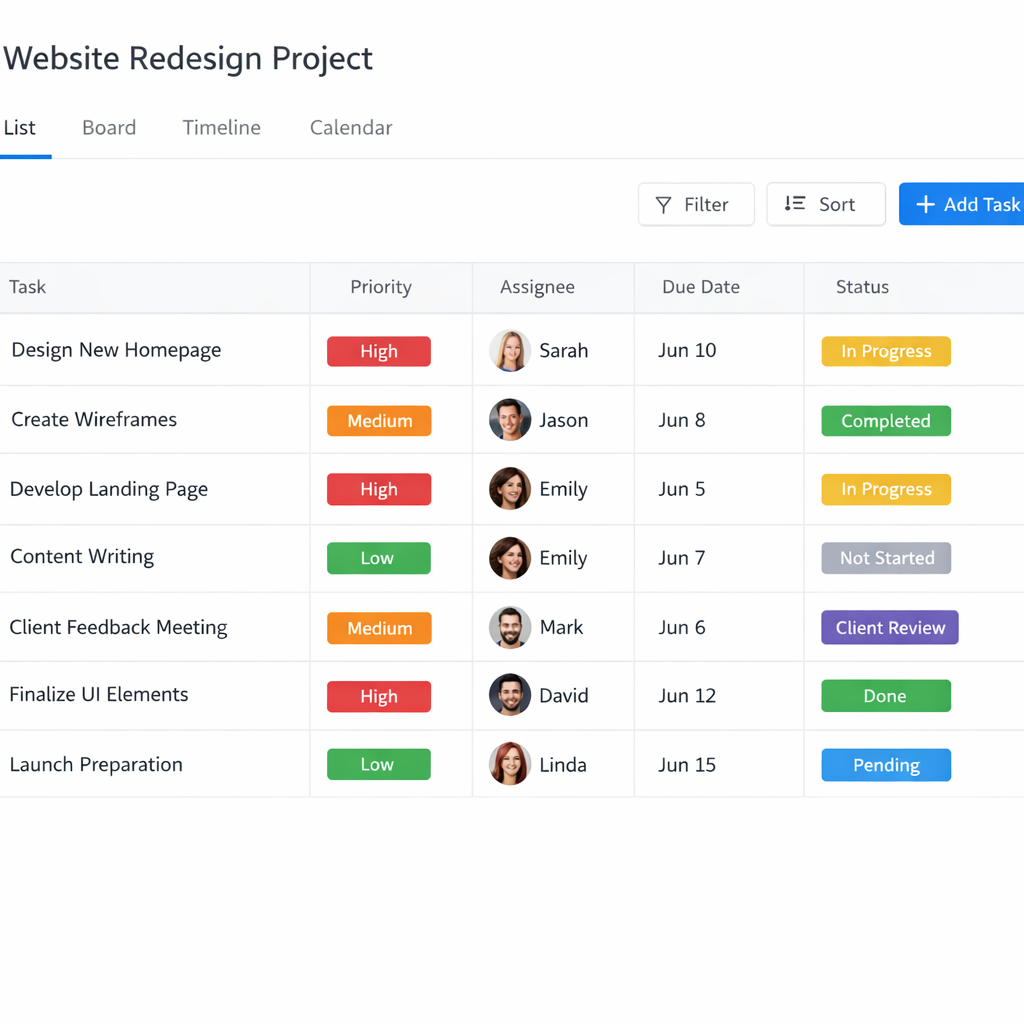
Write the plan in the tool your team already uses. A project management plan in a Word document that nobody opens is less valuable than a leaner version built directly inside Asana, ClickUp, or Notion where your team works every day. The best plan is the one with the lowest friction to access and update.
Keep the language operational, not aspirational. Every sentence in the plan should answer a practical question: what, who, when, or how. Sentences that describe goals without assigning ownership or timelines create the illusion of planning without the function of it.
Review the plan at the start of each project phase and update it when reality diverges from the original assumptions. A plan that is never updated becomes a historical document rather than a working one, and a team that learns the plan is never updated stops consulting it.
Finally, walk the team through the plan in a kickoff meeting before work begins. Reading a plan independently is not the same as hearing the project manager explain the rationale behind key decisions, flag the highest-risk areas, and clarify ownership of ambiguous tasks. The kickoff meeting is where the plan becomes shared understanding rather than a document one person wrote and everyone else filed away.
Conclusion
A project management plan is not a formality. It is the operational foundation that determines whether your project delivers on its promise or spends its final weeks in crisis management mode. Build it with the components covered here, keep it in the tool your team already uses, and treat it as a living document that reflects current reality rather than original intentions. The investment in planning always costs less than the cost of recovering from a project that went off course because nobody planned carefully enough.