

Agile project management gets misrepresented constantly — most people hear the word and picture a room full of engineers doing daily standups on a whiteboard, which has nothing to do with how a small business actually runs. At its core, agile is a mindset built around short work cycles, fast feedback, and adapting before a project goes off the rails. Whether you run a creative agency, a consulting firm, or a product-based business, the principles apply — and they connect directly to the structured foundation laid out in the complete guide to project management for small businesses. This page shows you exactly where small teams go wrong with agile and how to avoid those traps.
Agile project management: why most small teams get it wrong
There is a version of agile project management that works beautifully for small businesses — and a version that creates more confusion than it solves. The difference between the two is not the size of your team or the industry you operate in. It is whether you understand what agile actually asks of you versus what most people assume it means.
Most small teams that try agile and abandon it were never doing agile in the first place. They were doing a loose interpretation of it, missing the core mechanics that make the methodology functional, and then concluding that agile does not work for businesses like theirs. This page sets the record straight.
What agile project management actually means
Agile project management is an iterative approach to delivering work — iterative meaning you complete work in short, repeated cycles rather than planning everything upfront and executing in one long sequence. Each cycle produces something tangible that can be reviewed, tested, and improved before the next cycle begins.
The methodology emerged from software development in the early 2000s when teams recognized that long, rigid project plans were failing to keep pace with changing client needs and market conditions. The Agile Manifesto, published in 2001 by a group of software practitioners, outlined four core values that still define the approach today: prioritizing individuals and interactions over processes and tools, working deliverables over comprehensive documentation, customer collaboration over contract negotiation, and responding to change over following a fixed plan.
For entrepreneurs, the practical translation is this: agile project management means you stop trying to predict everything at the start of a project and instead build a rhythm of short execution cycles, regular check-ins, and frequent course corrections.
The most common mistakes small teams make with agile
Understanding what agile project management is matters less than understanding where teams consistently go wrong with it. These are the four mistakes that derail most small business agile implementations.
Treating sprints as loose time blocks
A sprint, the two-week work cycle at the heart of most agile frameworks, is not just a deadline with a different name. It is a protected container of work with a fixed scope and a clear output. When teams treat sprints as flexible windows that can be extended or overloaded when priorities shift, they lose the cadence that makes agile functional.
The sprint boundary exists to force prioritization decisions. If new work arrives mid-sprint, it goes into the backlog — the prioritized list of future work — and gets addressed in the next cycle. Breaking that boundary erodes the entire system.
Skipping the retrospective
The retrospective is the meeting held at the end of each sprint where the team asks three questions: what went well, what did not go well, and what will we do differently next time. It is the feedback loop that makes agile self-improving over time.
Most small teams skip it because it feels like overhead. The result is a team that runs the same dysfunctional patterns sprint after sprint with no mechanism for catching and correcting them. The retrospective is not optional — it is the part of agile project management that compounds your team’s performance over time.
Confusing agile with no planning
Agile does not mean you skip planning. It means you plan at the right level of detail for the work immediately ahead of you rather than trying to plan every detail of a six-month project on day one. Each sprint still requires a clear plan — which tasks are included, who owns each one, and what done looks like for each item.
This is a point that connects directly to how to build a project management plan from scratch, where the distinction between upfront planning and adaptive planning is explored in practical terms.
Using agile for the wrong type of work
Agile project management performs best on work that is inherently uncertain or likely to evolve — product development, marketing campaigns, service design, content strategy. It is less suited to work that is highly sequential and fixed, like a construction project or a regulatory compliance process where steps must happen in a specific order with no deviation.
If your business runs primarily on fixed-scope, fixed-timeline client contracts, a hybrid approach — using agile internally while presenting waterfall-style milestones to clients — often works better than pure agile.
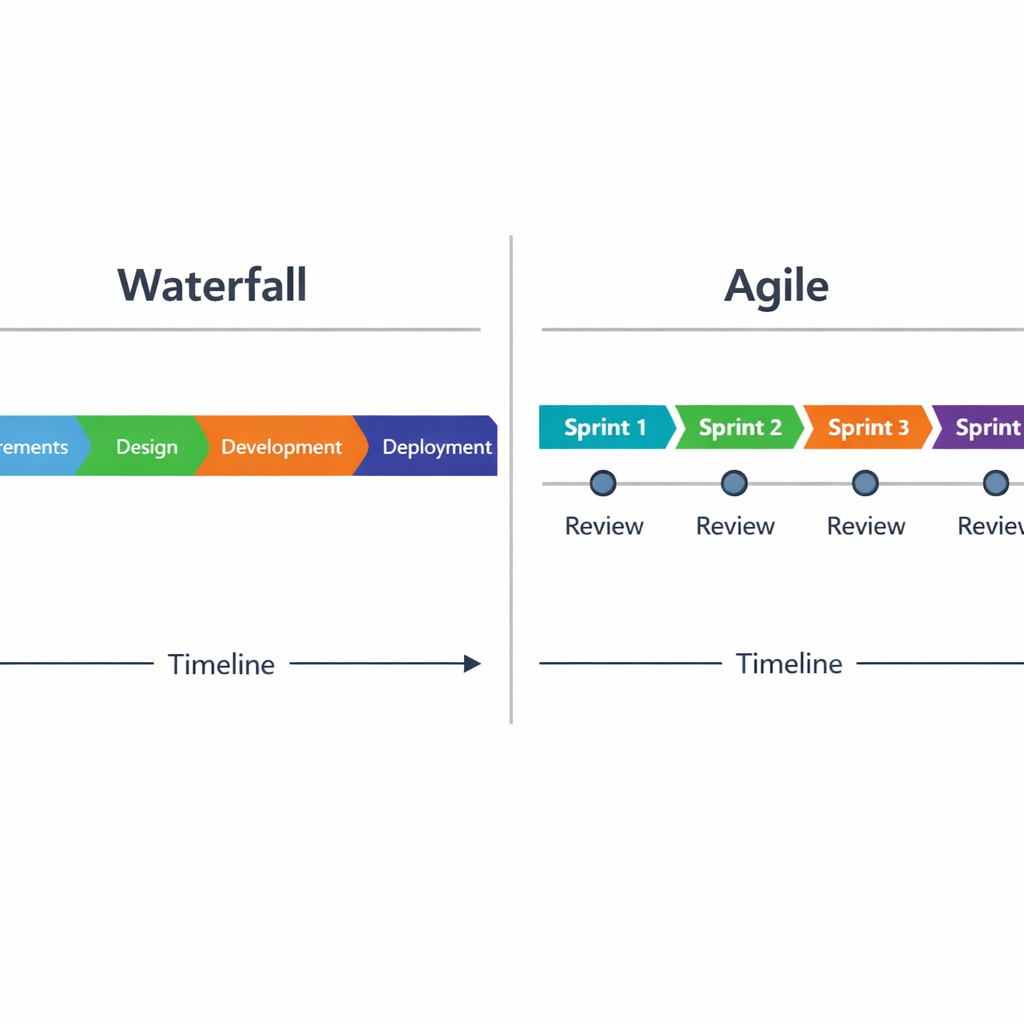
The agile frameworks worth knowing
Agile is an umbrella term that covers several specific frameworks, each with its own structure and use case. Knowing the difference helps you choose the right implementation for your team rather than defaulting to a generic interpretation.
Scrum is the most widely used agile framework and the one most people picture when they hear the term agile project management. It organizes work into sprints, typically two weeks long, with defined roles — a Scrum Master who facilitates the process, a Product Owner who prioritizes the backlog, and the development team who executes the work. For small businesses, the role structure often gets simplified, with one or two people covering multiple functions.
Kanban is a flow-based framework that visualizes work as cards moving across columns — typically To Do, In Progress, and Done. Unlike Scrum, Kanban does not use fixed sprint cycles. Work flows continuously, and the key discipline is limiting how many tasks are in progress at any one time, a concept called work-in-progress limits. Kanban works particularly well for teams with ongoing, unpredictable workloads like support operations or content production.
Scrumban is a hybrid of the two, combining Scrum’s sprint structure with Kanban’s visual board and flow principles. It is increasingly popular with small teams that want the rhythm of sprints without the full ceremony of Scrum.
For entrepreneurs evaluating which framework fits their workflow, the tool selection question is closely related — a point covered in best project management software for small teams, where specific platforms are matched to specific workflow styles.
How to implement agile project management in a small business
A practical agile implementation for a small business does not require a certified Scrum Master or a dedicated project management tool on day one. It requires three things: a backlog, a sprint, and a retrospective.
Start by building a backlog of all current and upcoming work. Every task, project, client request, and internal initiative goes into this list. Then prioritize it — what delivers the most value right now sits at the top, everything else falls below it in order of importance.
Define a sprint length that matches your work rhythm. Two weeks is standard, but one week works for fast-moving teams and three weeks works for teams with longer deliverable cycles. The sprint length matters less than the consistency — pick one and stick with it.
At the start of each sprint, pull the highest-priority items from the backlog into the sprint and assign ownership. At the end of each sprint, review what was completed, hold a fifteen-minute retrospective, and plan the next sprint.
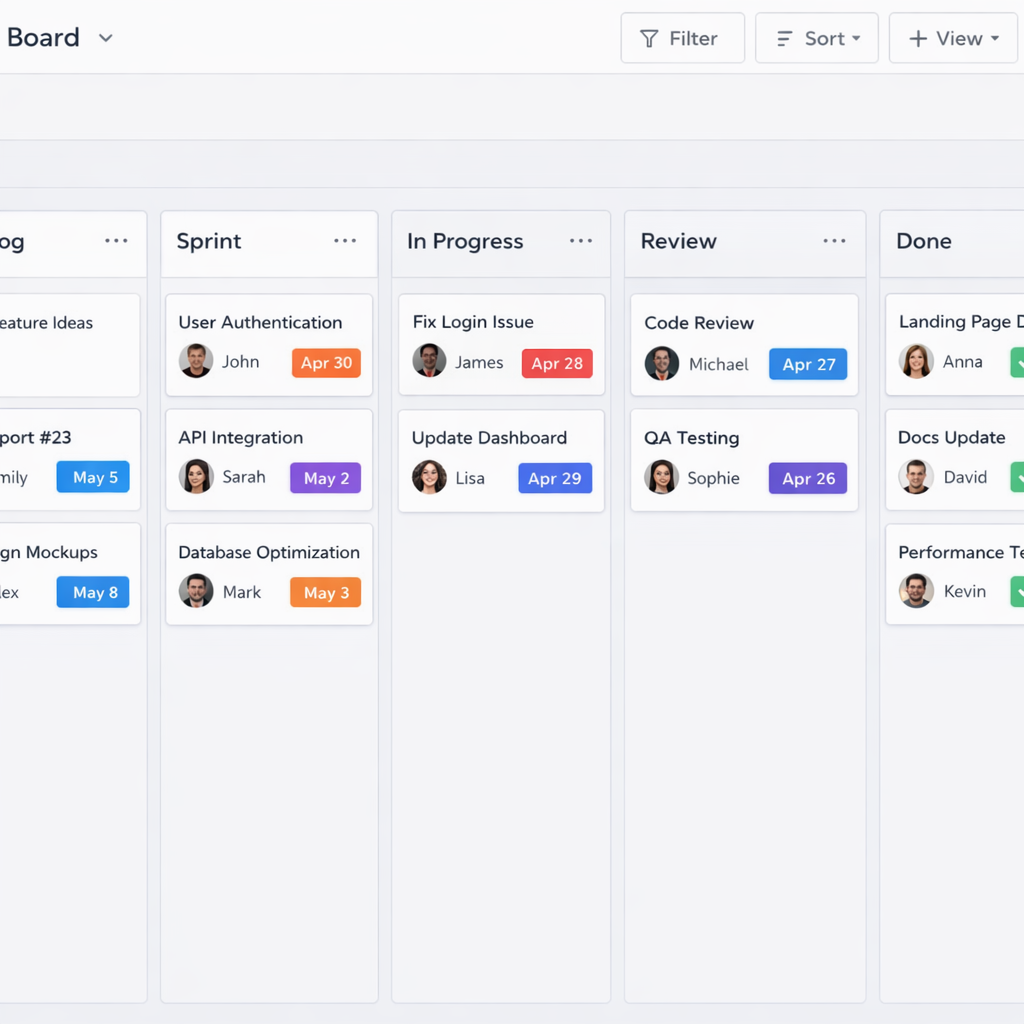
That cycle — backlog, sprint, retrospective, repeat — is the entire operational core of agile project management. Everything else is refinement.
When agile works and when it does not
Agile project management is not a universal solution. It works exceptionally well when requirements are likely to change, when client feedback needs to be incorporated frequently, or when the team is building something new where the right answer is not yet fully known.
It works less well when the client expects a fixed deliverable at a fixed price on a fixed date with no room for iteration. In those situations, the transparency that agile requires — showing incomplete work regularly and adjusting scope based on feedback — can conflict with contract terms and client expectations.
The most practical position for most small business owners is not to choose between agile and traditional project management but to understand both well enough to apply the right approach to each project. That broader perspective on project management methodologies is covered in detail across the complete guide to project management for small businesses.
Conclusion
Agile project management works for small businesses when it is implemented with discipline rather than treated as an excuse to avoid planning. The teams that get the most from it are not the ones with the most formal training — they are the ones that commit to the rhythm of short cycles, honest retrospectives, and consistent prioritization. Start with a simple backlog and a two-week sprint, run three cycles before evaluating whether it fits, and build from there.