

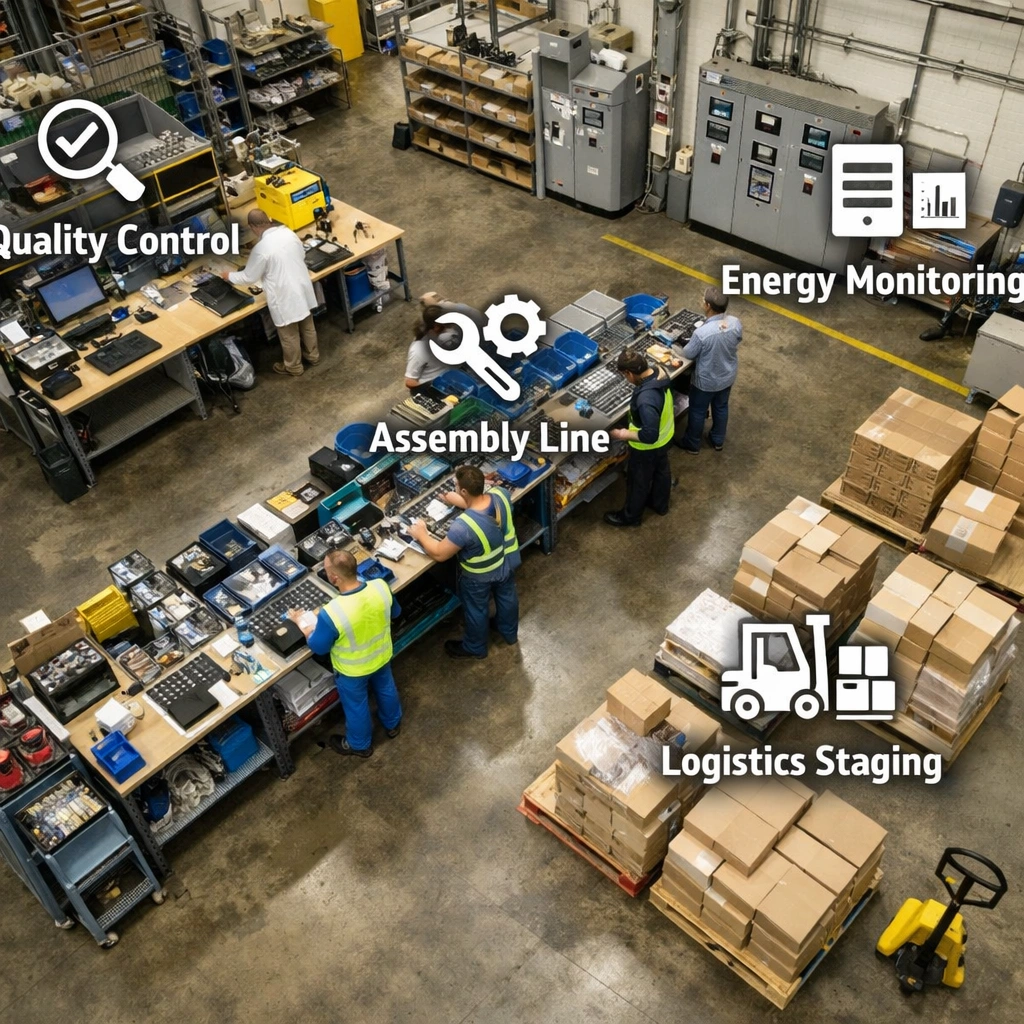
Most entrepreneurs underestimate how broadly industrial AI applications have spread across physical operations — from shop floors to logistics hubs. Understanding the full landscape of AI in industrial automation: what actually works in 2026 is the first step before choosing where to invest. Industrial AI applications now cover everything from quality control to energy management, and knowing which ones deliver measurable ROI separates smart adopters from expensive early mistakes. This breakdown gives you exactly that clarity.
Running a business that touches physical production, logistics, or manufacturing in 2026 means one thing is non-negotiable: you need to understand where industrial AI applications are delivering real returns and where they are still overpromised. The noise around automation is loud. The actual results, when you look at them closely, are concentrated in a handful of specific use cases that keep showing up across industries.
This is not a technology overview. It is a practical map of where industrial AI applications are creating measurable advantages for entrepreneurs who move early and smart.
Why industrial AI applications are no longer optional
A few years ago, implementing any form of intelligent automation required a dedicated data science team, a seven-figure budget, and a long runway before you saw any return. That is no longer the case. The infrastructure has matured. Cloud-based deployment models have dropped the entry cost dramatically, and modular platforms now allow small and mid-sized operations to activate specific industrial AI applications without overhauling their entire tech stack.
What has not changed is the competitive pressure. Manufacturers and operators who have already deployed these systems are running leaner, catching defects earlier, and responding to demand shifts faster than those still relying on manual processes. The gap between early adopters and late movers is widening every quarter.
For entrepreneurs evaluating where to start, the smartest move is to understand the full landscape first — which applications exist, what problems they actually solve, and which ones are realistic at your current scale.
The six industrial AI applications generating the most ROI in 2026
Predictive maintenance
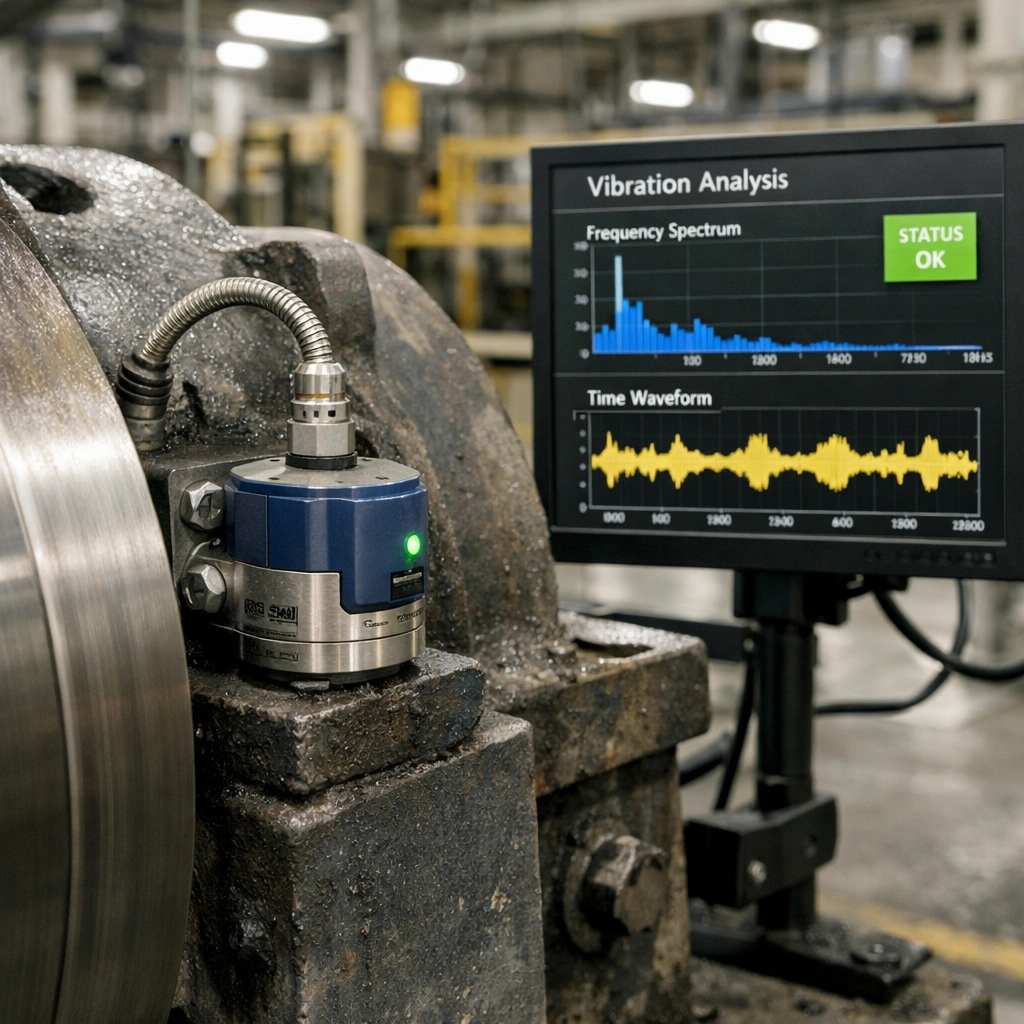
Equipment failure is expensive in two ways: the repair cost itself and the unplanned downtime that ripples through your entire operation. Predictive maintenance systems use sensor data from machines — vibration, temperature, pressure, acoustic signals — to detect anomaly patterns before a breakdown occurs.
The business case is straightforward. Instead of replacing components on a fixed schedule (some too early, some too late), you replace them when the data says they need replacing. Companies using this approach report reductions in unplanned downtime of 30 to 50 percent in the first year of deployment.
This is one of the most mature industrial AI applications available today, which means the tooling is reliable and the implementation path is well-documented. If you want a deeper breakdown of how to deploy this in your operation, predictive maintenance AI: stop paying for breakdownscovers the full process.
Machine vision for quality control
Human inspection has hard limits. Fatigue, lighting conditions, and sheer volume make it unreliable at scale. Machine vision systems high-speed cameras paired with trained detection models identify surface defects, dimensional errors, and assembly faults at production line speed with a consistency no human team can match.
Across food processing, electronics manufacturing, automotive parts, and packaging, machine vision has become one of the most deployed industrial AI applications precisely because the ROI calculation is simple: fewer defective products reaching customers means fewer returns, fewer recalls, and stronger margins.
For a full comparison of platforms and what real deployment costs look like, machine vision manufacturing: why manual inspection is failing youis worth reading before you talk to any vendor.
Supply chain demand forecasting
Most supply chain problems are not logistics problems. They are information problems. Operations that are still using static reorder points and manual demand planning are systematically over-stocking slow movers and under-stocking fast ones.
Demand forecasting models trained on historical sales data, seasonal patterns, and external signals — weather, market trends, supplier lead times — dramatically improve inventory positioning without requiring a larger planning team. This is one of the industrial AI applications that scales well because the more data you feed it, the more accurate it becomes.
The full breakdown of how this works end to end is inAI supply chain optimization: end the guesswork for good.
Energy consumption optimization
Energy is one of the largest controllable costs in any production environment, and it is consistently undertreated. AI-based energy management systems monitor consumption patterns across machines, HVAC, lighting, and compressed air systems to identify waste and automatically adjust load in real time.
For operations running multiple shifts, the savings compound quickly. Some facilities have reduced energy costs by 15 to 25 percent within the first 12 months of deployment without any changes to their production output.
This application is growing fast because energy prices remain volatile and sustainability reporting requirements are tightening across regulated markets.
Process automation and robotic control
Beyond the physical robots themselves, the intelligence layer that coordinates them — scheduling tasks, rerouting workflows when a line goes down, balancing throughput across stations — is where industrial AI applications add a layer of value that fixed automation cannot provide.
Adaptive process control systems adjust parameters in real time based on input variability. If a raw material batch comes in slightly off-spec, the system adjusts downstream settings to maintain output quality rather than flagging the batch and halting production.
Autonomous inspection and monitoring
Drones and mobile robots equipped with sensors and vision systems are replacing manual inspection rounds in facilities where coverage is wide, access is difficult, or conditions are hazardous. Oil refineries, large warehouses, and utility infrastructure are the most active deployment environments right now.
The business case is a combination of safety improvement, cost reduction, and frequency — automated systems can inspect continuously rather than on a weekly or monthly schedule, catching issues earlier and with better documentation.
How to evaluate which industrial AI applications fit your operation
Not every application makes sense at every scale. The evaluation framework that works best for entrepreneurs is a simple three-part filter:
Problem clarity: Can you define the specific operational problem in measurable terms? If you cannot quantify the cost of the problem today, you will not be able to measure the impact of the solution.
Data availability: Most industrial AI applications require historical operational data to function well at launch. If your machines are not instrumented or your production data is siloed in spreadsheets, your first investment may need to be in data infrastructure rather than the AI layer itself.
Integration complexity: How connected is your current equipment? Modern platforms are designed to integrate with legacy machinery through IoT sensors and edge computing devices, but the complexity varies significantly depending on your equipment age and your existing software stack.
The full guide to sequencing these decisions without a technical team is in AI in industrial automation: what actually works in 2026 — the pillar resource this series is built around.
What separates successful deployments from expensive experiments
The entrepreneurs who get the most out of industrial AI applications share a few common patterns. They start with one well-defined problem rather than trying to modernize everything at once. They involve the people closest to the operational problem in the selection process — floor supervisors, logistics coordinators, maintenance crews — because those people know where the real friction is. And they set clear, time-bound metrics before deployment so they can make an honest evaluation at the 90-day mark.
The deployments that fail almost always share the opposite pattern: a top-down technology decision made without operational input, unclear success criteria, and an expectation that the platform will self-configure once installed.
Industrial AI applications are tools. They perform in proportion to how well you deploy them.
Conclusion
The landscape of industrial AI applications in 2026 is wide, but the path for entrepreneurs is actually narrower than it looks. A small number of well-proven use cases — predictive maintenance, machine vision, demand forecasting, energy optimization — account for the majority of documented ROI across industries. Start there. Understand the problem you are solving, confirm your data is ready to support the application, and choose platforms built for your scale rather than for enterprise deployments that assume resources you do not have.
The operations pulling ahead right now are not the ones with the biggest automation budgets. They are the ones making precise, well-sequenced decisions about which industrial AI applications to deploy and when.