

If you’ve been running your business on spreadsheets or disconnected tools, you’ve already felt the friction. What is ERP software? It’s a single platform that connects your finance, inventory, HR, and sales into one intelligent system. Unlike traditional solutions, modern ERP software uses predictive logic to automate routine decisions and surface insights in real time. Understanding what is ERP software today means understanding how automation has changed the category entirely — and why more small business owners are making the switch. For the full breakdown, the complete guide to AI-powered ERP for small businesses walks you through every stage from platform selection to implementation what is ERP software.
The problem with running a business on disconnected tools
Most entrepreneurs don’t start with a plan for their tech stack. They grab a tool for invoicing, another for inventory, something else for payroll, and before long they’re managing five platforms that don’t talk to each other. Every Monday starts with someone manually copying numbers from one spreadsheet into another.
That’s not a workflow problem. That’s a structural problem. And it compounds fast.
When your sales data lives in one place, your fulfillment data in another, and your financial reports somewhere else entirely, you don’t have visibility — you have noise. Decisions get made on gut feeling or stale numbers, and the cost of that gap only becomes obvious when something breaks.
This is the exact pain point that ERP systems, enterprise resource planning platforms, were built to solve. But the traditional versions of these tools came with their own headaches: expensive licensing, six-month implementation timelines, and interfaces that looked like they were designed in 2003.
The shift toward AI-driven ERP changes that equation significantly, especially for lean, fast-moving entrepreneurial teams what is ERP software.
What an ERP system actually does
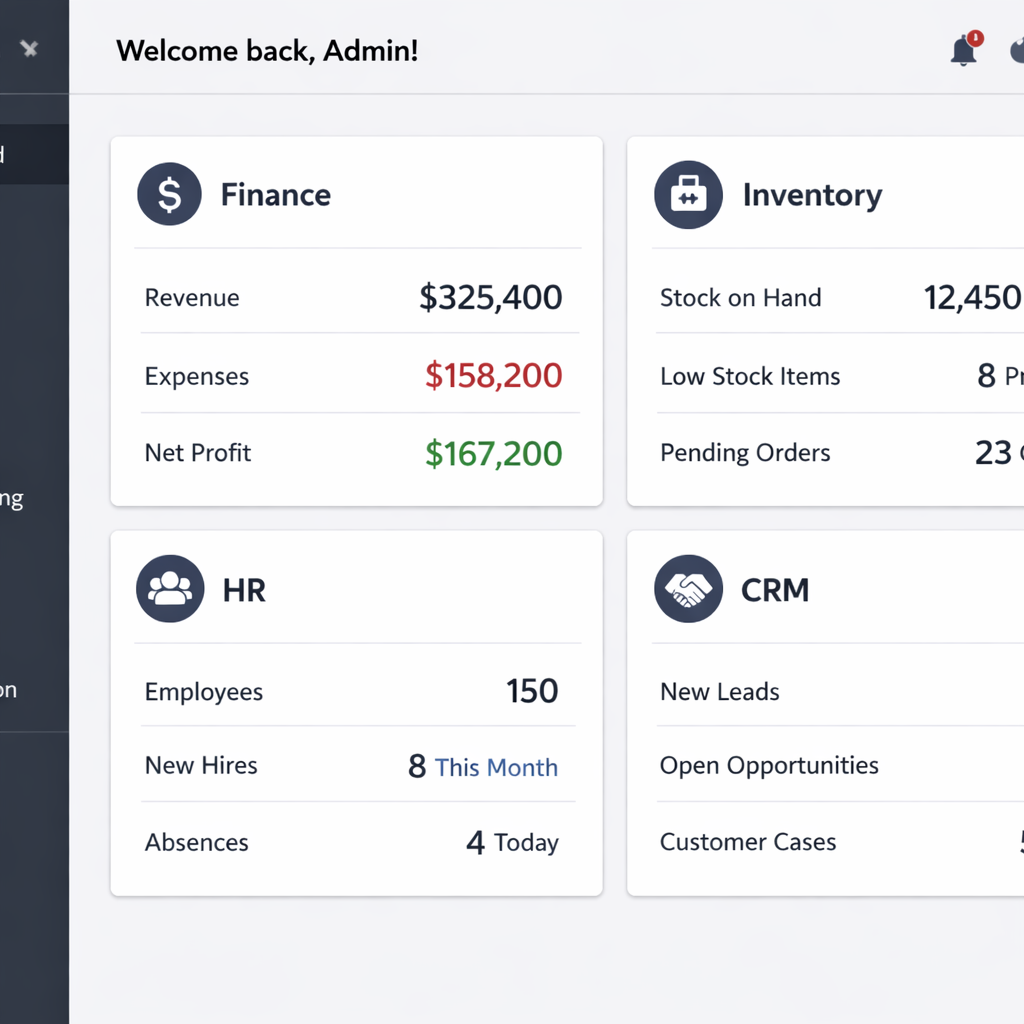
At its core, an ERP system is a centralized platform that connects the major operational functions of your business. Instead of isolated tools, you get one environment where data flows between departments automatically.
A standard ERP covers: what is ERP software ?
- Finance and accounting — invoicing, expense tracking, reconciliation, reporting
- Inventory and supply chain — stock levels, supplier orders, fulfillment tracking
- Human resources — payroll, scheduling, onboarding, compliance
- Customer data — order history, service records, communication logs
- Project management — resource allocation, timelines, deliverable tracking
The fundamental value isn’t just consolidation. It’s that when all of this data lives in the same system, every department works from the same source of truth. Your finance team sees the same inventory numbers as your operations lead. Your customer service rep can pull up order history without emailing the warehouse.
That kind of operational alignment is what lets a 10-person team punch above its weight.
Where the AI layer changes the game
Traditional ERP platforms were powerful but passive. They stored data and generated reports when you asked for them. You still needed a human to interpret the numbers and decide what to do next.
AI-driven ERP platforms add an active intelligence layer on top of that foundation. The system doesn’t just record what happened — it analyzes patterns, flags anomalies, and in many cases takes automated action based on rules you set.
Here’s what that looks like in practice:
Demand forecasting. Instead of manually reviewing last quarter’s sales to estimate next month’s inventory order, the system analyzes your historical data, seasonal trends, and current market signals to generate a purchase recommendation automatically what is ERP software.
Cash flow alerts. The platform identifies that three of your biggest clients typically pay late in Q4 and flags the risk to your finance team 30 days in advance — before the cash gap actually hits.
Anomaly detection. An unusual expense appears in your accounts. The system flags it for review rather than letting it sit in a spreadsheet until your next audit.
Workflow automation. A new order comes in, triggers an inventory check, generates a fulfillment task, and schedules an invoice — without a single manual touchpoint.
This is the operational leverage that entrepreneurs building lean teams have been waiting for. The platform does the pattern recognition. Your team focuses on execution and judgment what is ERP software.
The core modules every entrepreneur should know
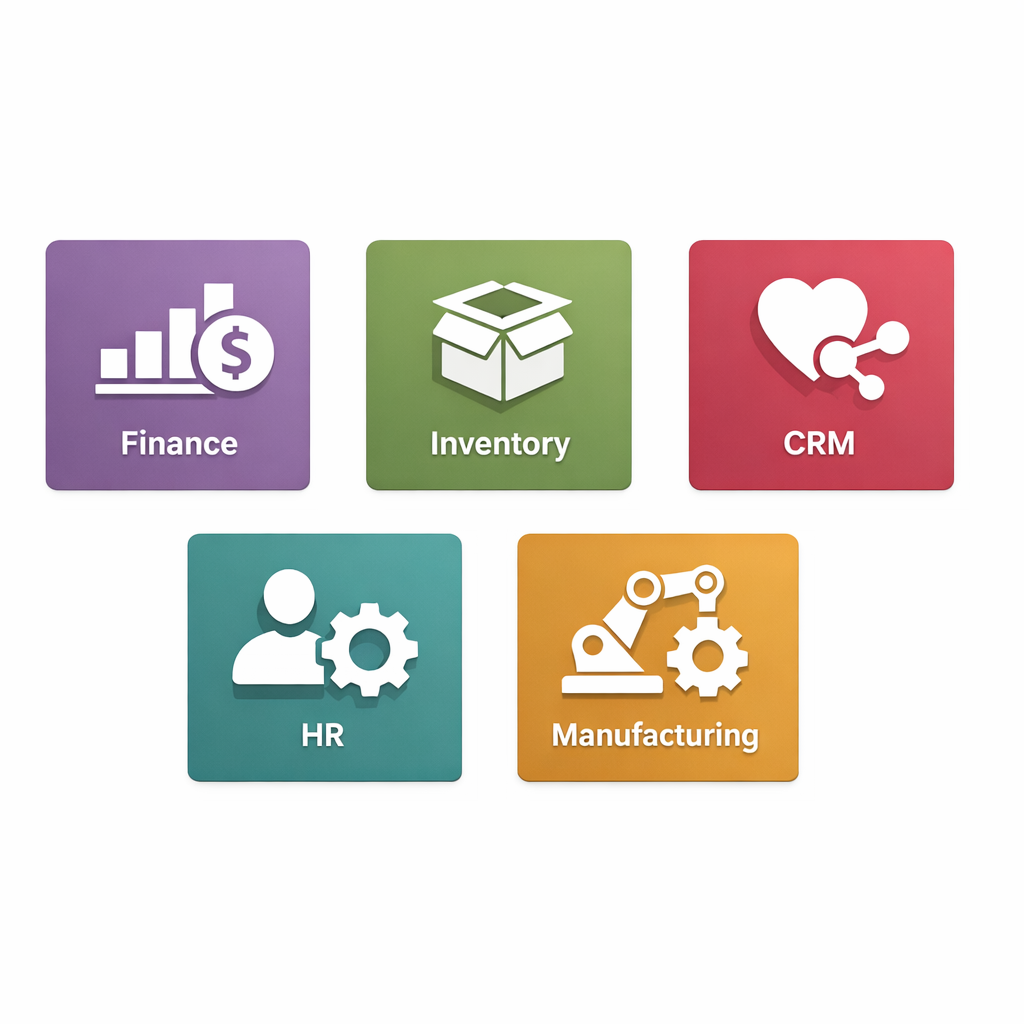
Not every business needs every module from day one. Part of what makes modern AI ERP platforms more accessible than their predecessors is modular deployment — you activate what you need and expand as you scale.
The modules with the highest immediate impact for most entrepreneurs are:
Financial management. This is the non-negotiable starting point. Real-time visibility into revenue, expenses, margins, and cash flow is the foundation every other business decision rests on.
Inventory and order management. If you sell physical products, this module alone can eliminate hours of weekly manual work and reduce costly stockout or overstock situations.
CRM integration, customer relationship management. Connecting your customer data to your operational data means your team can make smarter decisions about fulfillment priorities, upsell timing, and service quality.
Reporting and analytics. The AI layer lives largely in this module. Automated reports, visual dashboards, and predictive insights replace the manual spreadsheet work that quietly consumes your team’s best hours.
HR and payroll. For teams of five or more, automating payroll runs, PTO tracking, and compliance reporting pays for itself in time saved almost immediately.
Is an AI ERP system right for your stage of growth
This is the question most entrepreneurs get wrong. They either implement an ERP too early — before they have enough operational complexity to justify it — or too late, when the cost of disconnected systems is already bleeding them.
A few honest signals that you’re ready:
what is ERP software You’re managing more than one revenue stream or fulfillment channel and reconciling them manually takes more than two hours a week.
Your team has grown past five people and coordination is creating visible friction — missed handoffs, duplicate work, version-control issues on shared documents.
You’ve had at least one painful moment where a financial or inventory decision was made on bad data, and it cost you real money.
You’re preparing to raise capital or bring on investors and need clean, auditable financials.
If two or more of those apply, the operational leverage of an AI ERP platform will almost certainly outweigh the implementation investment what is ERP software .
If you’re still in the early stages — solo operator, single product, straightforward revenue model — a full ERP is probably overkill. Start with the best AI ERP software comparison to understand what the market looks like and what kind of platforms are built for businesses at your specific scale.
What to expect when you make the switch
The biggest fear most entrepreneurs have around ERP adoption is disruption. They imagine a six-month implementation, a steep learning curve, and a team that resents the new system.
That fear is mostly inherited from the era of legacy ERP platforms. Modern AI-driven systems are built with faster onboarding in mind, and the better vendors invest heavily in guided setup, pre-built templates, and dedicated implementation support.
That said, realistic expectations matter.
Data migration takes time. Getting your historical financial, inventory, and customer data into the new system cleanly is the most labor-intensive part of the process. Plan for it.
Adoption requires intention. The platform only works if your team actually uses it. Designate an internal champion — someone on your team who owns the rollout and becomes the go-to resource for questions.
The ROI isn’t always immediate. Some of the biggest gains from AI-driven ERP — better forecasting, cleaner reporting, fewer operational fires — show up over months, not days. Set a 90-day evaluation window before drawing conclusions.
For a detailed walkthrough of what the implementation process actually looks like, the AI ERP implementation guide breaks it down step by step for teams that have never deployed an ERP before.
Conclusion
Understanding what an AI-driven ERP system is — and what it isn’t — is the first step toward making a decision that actually fits your business. If you have been asking yourself what is ERP software and whether it applies to your operation, the honest answer is: it depends on where your business is right now what is ERP software?
It is not a magic fix. It is a structural upgrade that pays off when your operations have enough complexity to justify the investment. The businesses that get the most out of these platforms go in with clear objectives, realistic timelines, and a team that is bought into the change. When those conditions are in place, the operational gains are significant and compounding.
Start with your biggest pain point — whether that is financial visibility, inventory chaos, or coordination friction — and let that anchor your evaluation. The right platform does not transform your business overnight. It removes the friction that is quietly slowing it down, one automated workflow at a time.