
The number one reason small businesses delay adopting AI ERP software is not skepticism about the technology. It is the pricing opacity that defines this industry. Vendors bury their real numbers behind demo request forms, and by the time you are deep enough in a sales conversation to get an actual figure, the switching cost of walking away feels uncomfortably high.
That dynamic is deliberate. It is also entirely avoidable if you know what cost variables to ask about before the first sales call.
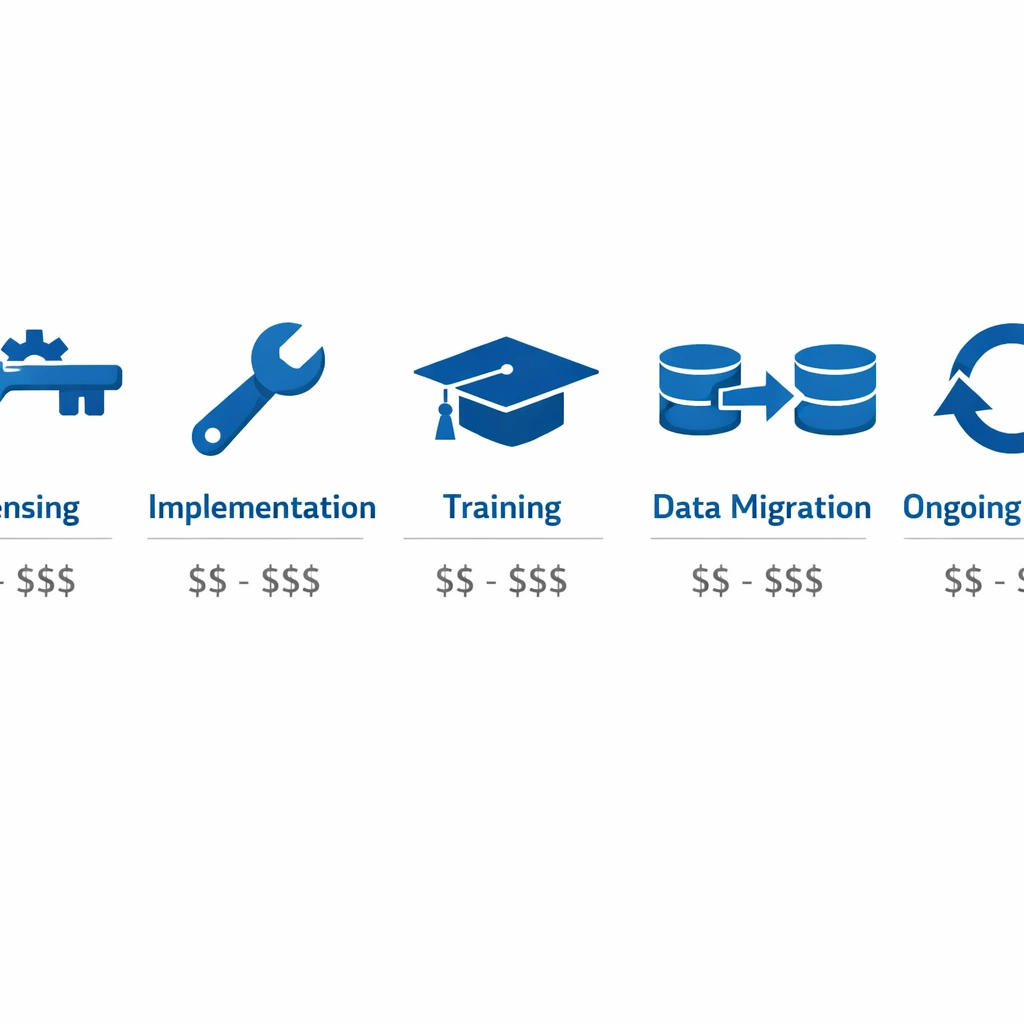
AI ERP software cost in 2026 breaks down into five distinct categories, and the total number you should be planning for is almost always larger than the licensing fee the vendor leads with. This article gives you the full picture — what each cost category covers, what realistic ranges look like across platform tiers, and where the hidden fees tend to appear in contracts that most entrepreneurs sign without reading carefully enough.
If you are still in the process of evaluating which platforms are worth pricing out, best AI ERP software for small business that actually delivers gives you the shortlist before you start requesting quotes.
Why ERP pricing is deliberately confusing
Before breaking down AI ERP software cost by category, it helps to understand why the pricing landscape is structured the way it is.
ERP vendors have historically served enterprise clients with large procurement teams and long sales cycles. In that context, custom pricing negotiated deal by deal made sense every enterprise implementation is different enough that a published price list would be misleading anyway.
The problem is that this pricing culture carried over into the small business market, where entrepreneurs don’t have procurement departments and don’t have time for a six-week sales process just to find out whether a platform is in their budget.
The result is a market where the same platform might cost one business $800 per month and another business $3,200 per month for functionally similar configurations not because the pricing is irrational, but because the first business knew what to negotiate and the second one didn’t.
Understanding AI ERP software cost at the component level gives you the information you need to walk into that negotiation with clarity
Cost category one: licensing fees
Licensing is the number vendors lead with, and it is the most variable component of AI ERP software cost across the market.
Most platforms price licensing in one of three models.
Per-user monthly subscription. The most common model for cloud-based platforms. You pay a fixed fee per user per month, typically with different tiers based on access level — a full user who can configure and administer the system costs more than a limited user who only reads reports or submits approvals. Ranges in 2026 run from approximately $50 per user per month at the entry level to $300 or more per user per month for enterprise-tier platforms with full AI functionality.
Module-based pricing. Some platforms charge per module rather than per user. You pay for finance, then add inventory, then add CRM as separate line items. This model can be cost-effective for businesses that genuinely only need two or three modules, but it scales quickly once you start activating the full suite. Expect $200 to $800 per module per month depending on the platform and the complexity of the module.
Resource-based pricing. A smaller number of platforms — Acumatica being the most prominent example — charge based on system resource consumption rather than user count. This model benefits businesses with large teams where most members need occasional read-only access rather than full system interaction. Total monthly costs typically run $1,500 to $5,000 for small business configurations.
The licensing fee is rarely the largest component of your first-year AI ERP software cost. It is, however, the most visible one, which is why vendors emphasize it.
Cost category two: implementation fees
Implementation is where AI ERP software cost surprises most entrepreneurs, and it is the category most frequently underestimated in initial budget planning.
Implementation covers the work required to configure the platform for your specific business — setting up your chart of accounts, building your workflow rules, connecting your existing integrations, migrating your data, and testing the system before go-live. Depending on the platform and the complexity of your operation, this work is performed either by the vendor directly, by a certified implementation partner, or by a combination of both.
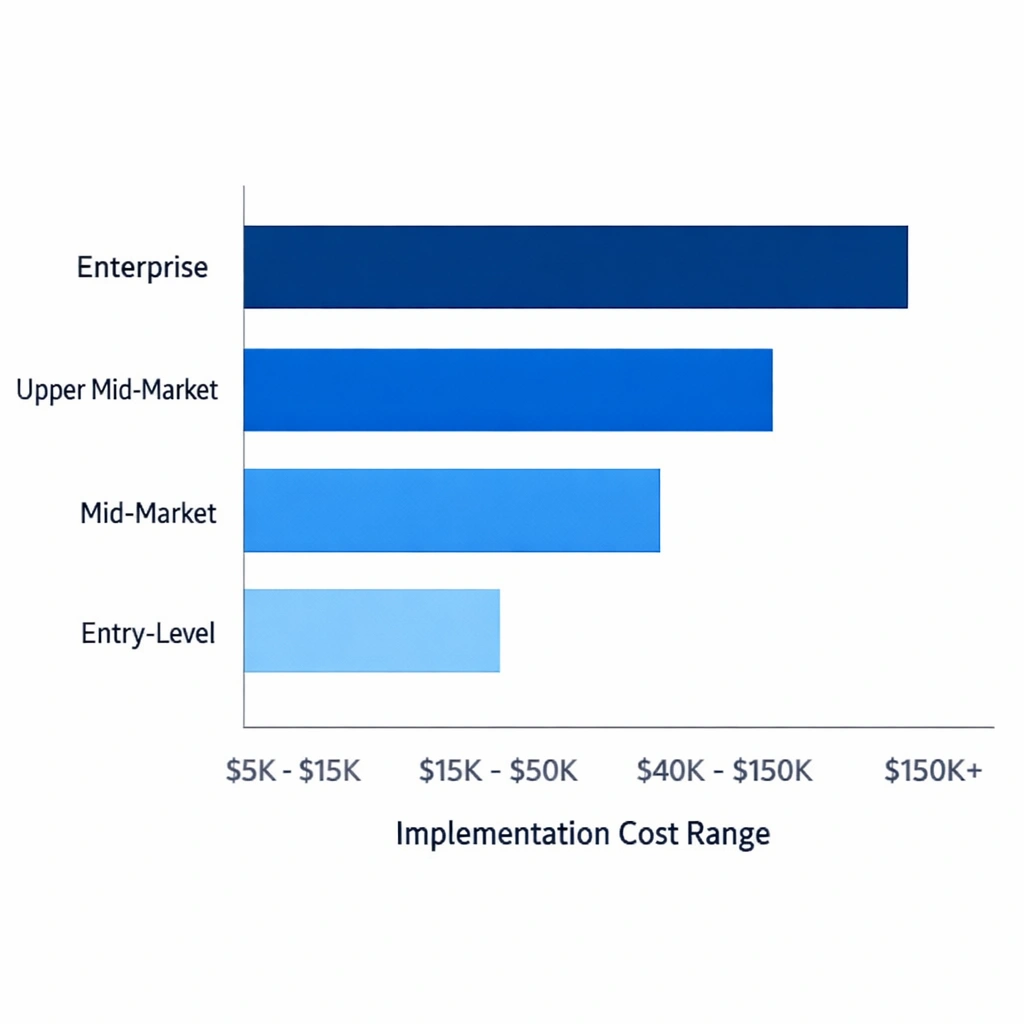
Realistic implementation cost ranges for small businesses in 2026:
Entry-level platforms (Odoo Community, less complex configurations): $5,000 to $15,000 for a basic multi-module implementation with a mid-tier partner.
Mid-market platforms (SAP Business One, Acumatica, mid-complexity configurations): $15,000 to $50,000 depending on the number of modules, integration complexity, and the partner’s hourly rate.
Upper mid-market platforms (NetSuite, complex configurations with multiple integrations): $40,000 to $150,000 for full implementations with established partners.
These ranges assume a reasonably clean data migration. If your existing data requires significant cleanup — which, as covered in the implementation guide, is more common than most businesses expect — add 20 to 40 percent to the data migration line item.
For a step-by-step breakdown of what the implementation process actually involves and where costs accumulate, how to implement AI ERP software without disrupting your business walks through each phase in detail.
Cost category three: data migration
Data migration deserves its own line item in your AI ERP software cost planning because vendors consistently underquote it and businesses consistently underestimate the labor involved.
Migration covers extracting your existing data from your current systems, cleaning and standardizing it, mapping it to the new platform’s data structure, importing it, and validating that the imported data matches the source. Each of those steps takes longer than it sounds.
The variables that drive migration cost include the volume of records being migrated, the number of source systems you are migrating from, the cleanliness of your existing data, and whether historical transaction data is being migrated or only current master data.
For a small business migrating from QuickBooks and a separate inventory tool with reasonably clean data, migration costs typically run $2,000 to $8,000 when handled by a professional. For businesses migrating from a legacy on-premise ERP with years of accumulated data across multiple departments, that number can reach $20,000 to $30,000 or more.
The most cost-effective approach is to invest in data cleanup before the migration begins rather than paying implementation consultants their hourly rate to clean data during the migration process. An internal team member spending two weeks cleaning your customer and product records before the migration starts will typically save more in consultant fees than it costs in staff time.
Cost category four: training costs
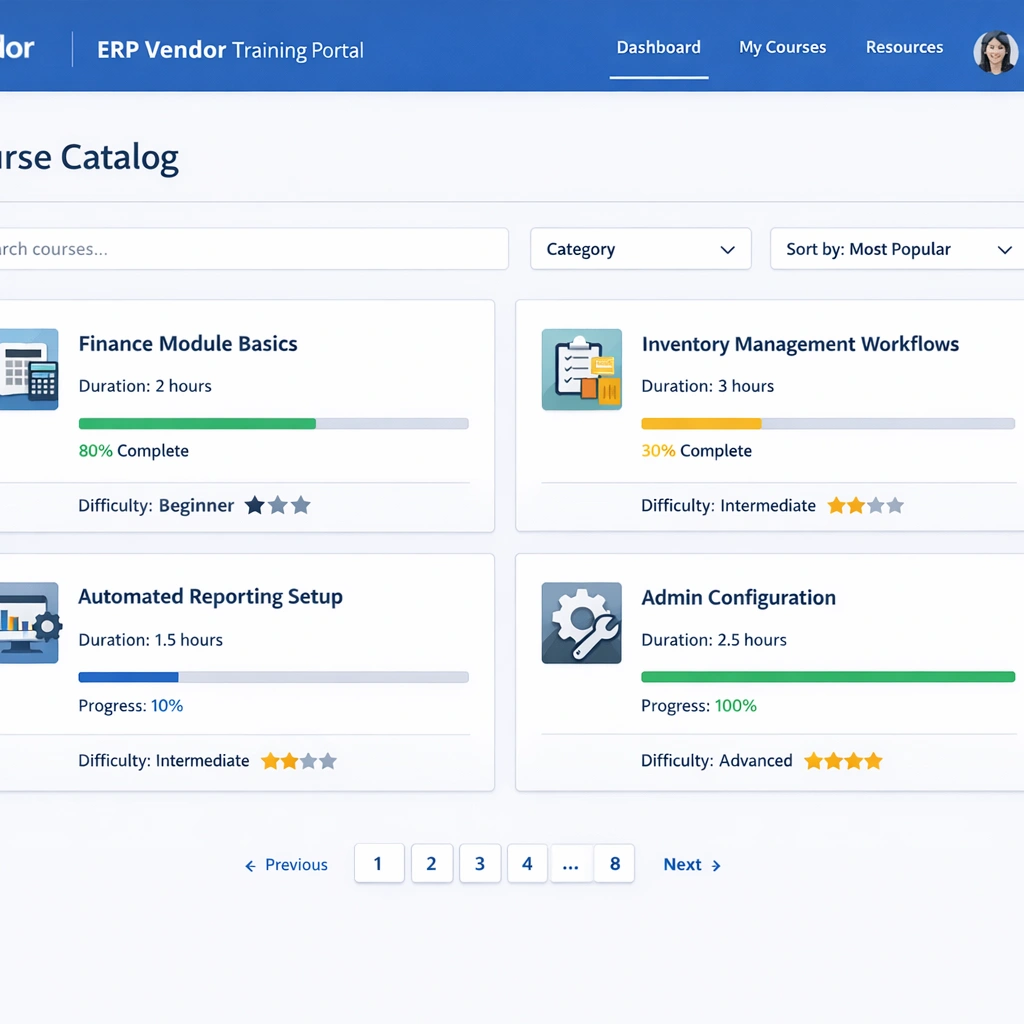
Training is the AI ERP software cost component most frequently cut from budgets and most frequently regretted afterward.
Inadequate training is the leading cause of low system adoption, which is the leading cause of failed ERP implementations in businesses where the technology itself was sound. A platform that your team doesn’t use correctly delivers no return on the investment you made in licensing and implementation.
Training costs break down into two components: vendor or partner-provided training and internal productivity loss during the learning curve.
Vendor training fees vary widely. Some platforms include a structured onboarding program in the implementation fee. Others charge separately for training days, which typically run $1,500 to $3,000 per day for on-site or live virtual sessions. For a small business team requiring two to three days of role-specific training, budget $3,000 to $9,000 for this line item.
Productivity loss during adoption is a real cost that rarely appears in vendor quotes but shows up in your operations. During the first four to eight weeks after go-live, expect your team to operate at 70 to 80 percent of normal efficiency as they build familiarity with the new system. Factor that reduced capacity into your implementation timing — scheduling a go-live immediately before your busiest season is a planning error that costs more than it saves.
Cost category five: ongoing support and maintenance
The final component of AI ERP software cost is the one that continues indefinitely after go-live: ongoing support, maintenance, and platform updates.
For cloud-based platforms, software updates are typically included in the subscription fee — this is one of the genuine advantages of SaaS ERP over legacy on-premise systems, which required separate maintenance contracts and IT staff to manage updates. However, several other ongoing cost items require explicit budgeting.
Support tier fees. Most platforms offer tiered support — a basic tier with email support and a knowledge base, a standard tier with phone support and faster response times, and a premium tier with a dedicated account manager and proactive monitoring. For a small business running mission-critical operations on the platform, the standard or premium tier is not optional. Budget $200 to $1,000 per month depending on the platform and tier.
Customization and configuration updates. As your business evolves, your ERP configuration needs to evolve with it. Adding a new product line, entering a new market, or restructuring your team will require workflow updates, new reporting configurations, and potentially new module activations. Budget a recurring annual amount — typically $3,000 to $10,000 — for ongoing configuration work, either with your implementation partner or an internal administrator.
Integration maintenance. Every third-party integration — your e-commerce platform, your payment processor, your logistics provider — requires periodic maintenance as those platforms update their APIs. If your ERP implementation includes multiple integrations, factor in a recurring maintenance cost for keeping those connections functional.
The total cost of ownership calculation
Pulling all five categories together gives you the total cost of ownership figure that your AI ERP software cost planning should be based on — not the monthly licensing fee the vendor puts in the subject line of their outreach email.
For a small business implementing a mid-market AI ERP platform with three to four modules, a clean data migration, and a team of ten to fifteen users, a realistic three-year total cost of ownership in 2026 looks something like this.
Licensing: $2,000 to $4,000 per month, or $72,000 to $144,000 over three years. Implementation: $20,000 to $50,000 one-time. Data migration: $5,000 to $15,000 one-time. Training: $5,000 to $10,000 first year, $2,000 to $5,000 annually thereafter. Ongoing support and maintenance: $5,000 to $15,000 annually.
Three-year total: $120,000 to $270,000 depending on platform tier, implementation complexity, and support level chosen.
That range sounds wide, and it is — because the variables that determine where your number lands are specific to your business. The point is that a $150 per user per month licensing fee is not a $150 per user per month investment. The full cost is a multiple of that, and planning for the full number from the start is what separates implementations that deliver ROI from ones that get abandoned halfway through.
How to negotiate a better deal
Understanding AI ERP software cost at the component level gives you specific leverage points in vendor negotiations that most buyers never use.
Negotiate implementation fees separately. Vendors often bundle implementation into a package price that obscures the markup. Ask for an itemized implementation quote and compare it against independent implementation partner rates. In many cases, a certified third-party partner delivers the same implementation quality at 20 to 30 percent lower cost than the vendor’s in-house team.
Push for a phased licensing structure. If you are implementing in phases, you should not be paying full licensing fees for modules that are not yet live. Negotiate a ramp-up schedule where licensing fees increase as each phase goes live rather than paying for the full suite from day one.
Lock in multi-year pricing. SaaS ERP vendors increase their prices regularly. A two or three-year contract at a fixed rate protects you from mid-contract price increases and typically comes with a discount of 10 to 20 percent compared to month-to-month pricing.
Get the support tier in writing. Verbal commitments about support response times and account management mean nothing six months after go-live when your contact has changed. Whatever support level was part of your buying decision needs to be explicitly written into the contract.
For context on what specific platforms charge and how their pricing structures compare, AI ERP vs traditional ERP — the brutal truth for entrepreneurs includes a direct cost comparison between legacy and AI-native systems.
Conclusion
AI ERP software cost in 2026 is manageable and, for most small businesses, justifiable against the operational returns the platform delivers. The businesses that feel blindsided by ERP costs are almost always the ones that planned against the licensing fee alone and discovered the full picture during implementation.
Plan for the total cost of ownership from day one. Negotiate each cost category separately. And choose a platform whose full three-year cost fits your budget — not one whose monthly fee fits your budget while the implementation cost sits on a credit card.