

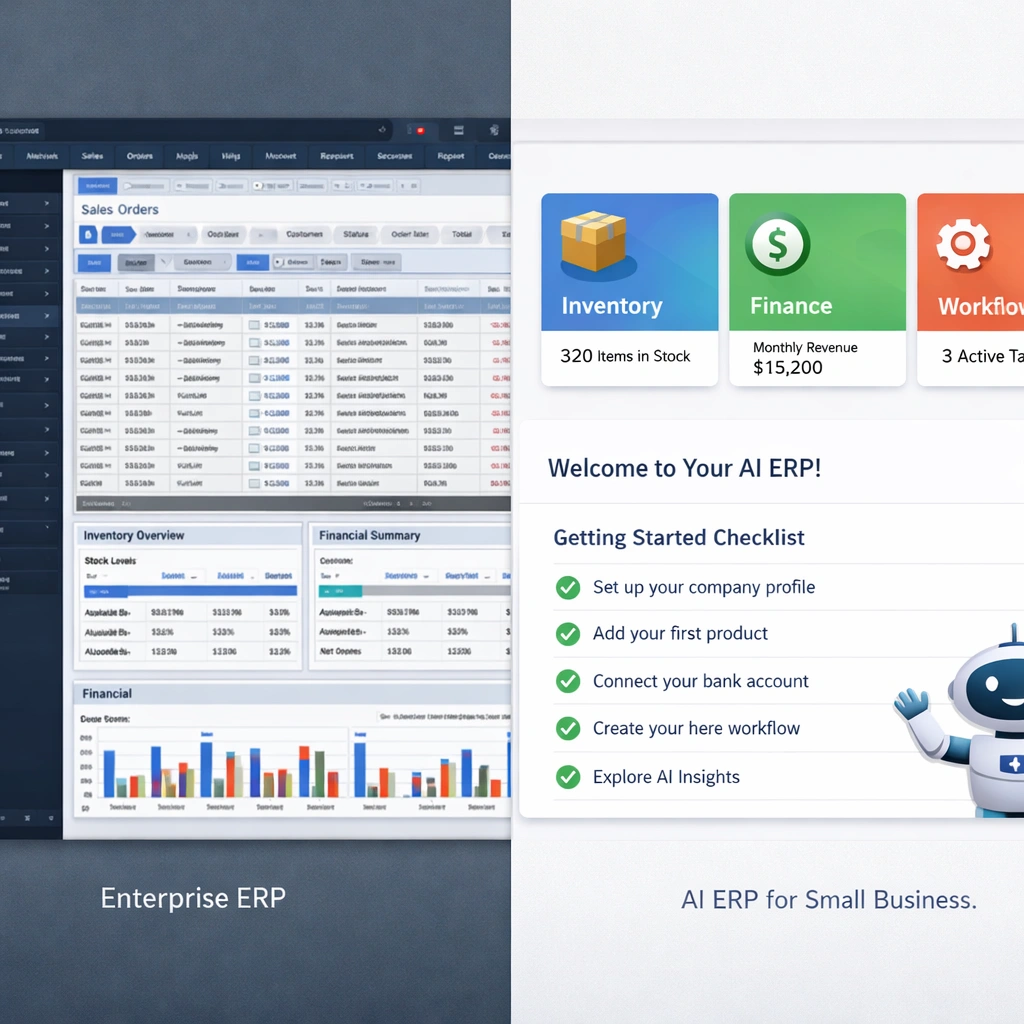
Small business owners don’t have the luxury of a six-month software evaluation process. You need a platform that works, integrates with what you already have, and doesn’t require a dedicated IT team to keep it running. The problem is that most ERP vendors built their products for enterprise clients and retrofitted a “small business” plan as an afterthought best AI ERP software for small business.
The best AI ERP software for small business in 2026 is different. A new generation of platforms was designed from the ground up with leaner teams in mind faster to deploy, easier to configure, and smart enough to grow with you. This breakdown covers the platforms worth your attention, the features that actually move the needle, and the questions you need to ask before you commit to anything.
Before diving into specific platforms, if you’re still getting clear on what this category of software actually does, what is AI ERP software and why it’s reshaping how entrepreneurs operate gives you the foundation you need.
Why most small businesses pick the wrong ERP platform
The selection process usually goes wrong in one of two directions. Either the business picks an enterprise platform it can’t afford to implement properly, or it picks a lightweight tool that can’t scale past a certain point and requires a full migration eighteen months later.
The best AI ERP software for small business sits in a specific middle ground. It has to be genuinely capable — not a stripped-down version of something bigger — but it also has to be deployable without a team of consultants and a nine-month timeline.
Three things separate the right platforms from the wrong ones for small businesses specifically.
Modular architecture. You should be able to start with the two or three modules your business actually needs right now and add others as you grow. Paying for a full suite on day one when you only need inventory and finance is a common budget drain.
Low-code configuration. Your workflows are specific to your business. The platform needs to let a non-technical operator customize rules, approval chains, and reporting without submitting a development ticket every time something changes.
Transparent onboarding timelines. Any vendor that can’t give you a realistic go-live estimate in the first conversation is either inexperienced with small business implementations or has something to hide about how long the process actually takes.
The platforms worth considering in 2026
Odoo
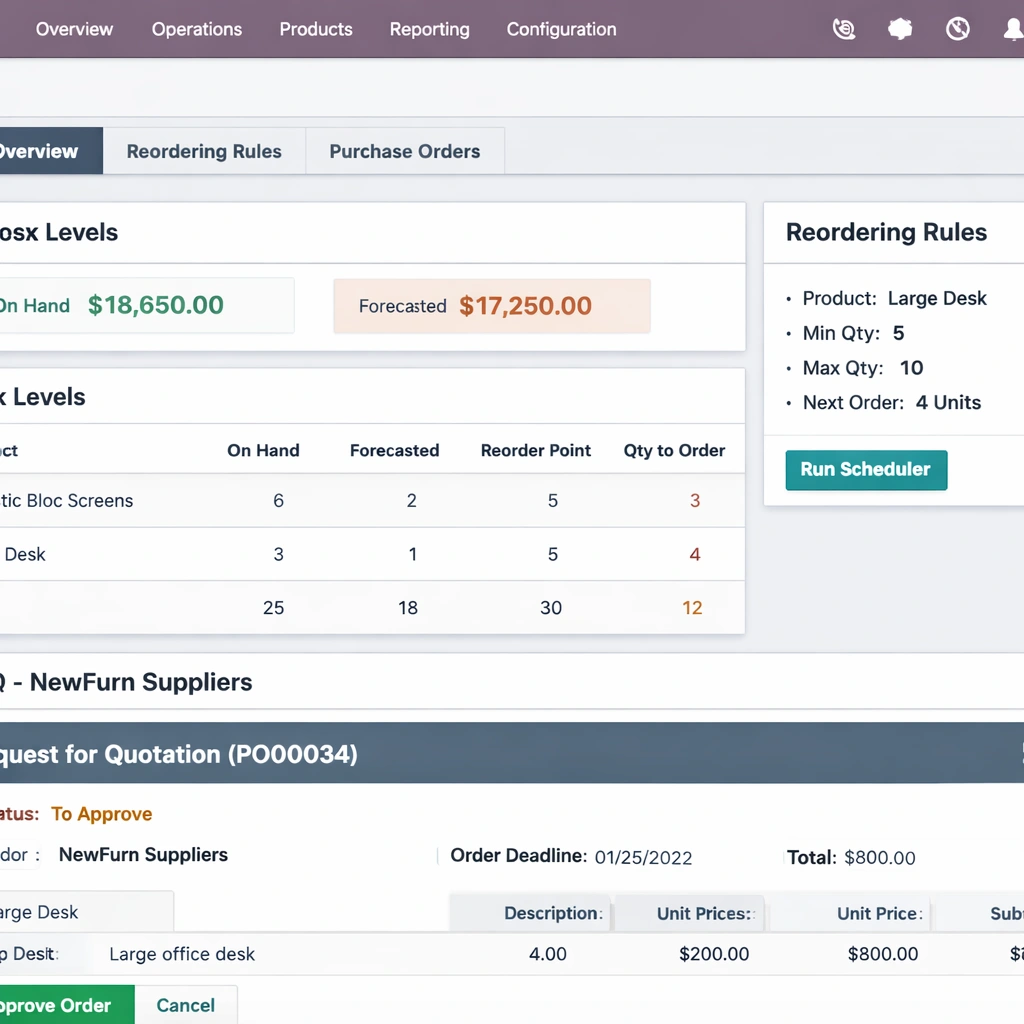
Odoo is one of the most flexible platforms available for small and mid-size businesses. Its modular structure means you can activate only the apps your operation needs — inventory, accounting, CRM, project management — and expand from there. The open-source foundation keeps licensing costs manageable, and the AI features embedded in recent versions handle demand forecasting, automated reordering, and invoice matching without requiring third-party integrations.
The tradeoff is implementation complexity. Odoo rewards businesses that invest time in configuration upfront. If you rush the setup, you’ll spend months correcting it. For entrepreneurs with a clear operational map and some technical patience, it’s one of the best AI ERP software for small business options available at this price point.
SAP Business One
SAP Business One is the small business entry point into the SAP ecosystem. It covers financials, sales, purchasing, inventory, and production in a single platform, and the AI layer — delivered through SAP’s Business Technology Platform — adds predictive analytics and automated reporting on top of the core ERP functionsbest AI ERP software for small business.
It’s not the cheapest option, but for businesses in manufacturing, wholesale distribution, or any industry with complex inventory management needs, the depth of functionality justifies the investment. Implementation typically runs three to four months with a certified partner, and the partner ecosystem is extensive enough that you won’t struggle to find local support.
Acumatica
Acumatica built its pricing model around something unusual for the ERP space — it charges by resource consumption rather than per user. For small businesses with seasonal teams or part-time staff who need system access occasionally, this translates to meaningful cost savings compared to platforms that bill per seat.
The platform covers financials, project accounting, inventory, and CRM, with an AI layer that handles cash flow forecasting, automated dunning, and anomaly detection in financial data. The cloud-native architecture means implementation is faster than on-premise alternatives, and the interface is clean enough that non-technical users adapt quickly.
For a detailed look at how these platforms compare on price, AI ERP software cost — what you’ll actually pay in 2026 breaks down the real numbers across licensing, implementation, and ongoing maintenance.
NetSuite
NetSuite is the platform most small businesses graduate to when they’ve outgrown QuickBooks and basic inventory tools. It handles multi-entity consolidation, advanced revenue recognition, and global compliance — features that matter as soon as a business starts operating across multiple locations or currencies.
The AI capabilities in NetSuite focus heavily on financial intelligence: automated anomaly detection, predictive close processes, and intelligent cash flow planning. For product-based businesses with complex order management needs, the SuiteCommerce integration makes it one of the more complete end-to-end options in this category.
The honest caveat: NetSuite is on the higher end of the pricing spectrum, and the implementation process requires either a strong internal project lead or a reliable implementation partner best AI ERP software for small business.
Features that actually matter for small business operations
Every platform in this category will claim to offer AI-powered everything. The features that genuinely move the needle for small businesses are more specific.
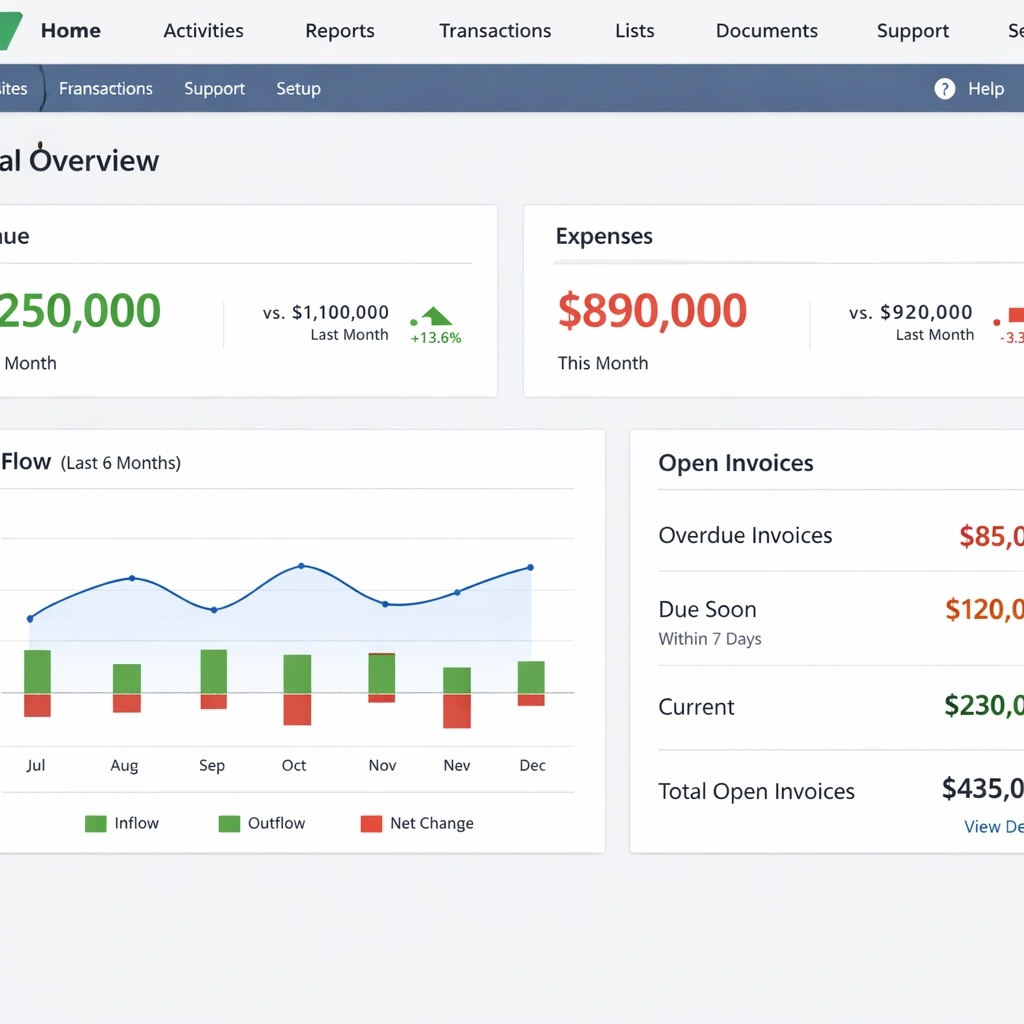
Automated cash flow forecasting. Cash is the constraint that kills small businesses, not revenue. A platform that monitors your receivables, payables, and burn rate in real time — and flags gaps before they become crises — is worth its cost on this feature alone.
Intelligent inventory management. Carrying too much stock ties up cash. Carrying too little costs you sales and customer relationships. The best AI ERP software for small business uses demand signals, supplier lead times, and seasonal patterns to keep your inventory levels dialed in automatically.
Workflow automation with exception handling. The goal isn’t to automate everything — it’s to automate the predictable and escalate the unusual. A good platform runs standard purchase orders, approvals, and reconciliations on autopilot while surfacing only the edge cases that need a human decision.
Real-time reporting without a BI team. Small businesses can’t afford a dedicated analytics function. The platform needs to surface the metrics that matter — margin by product, cash conversion cycle, fulfillment rate — in a format that a non-analyst can read and act on.
If you want to go deeper on specific capabilities, AI ERP software features that eliminate your most painful workflows covers each of these in detail with practical examples.
How to evaluate platforms without wasting three months
The fastest way to narrow your options is to run a structured pilot before you commit to a full implementation. Most platforms in this category offer a trial period or a sandbox environment. Use it with real data from your most operationally complex month — not a clean sample dataset.
During the pilot, test three things specifically. First, how long it takes a non-technical team member to complete a task they currently do manually. Second, how the system handles an exception — a supplier who ships the wrong quantity, an invoice that doesn’t match the purchase order. Third, how the reporting tools answer a question you actually need to answer, not a demo question the vendor prepared for.
The answers to those three tests will tell you more about platform fit than any sales presentation.
Conclusion
The best AI ERP software for small business in 2026 isn’t the most feature-rich platform or the one with the biggest marketing budget. It’s the one your team will actually use, configured around the workflows that matter most to your specific operation.
Odoo, SAP Business One, Acumatica, and NetSuite each serve different types of small businesses well. The right choice depends on your industry, your team’s technical comfort level, your growth trajectory, and your implementation budget. Get clear on those four variables before you start any vendor conversation, and the decision becomes significantly less complicated.