
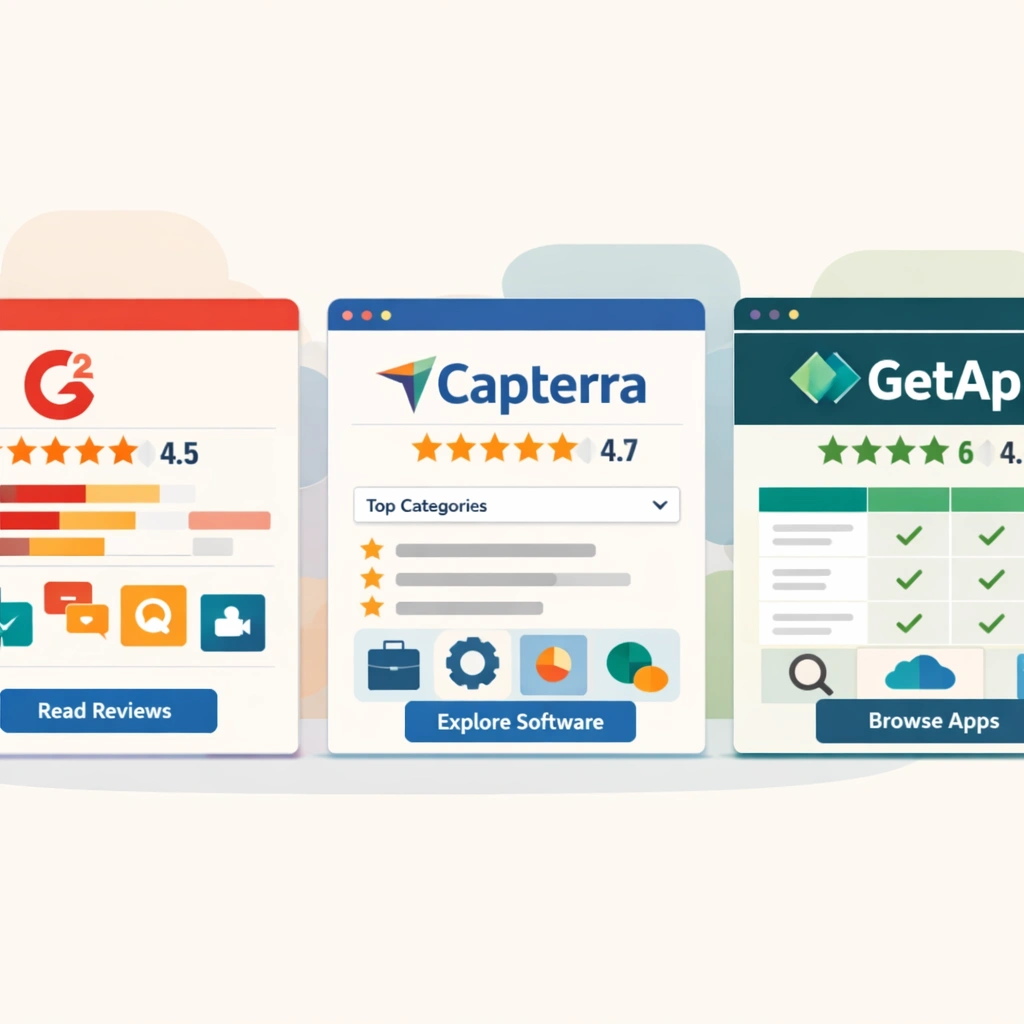
If your SaaS product is not showing up on G2, Capterra, or GetApp, you are invisible during the most important moment of the B2B buying process — the moment a buyer is actively shortlisting tools and deciding who gets a demo.
This is not a hypothetical risk. Most B2B software buyers consult at least one review platform before engaging a vendor. They use these directories to validate that your product actually works, to compare you against competitors on neutral ground, and to decide whether you are worth their time. By the time they reach your website, the shortlist decision is often already made.
SaaS review platforms are no longer a marketing nice-to-have. For any company selling software to businesses, they are core pipeline infrastructure — and most SaaS teams manage them poorly, inconsistently, or not at all.
This guide covers everything you need to build a review platform presence that generates real leads: what these platforms are, how to choose between them, how to collect reviews without burning customer goodwill, how to optimize your listings for conversion, and how to evaluate paid visibility when you’re ready to accelerate.
What SaaS review platforms are and why they control your pipeline
The term “SaaS review platform” covers a specific type of directory: third-party sites where verified software users leave structured feedback about products they have used in a professional context. The three that dominate B2B software research are G2, Capterra, and GetApp.
These are not simple listing directories. Each platform has its own ranking algorithm, its own buyer audience, and its own trust infrastructure. G2 uses a proprietary satisfaction score called the G2 Score, which weighs review volume, recency, and rating quality to rank products within each category. Capterra, owned by Gartner, blends organic rankings with paid placements and draws heavily from SMB buyers doing early-stage research. GetApp, also part of the Gartner network, targets slightly more technical evaluators and surfaces frequently in comparison-focused search queries.
What makes these platforms influential is not their traffic alone — it is the intent behind that traffic. A buyer landing on a G2 category page is not browsing casually. They have a defined problem, a rough budget, and a deadline. They are building a shortlist. Your listing either makes the cut or it does not.
The mechanics behind that decision — how platforms rank products, what buyers scan first, and what signals trigger trust — are covered in detail in what SaaS review platforms are and how they actually work.
G2 vs Capterra vs GetApp: which platform deserves your attention first
Choosing where to invest your review-building energy is not a trivial decision. Each platform attracts a different buyer profile, operates on a different ranking logic, and rewards a different type of vendor investment. Spreading yourself thin across all three simultaneously is one of the most common mistakes early-stage SaaS companies make — and it usually results in a mediocre presence everywhere instead of a strong presence anywhere.
Here is how the three platforms compare across the dimensions that actually matter for pipeline.
G2: the peer review heavyweight
G2 is the largest independent software review platform by traffic, with over 80 million annual visitors across more than 2,000 software categories. Its buyer audience skews toward mid-market and enterprise teams — operations managers, marketing directors, IT leads — who are evaluating tools with meaningful budgets and multi-stakeholder approval processes.
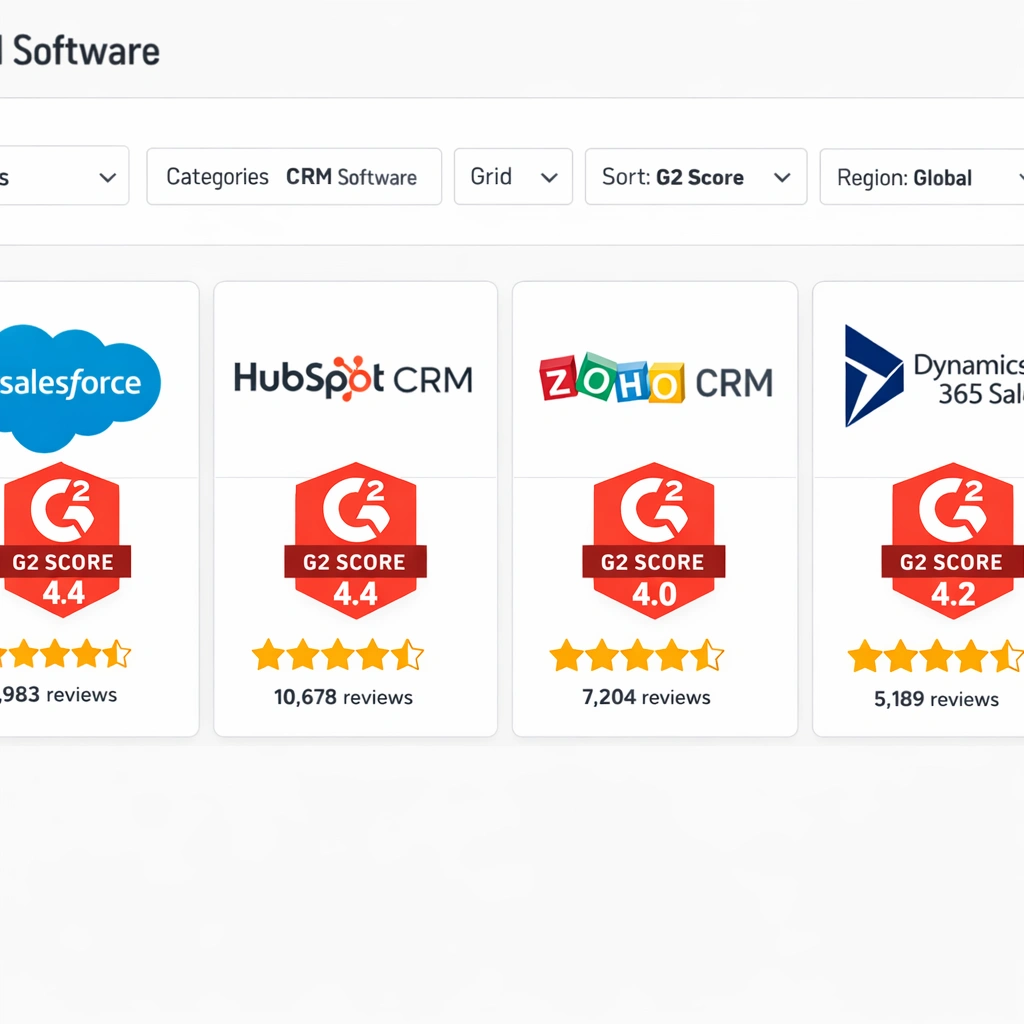
The G2 ranking system is built around the G2 Score, a composite metric that combines satisfaction (derived from review ratings and responses) with market presence (derived from review volume, social reach, and web presence). A product with 50 recent 4.8-star reviews will rank above a product with 200 older 3.9-star reviews in most categories. Recency is weighted heavily — reviews older than 12 months contribute less to your score than fresh ones.
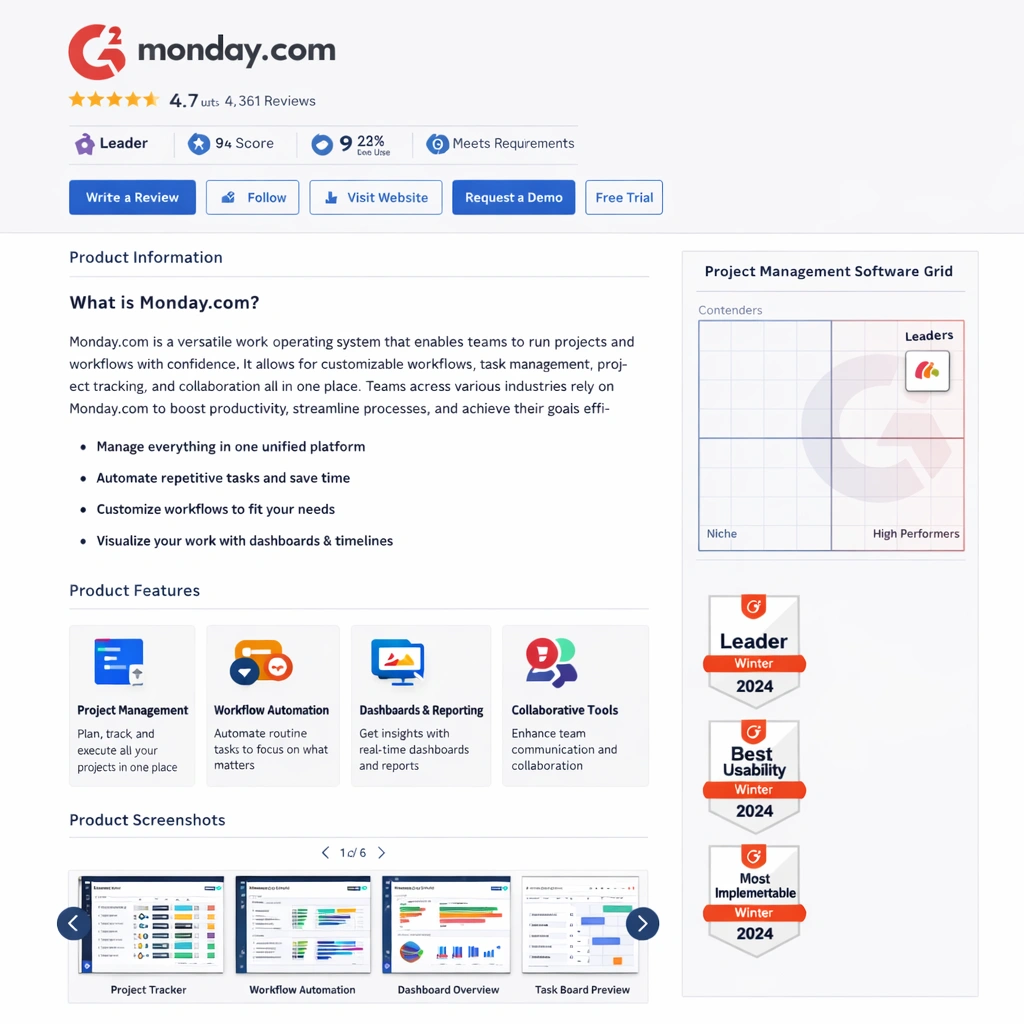
G2’s category grid system is one of its most useful features for buyers and one of its most misunderstood features for vendors. Every category is divided into four quadrants: Leader, High Performer, Contender, and Niche. Your quadrant placement is determined by your G2 Score and your market presence score relative to competitors. Landing in the Leader or High Performer quadrant generates significantly more profile visits than sitting in the Contender or Niche quadrant — even if your raw review count is similar.
For SaaS companies targeting mid-market buyers with a sales-led motion, G2 is typically the highest-priority platform.
Capterra: the SMB search engine
Capterra operates more like a vertical search engine than a pure review platform. Its strength is search visibility — Capterra category pages and comparison articles rank on the first page of Google for thousands of high-intent software queries. A buyer who types “best accounting software for small business” into Google will almost certainly encounter a Capterra result before they reach your website.
The buyer profile on Capterra skews smaller than G2. SMB owners, office managers, and department heads at companies under 200 employees make up a large share of Capterra’s audience. These buyers tend to be earlier in their evaluation process — they may not have a defined shortlist yet, which makes Capterra a strong top-of-funnel discovery channel.
Capterra’s organic ranking is influenced by review recency and volume, but paid placement plays a more visible role here than on G2. Sponsored listings sit at the top of every category page with a clear badge, and vendors who invest in cost-per-click advertising get consistent top-of-page visibility regardless of their organic ranking. For companies in competitive categories, the line between organic and paid performance on Capterra is blurrier than on G2.
GetApp: the comparison-stage capture tool
GetApp is the smallest of the three by raw traffic, but it punches above its weight in one specific scenario: the buyer who is already past initial discovery and is now comparing two or three finalists. GetApp surfaces heavily in search queries that include comparison language — X vs Yalternatives to Z,best X for [use case] — which means its traffic tends to arrive with higher purchase intent than early-stage research traffic.
GetApp shares its review database with Capterra. A review submitted on Capterra will often appear on GetApp as well, which means maintaining a strong Capterra presence gives you a simultaneous lift on GetApp without additional effort. For most SaaS companies, GetApp is not a primary investment — it is a secondary benefit of a well-executed Capterra strategy.
How to choose where to start
The right starting platform depends on three variables: your buyer profile, your average contract value, and your current review baseline.
If your buyers are mid-market or enterprise, start with G2. The buyer intent is higher, the sales cycle alignment is better, and the G2 Score system rewards consistent review velocity in a way that compounds over time.
If your buyers are SMB or you are in a category with strong Google search volume, start with Capterra. The organic search distribution alone can generate meaningful discovery traffic before you invest in paid visibility.
If you are starting from zero reviews, the platform choice matters less than the review collection system you build. A strong review velocity — ten to fifteen new reviews per month — will produce results on any platform faster than a perfect platform choice with inconsistent review collection.
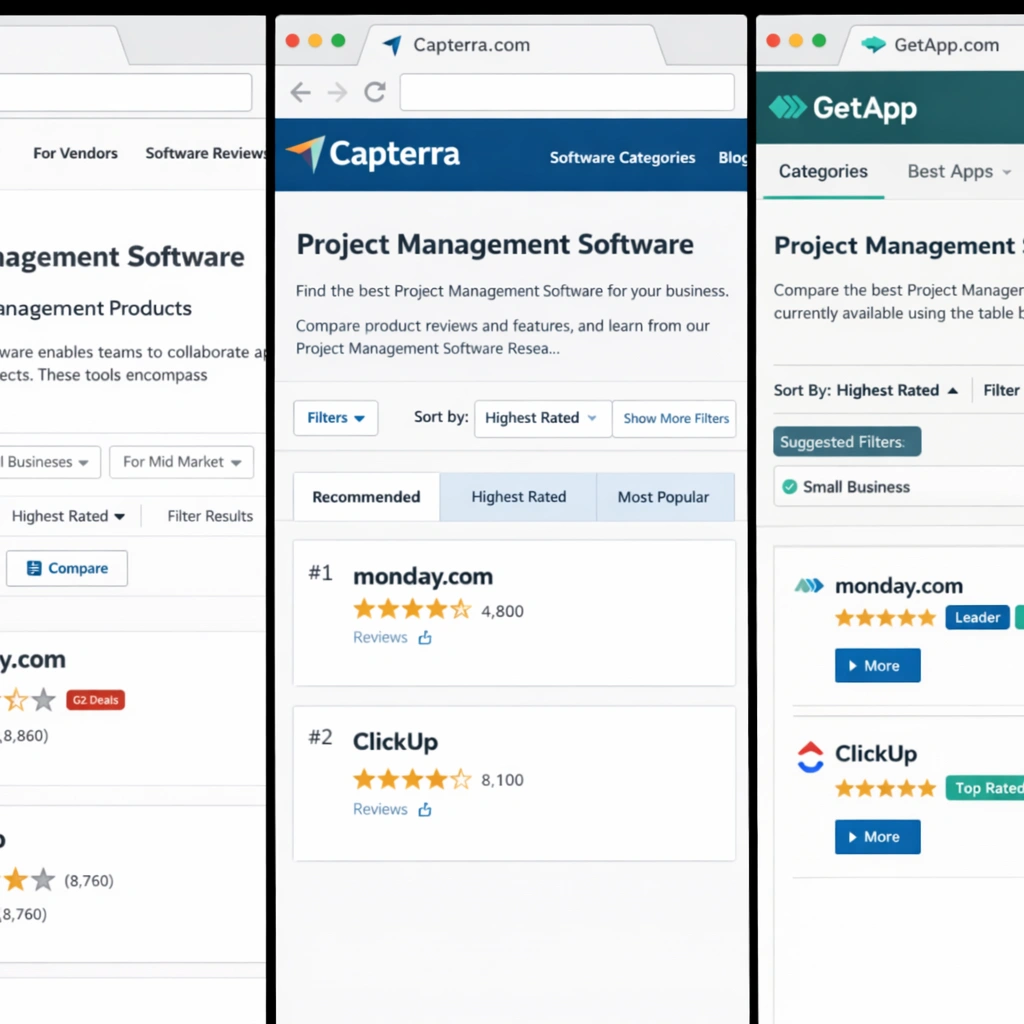
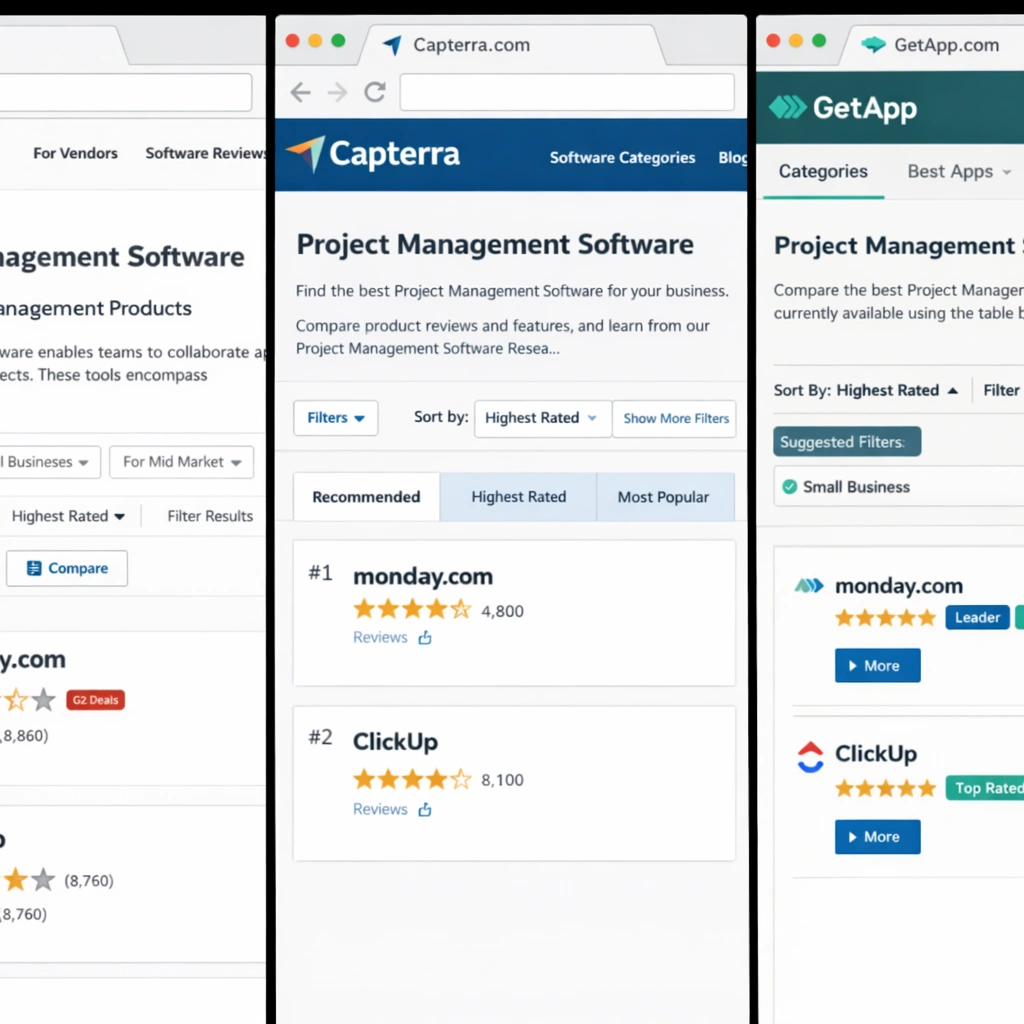
The full side-by-side breakdown of buyer demographics, ranking mechanics, and ROI benchmarks for each platform lives in the G2 vs Capterra vs GetApp comparison.
How to collect reviews at scale without burning customer goodwill
Reviews do not appear because your product is good. They appear because you have a system that asks for them at the right moment, through the right channel, with the right framing. Most SaaS companies either never ask or ask once badly — and then wonder why their review count stagnates while a competitor with an inferior product climbs the G2 rankings.
The gap is almost always process, not product quality.
Why customers don’t leave reviews unprompted
Leaving a review requires a decision, a login, and ten minutes of focused attention. For a satisfied customer, none of those are painful — but none of them are automatic either. A happy user will not open G2 on their own and search for your product to leave you five stars. They have their own job to do.
The vendors who accumulate reviews consistently are not the ones with the happiest customers. They are the ones who make the ask easy, timely, and low-friction. That distinction is the entire foundation of a review collection system.
The timing window that most teams miss
Timing is the single highest-leverage variable in review collection. Ask too early — before a customer has experienced meaningful value — and they have nothing real to say. Ask too late — after the initial enthusiasm has faded — and you are competing with inertia.
The highest-conversion timing window sits between the moment a customer achieves their first significant outcome with your product and the moment that outcome becomes routine. This is sometimes called the “success moment” — when a user completes their first successful campaign, closes their first deal using your CRM, or processes their first payroll without errors.
In practical terms, this window typically opens between 30 and 90 days after onboarding for most SaaS products. The exact timing depends on your activation benchmarks. If you track product usage data, the trigger is not a date — it is a behavior. A customer who has logged in twelve times in the past month and completed a core workflow is a better review candidate than a customer who signed up 60 days ago but has only logged in twice.
The three-channel ask sequence that works
A single email asking for a review converts poorly. A sequenced, multi-touch approach — delivered across channels that feel natural for your product — converts at two to four times the rate of a one-time blast.
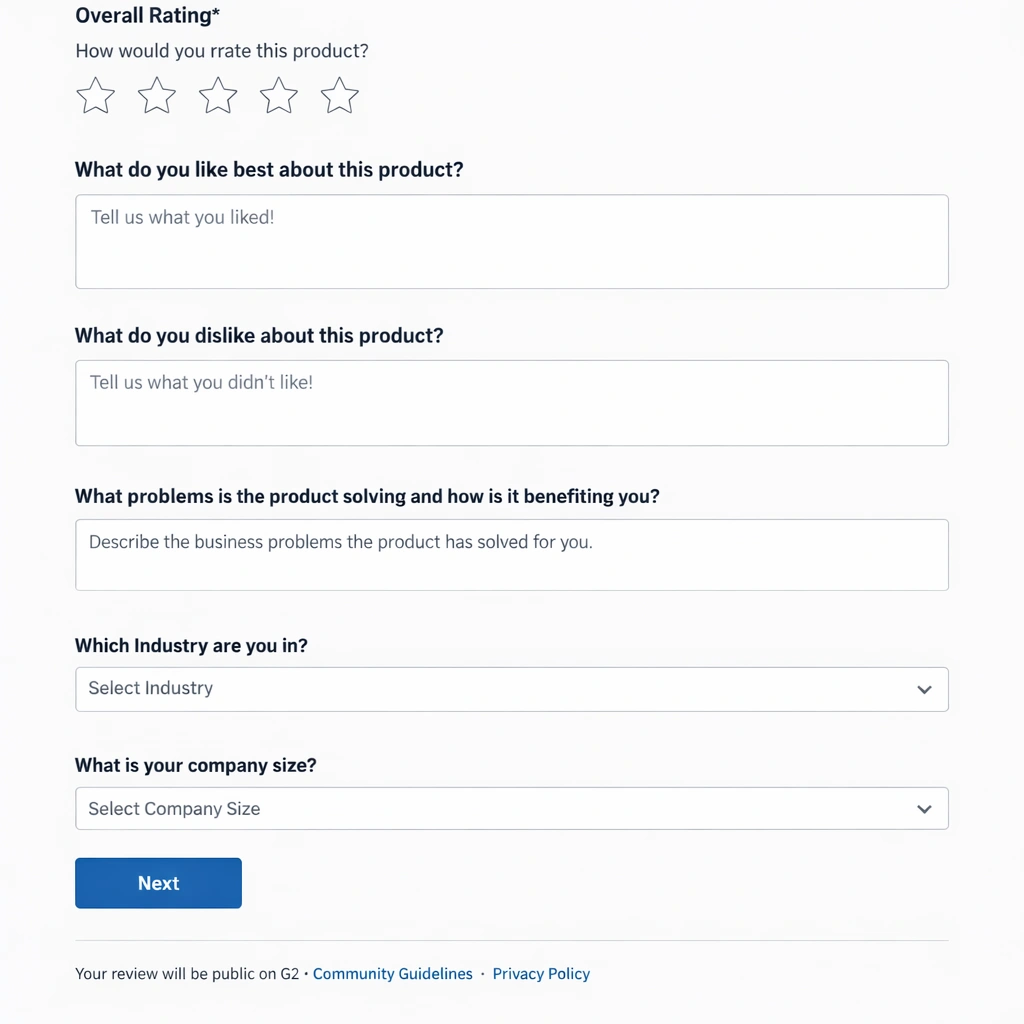
Channel 1: In-app prompt at the success moment. The highest-converting ask happens inside your product, at the exact moment a customer completes a meaningful action. A small, non-intrusive modal or banner — “You just completed your first [outcome]. Would you share your experience on G2?” with a direct link to your G2 review form — captures intent while the positive emotion is fresh. Keep the copy short and the friction minimal. One click to the review form, no login wall in between.
Channel 2: Direct email from a named person. Automated emails from a company address convert poorly. Emails that appear to come from a customer success manager or founder convert significantly better. The email should be short — three to four sentences — reference something specific about the customer’s use case, and include a single clear call to action with a direct link. Generic templates are easy to spot and easy to ignore.
Channel 3: Follow-up at renewal or expansion. The moment a customer renews their subscription or upgrades their plan is a strong secondary window. They have just made an active decision that your product is worth keeping. That decision is a natural prompt for a review ask — frame it as “since you’ve decided to continue, would you help others in your position make the same decision?”
How to handle the incentive question
G2, Capterra, and GetApp all permit vendors to offer incentives for leaving a review — gift cards, charitable donations, account credits — as long as the incentive is not conditional on a positive rating. The review must be honest; the incentive is for the act of reviewing, not for the content.
Incentives work. A $10 Amazon gift card or a $10 donation to a charity of the reviewer’s choice can lift response rates meaningfully, particularly for users who are satisfied but not motivated enough to act without a nudge. The key is disclosure — the platforms require that incentivized reviews are labeled as such, and most handle this automatically when you run an incentivized campaign through their official review generation programs.
What does not work is incentivizing only satisfied customers, pressuring customers to leave positive reviews, or making the incentive contingent on a specific rating. Beyond violating platform terms, these tactics produce a review profile that looks artificially inflated — buyers are sophisticated enough to notice when a product has 200 five-star reviews and zero critical feedback, and it reduces rather than builds trust.
Building review velocity into your customer success motion
One-time campaigns generate review spikes. Systematic review velocity — a steady stream of new reviews every month — requires review collection to be embedded in your customer success process, not bolted on as a quarterly marketing campaign.
The practical implementation looks like this. Every customer success manager has a personal review ask as part of their 60-day check-in call agenda. Every automated onboarding sequence includes a review prompt at the success milestone. Every NPS survey that returns a score of 8 or above automatically triggers a follow-up email with a review link. Every renewal confirmation email includes a one-line ask.
None of these individual touchpoints generates a flood of reviews. Together, they produce a consistent baseline of new reviews every month that compounds into a ranking advantage over competitors who run campaigns twice a year.
The detailed mechanics of this system — including outreach templates, timing triggers, and how to handle customers who never respond — are covered in how to get reviews on G2 without annoying your users.
How to optimize your listings for conversion once the reviews are in
Getting reviews onto your profile is step one. Getting those reviews to produce pipeline is step two — and most SaaS companies stop at step one.
A profile with 40 reviews and a half-completed listing converts at a fraction of what the same 40 reviews would produce on a fully optimized profile. The difference is not the number of stars. It is everything surrounding the stars — the copy, the screenshots, the category placement, the competitive positioning, and the response behavior that buyers observe when they read through your page.
Treating your review platform profiles as landing pages — with the same attention to conversion rate that you give your website — is what separates vendors who generate pipeline from review platforms and vendors who simply exist on them.
The profile elements buyers actually read
Eye-tracking studies on B2B software comparison pages consistently show the same pattern. Buyers scan the star rating and review count first, then jump to the most recent reviews, then read the product description, then look at screenshots. Pricing and feature lists come last.
That sequence has direct implications for where you invest your optimization effort.
The “about” section is your conversion copy. Most vendors write their G2 and Capterra descriptions the same way they write press releases — full of product jargon, feature lists, and superlatives that say nothing specific. Buyers skip these instantly. A high-converting description leads with the problem the product solves, names the buyer it is built for, and uses plain language that mirrors how your customers describe their own pain. One tight paragraph outperforms four bloated ones every time.
Screenshots are your silent sales team. A buyer who cannot visualize your product interface before booking a demo has a much higher friction threshold to convert. Screenshots should show your product doing something meaningful — a dashboard with real data, a workflow in progress, a report that answers a question buyers care about. Avoid generic loading screens, empty states, or settings pages. Show the product at its best moment, doing the job it is hired to do.
The review highlights you feature matter. G2 and Capterra both allow vendors to pin or highlight specific reviews at the top of their profile. Most vendors ignore this feature. The reviews you surface first should address the most common objections in your sales process — not just the most enthusiastic praise. A review that says “we switched from [competitor] and the migration took two hours” is more conversion-valuable than a review that says “great product, highly recommend.”
Category placement is a ranking decision, not a labeling decision
Which category you list under on G2 or Capterra determines which buyers find you, which competitors you appear alongside, and what ranking your review volume earns you.
Many SaaS products could legitimately fit in three or four categories. The instinct is to list in all of them. The smarter move is to identify the one or two categories where your review count relative to competitors gives you the best ranking position, and concentrate your presence there first.
A product ranked fifth in a category with 200 listed tools gets meaningful traffic. The same product ranked forty-fifth in a larger, more competitive category gets almost none — even with the same review count. Category selection is a competitive positioning decision, and it deserves the same analysis you would give a keyword targeting decision in paid search.
To evaluate category fit, look at the number of reviews the top-ranked products in each category have accumulated. If the category leader has 2,000 reviews and you have 35, that category will not produce meaningful traffic for years. If the category leader has 180 reviews and you have 35, you are three to four months of consistent review collection away from a top-ten ranking.
Responding to reviews as a conversion lever
Most vendors respond to reviews sporadically, if at all. The ones who respond to every review — including critical ones — quietly build a trust signal that compounds over time.
Buyers read review responses. A vendor who responds thoughtfully to a negative review demonstrates accountability, transparency, and customer focus in a way that no marketing copy can replicate. A vendor who never responds looks absent — like a company that collects testimonials for social proof but does not actually engage with customer feedback.
The mechanics of a good review response are simple. For positive reviews: acknowledge the specific outcome the customer mentioned, add one sentence of genuine context, and thank them without sounding like a template. For critical reviews: acknowledge the issue without being defensive, describe what has been done or is being done to address it, and invite the reviewer to continue the conversation directly. Do not argue. Do not explain away the problem. Take ownership and show that the feedback was heard.
Response time matters too. A review response posted within 48 hours signals an active, attentive team. A response posted six months later signals that someone ran a quarterly audit and checked a box.
The competitive intelligence layer most vendors ignore
Your review platform profiles are not just a pipeline channel — they are a window into your competitive landscape that most SaaS teams never look through.
Every competitor profile on G2 and Capterra shows you exactly what their customers love, what frustrates them, and what problems drove them to switch. Reading through the one and two-star reviews on your top competitor’s profile will surface the objections your sales team should be addressing, the features your roadmap should be prioritizing, and the messaging angles your marketing should be testing.
This is not a one-time exercise. Setting a monthly reminder to read the ten most recent reviews on your top two or three competitor profiles takes 30 minutes and produces a quality of competitive intelligence that most paid research tools cannot match.
The full optimization checklist — covering profile copy, screenshot strategy, category selection, review response templates, and the G2 grid positioning levers — is in how to optimize your G2 profile and stop losing deals silently.
When and how to use paid visibility to accelerate your review platform results
Organic review platform presence is the foundation. Paid visibility is the accelerant — but only when the foundation is already solid enough to convert the traffic it receives.
Most SaaS companies approach paid visibility on review platforms in one of two wrong ways. They either ignore it entirely and leave pipeline on the table in competitive categories, or they turn it on before their profile is ready and burn budget sending buyers to a listing that loses them on arrival. The right approach is sequential: build the organic floor first, then use paid to multiply what is already working.
What paid visibility actually buys you on each platform
The paid products available on G2, Capterra, and GetApp are structurally different, and understanding those differences determines which one deserves your budget first.
Capterra and GetApp operate on a cost-per-click model. You bid for sponsored placement at the top of category search results pages. Every time a buyer clicks through to your profile or your website, you pay. The barrier to entry is low — you can test with a modest daily budget and get meaningful data within two to three weeks. The feedback loop is fast and the attribution, while imperfect, is more direct than most other B2B channels.
G2 monetizes through a different stack. Enhanced profile features, category sponsorship slots, and — most valuably for companies with a sales-led motion — buyer intent data. G2’s intent data tells you which companies are actively researching your category right now, which allows your sales team to reach out to in-market buyers before those buyers have even engaged a competitor. This is a fundamentally different product from a CPC ad. It is a prospecting signal, not a traffic driver, and its ROI is measured in pipeline influenced rather than clicks generated.
For early-stage SaaS companies with limited budgets and a product-led or self-serve motion, Capterra’s CPC model is the more accessible starting point. For companies with a sales team and mid-market or enterprise targets, G2’s intent data is often the higher-leverage investment.
The profile floor you must clear before spending
Paid traffic sent to an unprepared profile does not convert — it evaporates. Before activating any paid visibility, your profile needs to clear a minimum threshold on every dimension that buyers evaluate in the first 30 seconds of landing on your listing.
At minimum, your profile needs 15 to 20 published reviews with an average rating above 4.0, a complete product description written in plain language that leads with buyer outcomes, at least five to eight product screenshots showing the interface in meaningful use, accurate pricing information, and visible vendor responses to recent reviews.
A buyer who clicks a sponsored result and lands on a profile with three reviews, a missing description, and no screenshots will leave in under 30 seconds. You paid for that click. The problem was never the ad — it was the destination it pointed to
How to structure a first Capterra campaign
Start with a single category — the one that most closely matches how your buyers describe their problem, not how you describe your product. These are frequently different. A buyer who needs to manage client deliverables does not search “collaborative work management platform.” They search “project management software for agencies.”
Run a modest daily budget for the first two to three weeks — enough to generate at least five to ten clicks per day. Track three numbers and only three numbers in the early phase: clicks, profile visits, and trial signups or demo requests that originate from Capterra. Add UTM parameters to your Capterra profile URL so every visit from the platform is tagged correctly in your analytics.
After two to three weeks, calculate your cost per qualified lead — not your cost per click. A $14 average CPC sounds expensive until you discover that one in six profile visitors converts to a trial and one in four trials converts to a paying customer. The same $14 CPC sounds reasonable or expensive depending entirely on your average contract value and conversion rates downstream.
Resist the temptation to expand to multiple categories before you have proven the model in one. Category expansion on Capterra follows the same logic as geographic expansion in paid search — prove it works in one market, then scale.
G2’s intent data and when it makes sense
G2 Buyer Intent is a product that surfaces company-level signals — not individual contacts, but company domains — showing which organizations are actively researching your G2 category. When a buyer at a target company visits your category page, compares your profile to a competitor, or reads reviews in your space, G2 registers that activity and surfaces the company name to you.
This is valuable in a specific context: you have a sales team that can act on the signal quickly, your average contract value justifies the cost of the G2 platform package required to access intent data, and your sales team has a credible outreach sequence that can reach out to an in-market buyer without sounding like a cold call.
The framing matters enormously. “I saw you were researching [category] tools” is not a strong opener — buyers know it signals surveillance-style tracking and it creates friction. The more effective approach is to use the intent signal to prioritize outreach timing rather than to reference the signal directly. Your sales team reaches out with a relevant, value-first message at a moment when the buyer is already in an active research mindset. The timing does the heavy lifting, not the reference to the data source.
For companies earlier in their journey — under $1M ARR, no dedicated sales team, or a primarily product-led motion — G2’s intent data is not the right first investment. Build the organic review presence first, test Capterra CPC second, and revisit G2’s paid stack when the sales infrastructure is in place to act on the signals it generates.
Measuring return across both paid and organic
Attribution on review platforms is messier than on Google Ads because the buyer journey is rarely linear. A buyer discovers you on Capterra, leaves to research three competitors, comes back to your website directly four days later, and signs up for a trial without any Capterra touchpoint in the final session. Last-click attribution gives Capterra zero credit. The reality is more nuanced.
The most useful measurement frame for review platform ROI is influenced pipeline — how many deals in a given period had at least one review platform touchpoint in the buyer journey, regardless of whether it was the last touchpoint. Most CRMs can surface this with a simple UTM-based filter across all touchpoints, not just the final one.
Pair that with self-reported attribution. Ask every new trial signup or demo request how they first heard about you. The self-reported answer and the analytics data will frequently disagree — and both are telling you something real. Buyers remember the moment they first trusted you, which is often a review platform, even when their last click came from somewhere else.
The complete framework for running Capterra ads profitably — including bidding strategy, category selection, profile optimization for paid traffic, and the ROI benchmarks that indicate a healthy campaign — is in Capterra ads for SaaS: are they worth your budget in 2026.
Conclusion
SaaS review platforms are not a side project. For any company selling software to businesses, G2, Capterra, and GetApp are now embedded in the buying process at the exact moment a prospect decides whether you deserve a spot on their shortlist. That moment happens before your sales team gets involved, before your website gets a chance to convert, and before your outbound sequence lands in anyone’s inbox.
The companies that win on these platforms share one characteristic: they treat review platform presence as a system, not a campaign. They collect reviews consistently rather than in bursts. They optimize their profiles the way they optimize landing pages. They respond to every review, including the critical ones. They track the channel with the same rigor they apply to paid search. And when they activate paid visibility, they do it on top of an organic foundation that is already converting — not as a substitute for one.
The gap between a profile that generates pipeline and one that sits dormant is almost never review quality. It is review velocity, profile completeness, and the consistency of the team managing the channel over time.
None of this requires a large budget or a dedicated headcount. It requires a repeatable process and the discipline to run it every month rather than revisiting it once a year when someone notices a competitor climbing the rankings.
The five sections of this guide each represent a lever you can pull independently — but they compound fastest when you pull them together. Understanding the platforms comes first. Choosing where to focus comes second. Building a review collection system comes third. Optimizing the profile for conversion comes fourth. Paid visibility comes last, as the multiplier on everything you have already built.
Start where you are. Pick the one lever that is furthest from where it needs to be and move it. The infrastructure compounds quietly, and six months from now the gap between you and a competitor who started today will be difficult to close.