

Most business owners hear ERP and picture expensive software that only Fortune 500 companies can afford. That assumption is costing them. Understanding what is SAP ERP a fully integrated platform that connects finance, operations, HR, and supply chain into one system is the first step toward making smarter infrastructure decisions. If you’ve been managing your business across disconnected tools, the complete guide to SAP ERP system and what it does for modern businesses breaks down exactly where those gaps are costing you money. This page focuses on the core question: what SAP ERP actually is, and whether your business is ready for it.
The problem with running a business on disconnected tools
Picture this. Your finance team is on QuickBooks. Your warehouse runs on a spreadsheet. HR uses a separate payroll platform. Sales lives in a CRM that talks to nothing else. Every week, someone manually exports data from one system and imports it into another. Errors stack up. Decisions get made on outdated numbers.
This is not a workflow problem. It is an infrastructure problem. And it is exactly the gap that what is SAP ERP answers at its core.
SAP ERP, which stands for Systems, Applications, and Products in Enterprise Resource Planning, is a centralized business management platform developed by SAP SE, a German multinational software company founded in 1972. The platform connects every major function of a business accounting, procurement, manufacturing, logistics, HR, and sales into a single unified system where data flows in real time across departments.
When your warehouse updates inventory, your finance dashboard reflects it immediately. When HR processes a new hire, payroll adjusts automatically. That level of integration is what separates SAP ERP from the patchwork of tools most growing businesses rely on.
How SAP ERP actually works
At its foundation, SAP ERP operates on a centralized database. Every department within a company — finance, procurement, HR, production, sales — inputs and retrieves data from that single source. There is no duplication, no version conflicts, and no waiting for another team to send over a report.
The platform is built around modules, each dedicated to a specific business function. A company does not have to activate every module at once. Most start with the core financial and operational modules, then expand as the business grows. This modularity is one of the reasons SAP has remained the dominant ERP vendor globally for over two decades.
SAP ERP runs on a three-tier architecture:
Presentation layer — the user interface your employees interact with daily, whether on desktop or mobile.
Application layer — the logic engine that processes business rules, workflows, and transactions.
Database layer — the central repository where all business data is stored and retrieved in real time.
This structure means the system scales cleanly. A company with 50 employees using SAP today can grow to 5,000 without rebuilding its infrastructure from scratch.
What is SAP ERP built for: the industries and business types it serves best
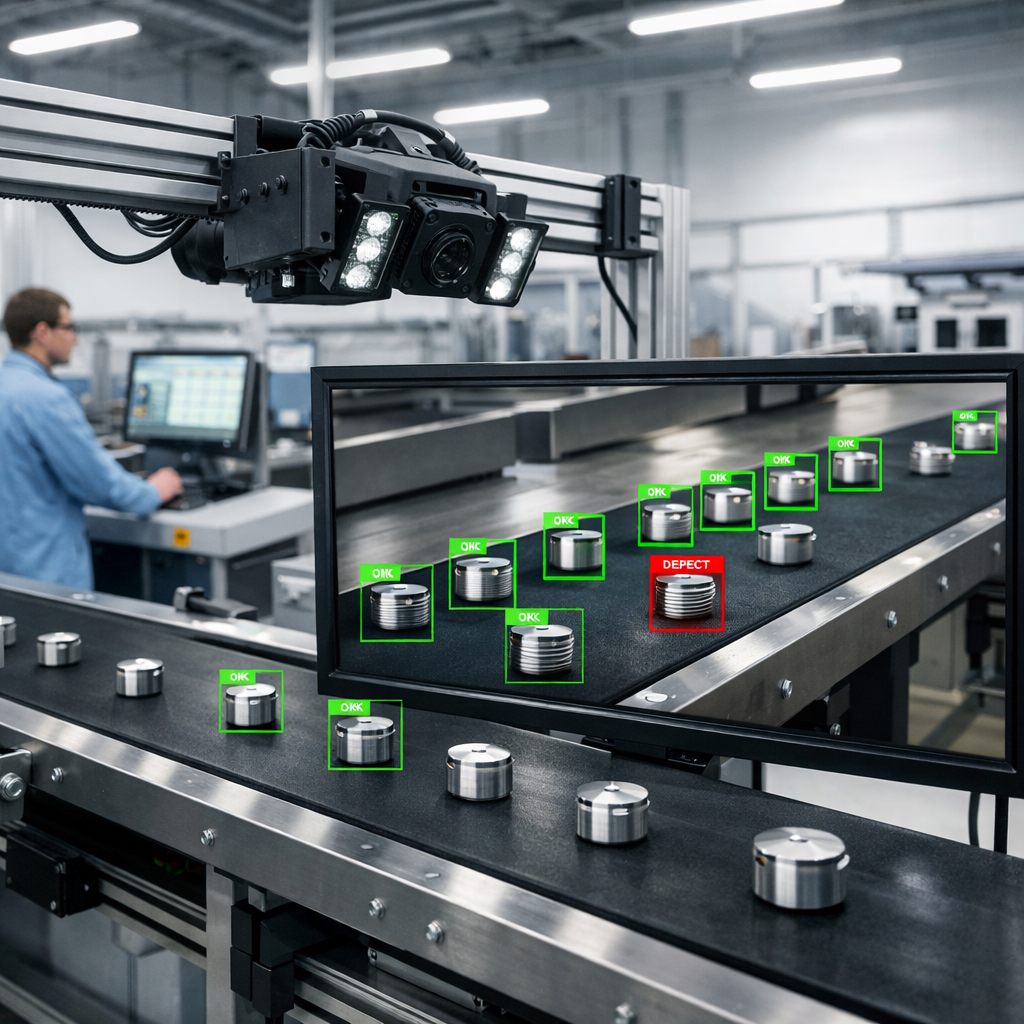
what is SAP ERP? SAP was not designed as a one-size-fits-all tool. It was engineered for complexity. Businesses that operate across multiple locations, manage large inventories, process high transaction volumes, or operate in regulated industries tend to get the highest return from SAP ERP.
The industries where SAP ERP delivers the most measurable impact include:
Manufacturing — production planning, quality management, and shop floor control all run through SAP with real-time visibility.
Retail and distribution — inventory tracking, supplier management, and demand forecasting operate from a single dashboard.
Healthcare — patient billing, compliance reporting, and procurement connect without manual reconciliation.
Financial services — multi-currency accounting, regulatory compliance, and risk management are built into the core modules.
Construction and engineering — project costing, asset management, and subcontractor billing are handled natively.
Small businesses with simple, linear operations may find SAP over-engineered for their current needs. But for any company managing complexity across departments, geographies, or supply chains, understanding what is SAP ERP becomes a strategic necessity rather than a technical curiosity.
If you are evaluating which parts of SAP apply to your specific operations, the breakdown of SAP ERP modules and which ones your business actually needs gives you a practical starting point.
Why businesses are switching to SAP ERP right now
The decision to move to SAP is rarely impulsive. It usually follows a breaking point — a quarter where financial reporting took three weeks, a product recall that could not be traced back through the supply chain, or a compliance audit that revealed data scattered across a dozen systems.
There are three primary drivers pushing businesses toward SAP ERP adoption today.
Operational fragmentation is getting expensive. As companies scale, the cost of maintaining integrations between disconnected tools compounds. Staff spend hours reconciling data instead of analyzing it. Errors in one system cascade into problems across three others.
Real-time decision-making is now a competitive requirement. Businesses that wait 48 hours for a consolidated report are already behind. SAP ERP delivers live dashboards across every function, meaning leadership acts on current data rather than historical summaries.
Compliance and audit pressure is increasing. Regulatory requirements across finance, HR, and data privacy demand traceable, auditable records. SAP ERP maintains a complete transaction log across every module, making compliance reporting faster and cleaner.
what is SAP ERP ? The switch is not painless. SAP ERP implementation, the structured process of configuring and deploying the platform across your business, requires planning, resources, and organizational alignment. The full SAP ERP implementation roadmap that vendors rarely share upfront covers what that process actually looks like and where most projects go wrong.

SAP ERP vs basic accounting or project management software
A common misconception is that SAP ERP is simply a more powerful version of tools like QuickBooks, Xero, or Asana. It is not. Those tools solve isolated problems. SAP ERP solves the connectivity between all of them.
QuickBooks tracks your expenses. SAP ERP connects those expenses to the purchase order that triggered them, the vendor contract it falls under, the budget line it belongs to, and the financial report it feeds into — automatically.
Asana manages tasks. SAP ERP manages the resources, costs, timelines, and deliverables behind those tasks, and connects them to payroll, procurement, and client invoicing in the same system.
This distinction matters because businesses often try to solve an integration problem by adding another integration tool. That approach creates more complexity, not less. SAP ERP eliminates the integration layer entirely by making every function native.
For businesses weighing SAP against other enterprise platforms, the direct comparison between SAP ERP and its main competitors lays out the differences across the metrics that matter most.
The bottom line on what SAP ERP is
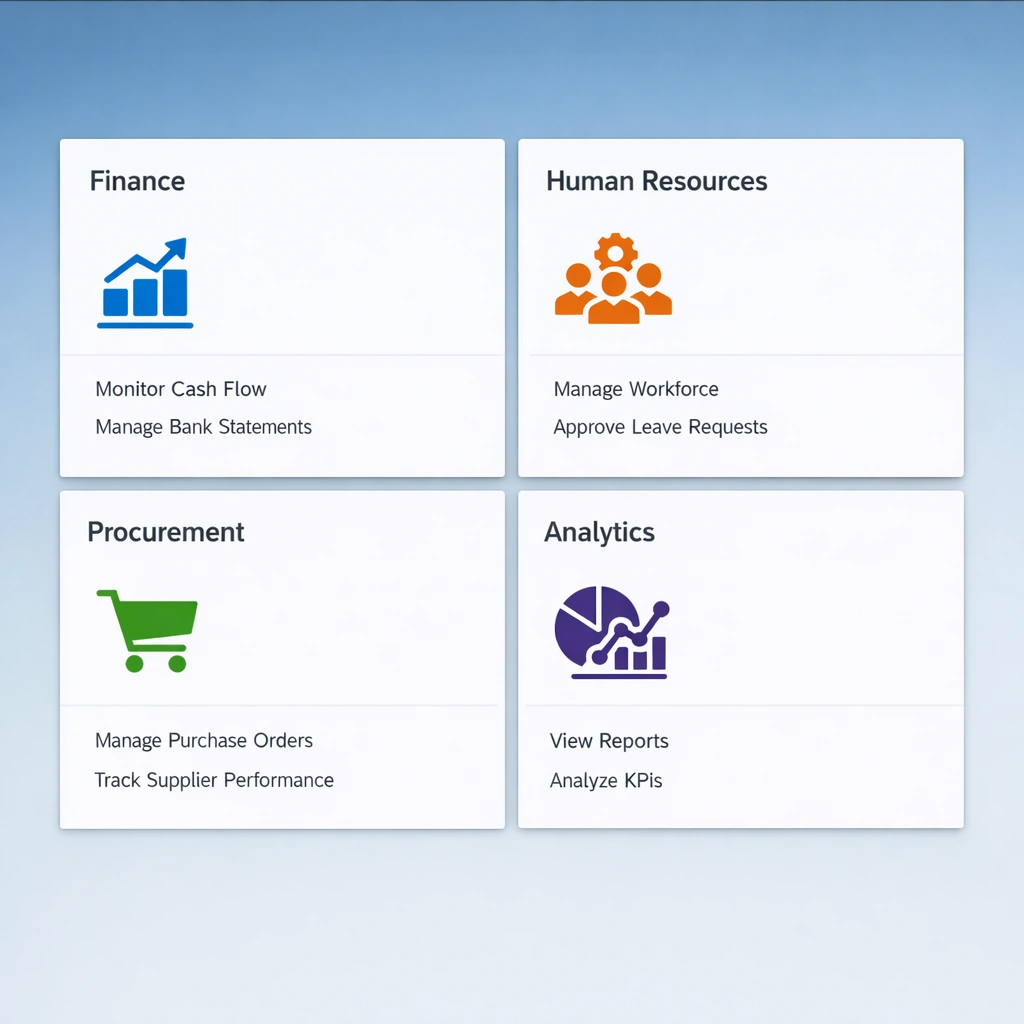
SAP ERP is not software you buy to solve one problem. It is infrastructure you build to run a better business. The companies that get the most from it are the ones that approach it as a strategic investment rather than a technology purchase.
The platform’s core value is simple: one system, one source of truth, zero reconciliation. Every department works from the same data. Every decision gets made with current information. Every process leaves a traceable record.
For entrepreneurs who have reached the point where their current tools are slowing growth rather than supporting it, understanding what is SAP ERP is not an academic exercise. It is the starting point for a more scalable operation.
Conclusion
Running a business on disconnected tools is not a technology problem — it is a growth ceiling. Every manual export, every reconciliation error, and every delayed report is a symptom of infrastructure that has not kept pace with your ambition.
SAP ERP removes that ceiling. It replaces fragmented workflows with a single, connected system where finance, operations, HR, and supply chain all speak the same language and update in real time.
Understanding what SAP ERP is marks the beginning of a larger decision. The platform goes deep, and the path to getting value from it runs through the choices you make before you ever configure a single module — choices about which parts of the system you actually need, what deployment will cost, and how to structure the rollout so it succeeds the first time.
That groundwork is what separates businesses that transform their operations with SAP from the ones that spend a year and a significant budget with little to show for it.