

Most founders sign a contract before they fully understand what they’re paying for. Backend development is the engine behind every app — the databases, servers, and logic that users never see but always depend on what is backend development?
Understanding what is backend development at a structural level saves you from scope creep, budget blowouts, and misaligned expectations. This guide breaks down every layer of backend development services for growing startups so you can evaluate proposals with confidence and build the right team from day one.
What is backend development, exactly?
what is backend development? Backend development refers to everything that happens on the server side of an application — the part users never interact with directly but rely on completely. When a user logs into your app, resets their password, or places an order, the backend is what processes that request, queries the right database, applies the business logic, and sends back a response.
Think of the frontend as the storefront window. The backend is the warehouse, the inventory system, and the staff running everything behind it.
what is backend development ? A backend system typically handles three core responsibilities:
Data storage and retrieval — managing databases where user information, product data, transactions, and content live.
Business logic — the rules that govern how your application behaves. Who can access what. How a discount gets applied. When a notification gets triggered.
Communication — through APIs, application programming interfaces that act as structured messengers between your frontend, your mobile app, third-party tools, and your server.
The core components of backend development services
When a vendor or agency says they offer backend development services, here is what that should concretely include.
Server architecture and infrastructure
This covers how your application is hosted and structured. Whether that means a traditional server setup or a cloud-native architecture on platforms like AWS, Google Cloud, or Azure — the infrastructure layer determines your app’s availability, speed, and ability to handle traffic spikes.
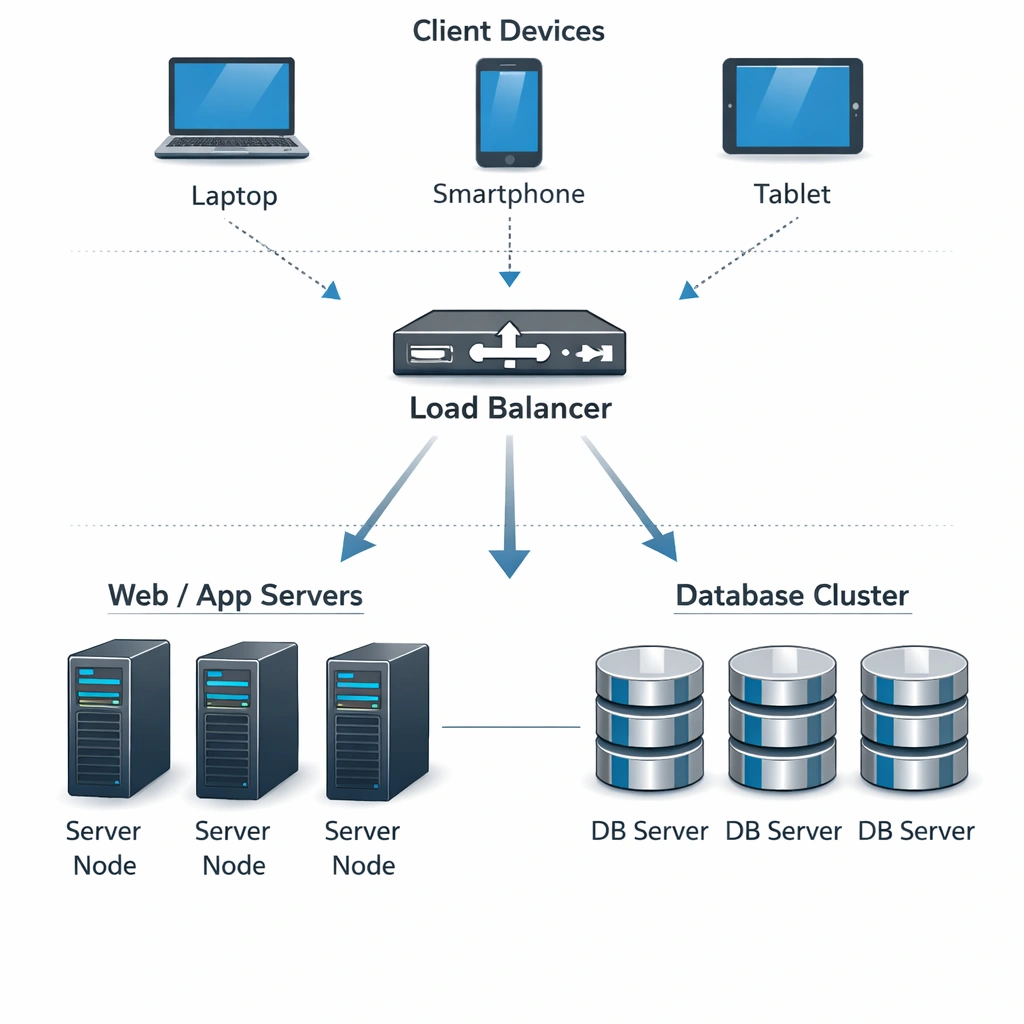
A backend team should be able to explain their infrastructure choices in plain language. If they can’t, that is a risk.
Database design and management
Every application needs a place to store data. Backend developers design and manage that storage layer — choosing the right database type, structuring tables or collections efficiently, and writing queries that retrieve data without slowing your app to a crawl.
There are two broad categories here. Relational databases, like PostgreSQL or MySQL, organize data in structured tables with defined relationships. Non-relational databases, like MongoDB, store data in more flexible formats suited for unstructured or rapidly changing data.
The wrong choice at this stage is expensive to reverse. A solid backend team makes this decision based on your product’s actual data model, not personal preference.
API development and integration
APIs are how your backend talks to the outside world — and to itself. A backend service will typically build a REST or GraphQL API that your frontend consumes, and also integrate your app with third-party services: payment processors, authentication providers, email platforms, analytics tools, and more.
This is where a lot of hidden complexity lives. Integrations that look simple on paper often involve handling edge cases, managing authentication tokens, and writing fallback logic for when external services go down.
Authentication and authorization systems
Authentication confirms who a user is. Authorization controls what they can do. These two systems are foundational to any serious application, and getting them wrong has direct security consequences.
Backend services in this area include building login systems, managing session tokens or JWTs (JSON Web Tokens, a compact method of securely transmitting user identity between systems), implementing OAuth flows for social login, and setting up role-based access control — the layer that decides a regular user cannot access admin-only features.
Background jobs and automation
Not everything in an app happens in real time. Sending a welcome email after signup, generating a monthly invoice, processing an uploaded video, or syncing data overnight — these are background jobs. A backend team designs and manages these automated processes so your app can handle work asynchronously, without making the user wait.
If you are building a SaaS product, this layer becomes critical fast. Churn, billing, and retention workflows all depend on reliable background job infrastructure.
What backend development services do not include
This is where scope misalignments happen most often.
Frontend development — HTML, CSS, JavaScript, and the visual components of your interface are typically not part of a backend engagement unless you hire a full-stack team. Be explicit about this boundary before you sign.
Product design and UX — wireframes, user flows, and interface design are separate disciplines. A backend team builds what your designers specify. They are not responsible for figuring out what to build.
DevOps and ongoing infrastructure management — some agencies include deployment pipelines and server monitoring, others do not. Cloud infrastructure management, security patching, and uptime monitoring may be scoped separately or handed off to a dedicated DevOps provider.
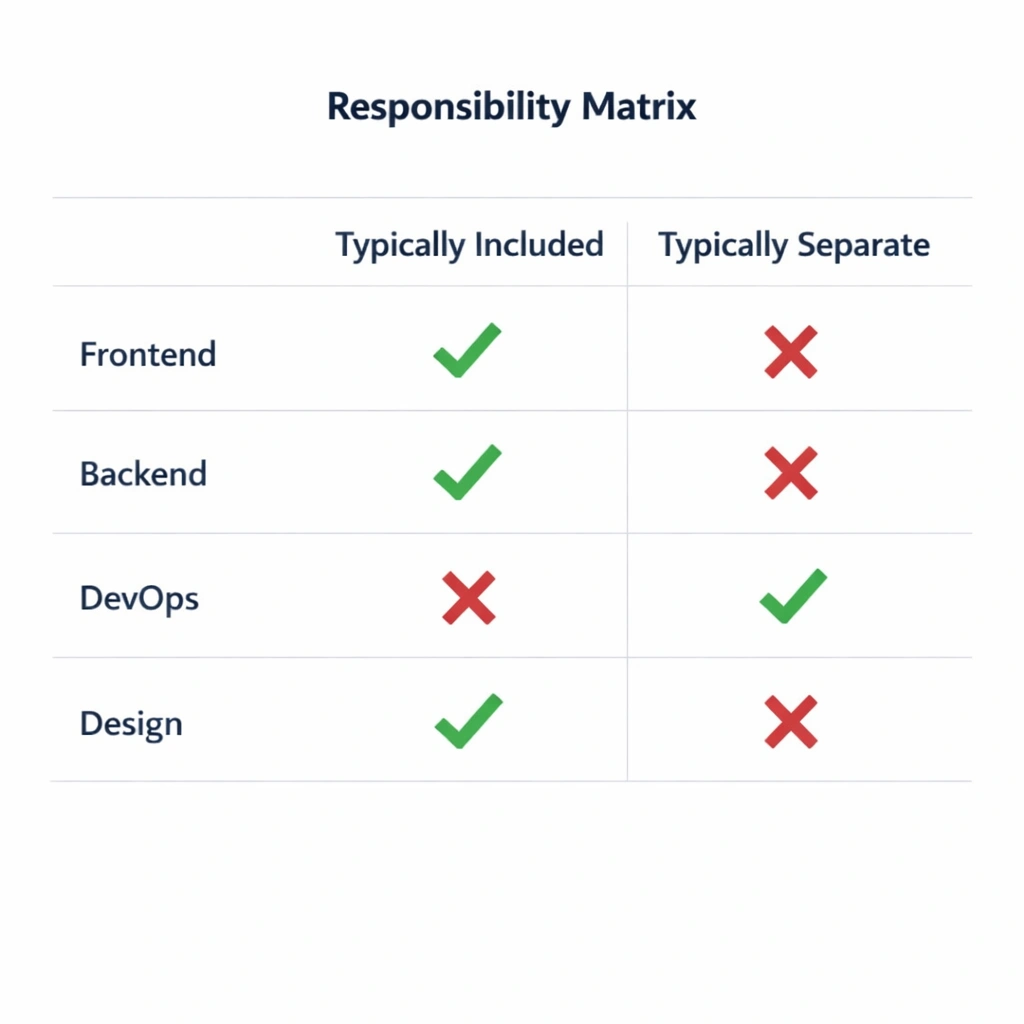
Mobile app development — a backend can serve a mobile app through APIs, but building the iOS or Android app itself is a separate workstream with a separate team.
Understanding these boundaries before you issue a brief protects you from assuming coverage that was never agreed upon.
How backend development fits into your broader product team
Backend development does not exist in isolation. It sits at the intersection of your product roadmap, your infrastructure budget, and your growth timeline.
If you are building a consumer app with unpredictable traffic growth, your backend team needs to plan for horizontal scaling from day one. If you are building an internal business tool with a fixed user base, a lighter architecture may serve you better at a lower cost.
The smartest founders treat backend planning as a strategic conversation, not a technical afterthought. Before you hire anyone, get clear on your expected user volume at launch, your data sensitivity requirements, which third-party integrations are non-negotiable, and your timeline for the first production release.
If you are still weighing whether to build internally or bring in outside help, the breakdown of outsourcing vs. in-house backend development for startups walks through the trade-offs in detail.
For founders who are also starting to evaluate which tools and frameworks their future team should use, the guide to backend technologies worth using in 2026 gives you a clear, stack-by-stack comparison without the noise.
Conclusion
what is backend development? Backend development services cover the infrastructure, data, logic, and communication layers that make your product work at every level. Understanding what is backend development — not just conceptually but operationally — puts you in a far stronger position when briefing vendors, reviewing proposals, or deciding how to structure your technical team.
The scope is broader than most founders expect, and the boundaries matter. Know what you are buying before you buy it.