

Every business gets a bad review eventually. The question is never whether it will happen — it is whether your response will make the situation worse or turn it into a trust signal for every future buyer who reads it. Knowing how to respond to negative reviews with consistency and professionalism is one of the highest-leverage reputation skills an entrepreneur can develop. A well-handled negative review often builds more credibility than a page full of five-star ratings, because it shows buyers how you behave when things go wrong. This skill sits inside our complete guide to amplified reviews, where reputation management and revenue generation are treated as two sides of the same system how to respond to negative reviews.
Why your response matters more than the negative review itself
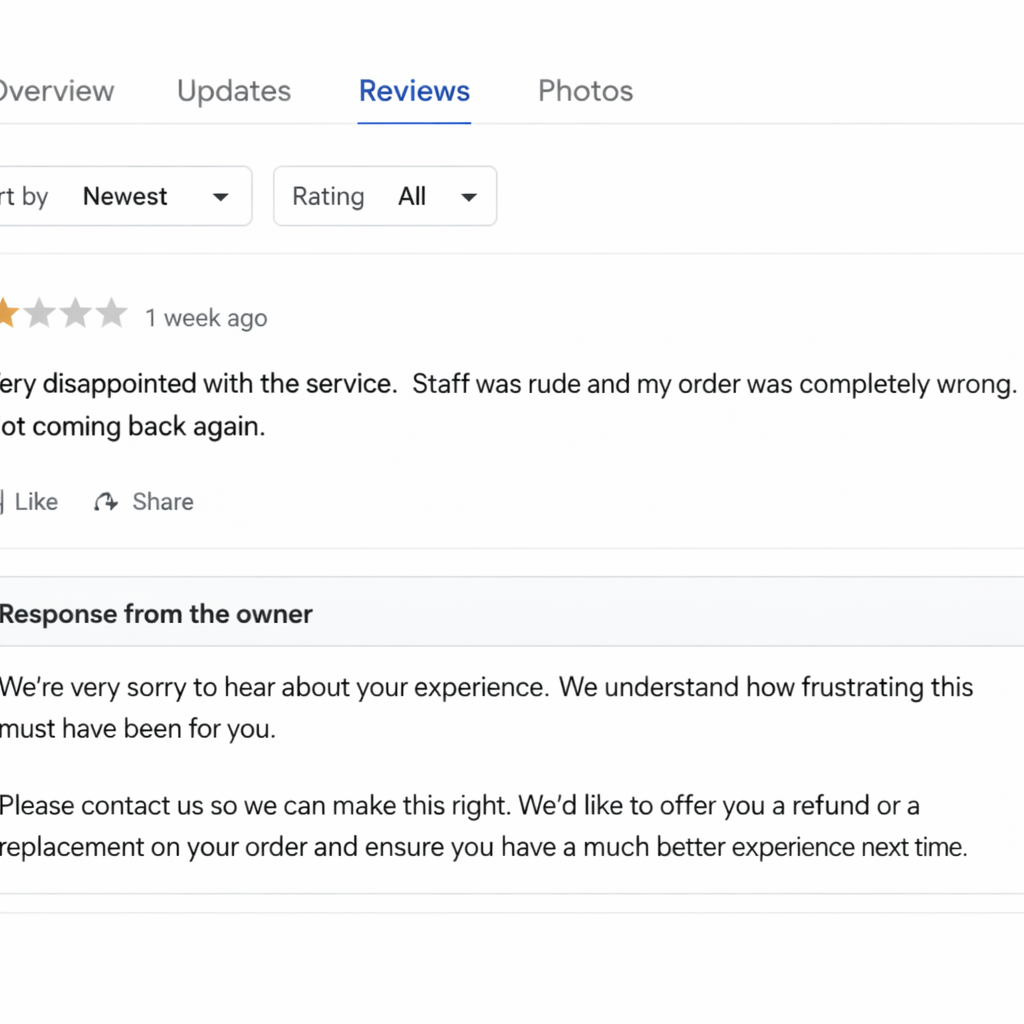
Most entrepreneurs react to negative reviews emotionally. They feel defensive, they delay responding, or they write something that makes the situation worse. This reaction is understandable but strategically costly, because the audience for your response is not the unhappy customer who left the review — it is every future buyer who reads the exchange.
When a potential customer reads a negative review, they are running a mental test. They want to know how your business behaves under pressure. A response that is professional, empathetic, and solution-oriented tells them that your business is accountable and trustworthy. A defensive or dismissive response tells them to go buy from your competitor.
Research consistently shows that buyers are more likely to trust a business with a small number of negative reviews than one with a perfect rating, because a perfect rating feels implausible. What they are actually evaluating is not the negative review itself — it is the quality of your response to it.
How to respond to negative reviews effectively starts with a mindset shift. Stop treating the response as damage control for the reviewer. Start treating it as a trust-building communication to every future buyer in your market how to respond to negative reviews.
The anatomy of a professional review response
A strong review response has four components, and the order matters.
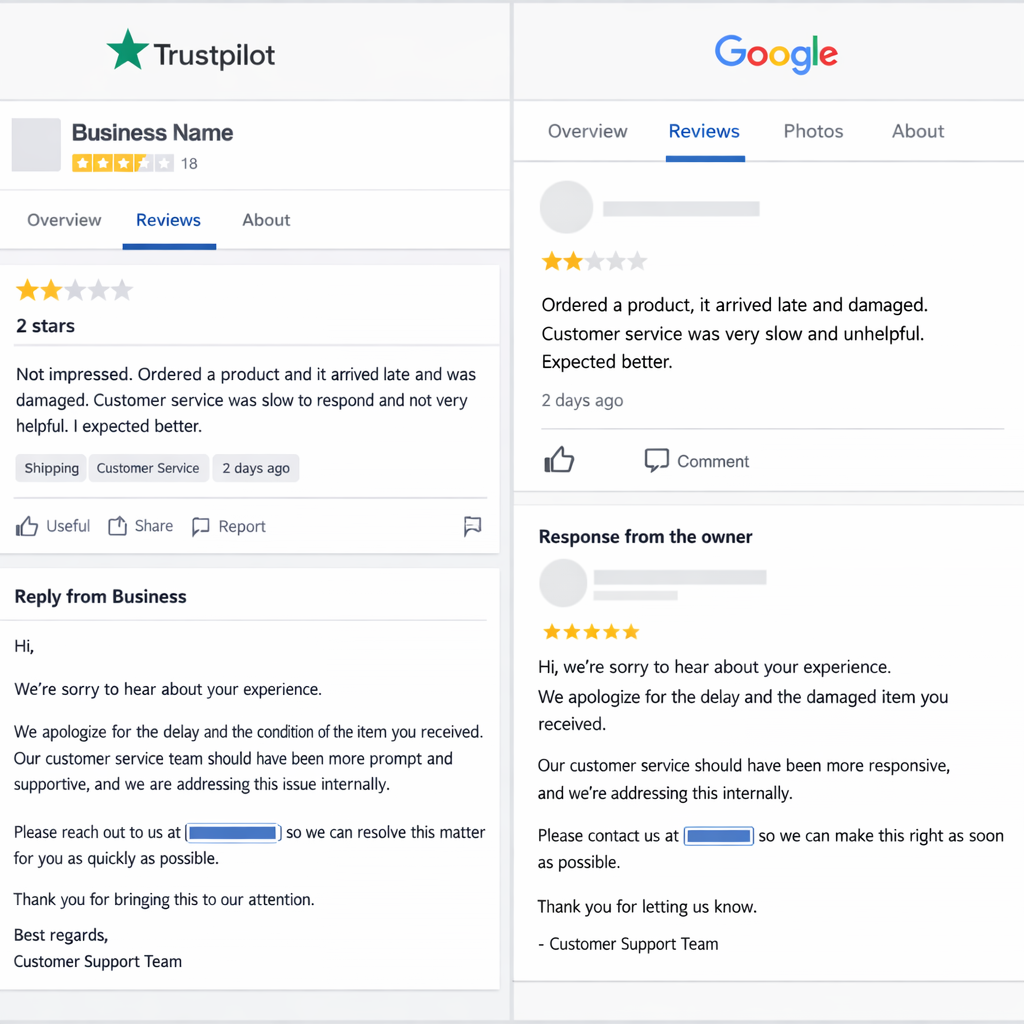
The first is acknowledgment. Start by recognizing the customer’s experience without immediately defending your business. Thank you for taking the time to share this is not a generic pleasantry — it is a signal to every reader that you take feedback seriously. Do not skip this step even when the review feels unfair.
The second is empathy. Validate the frustration without admitting fault for things outside your control. “I understand how frustrating it must have been to experience this” costs you nothing and immediately de-escalates the emotional temperature of the exchange. Buyers reading this response feel reassured that you are reasonable.
The third is a specific response to the issue. This is where most business owners get vague. Do not write “we take all feedback seriously and are always working to improve.” Write something specific to the situation described. If the customer mentioned a slow delivery, address the delivery. If they mentioned a staff interaction, address that directly. Specificity signals that you actually read the review and are not copy-pasting a template how to respond to negative reviews.
The fourth is a resolution path. Invite the customer to continue the conversation through a direct channel — an email address or a phone number. This moves the resolution offline, protects the public record from a back-and-forth argument, and gives the dissatisfied customer a genuine opportunity to feel heard.
Automating the notification side of this process — so you are alerted the moment a negative review appears — gives you the response speed that turns a potential reputation problem into a visible trust signal.
How to respond to negative reviews on Google and Trustpilot
The mechanics of responding differ slightly between platforms, and the strategic context for each response differs too how to respond to negative reviews.
On Google Business Profile, your response appears publicly beneath the review and is indexed by search engines. This means your response is not just visible to people reading your profile — it can appear in search results for your business name. Write every Google response as if it will be the first thing a new prospect reads about how you handle problems. Keep it under 150 words, stay professional, and always end with an invitation to resolve the issue directly.
On Trustpilot, the platform’s community standards are more formal and the audience tends to be more skeptical. Trustpilot buyers are often in a later stage of the decision process — they are validating, not discovering. A weak response on Trustpilot carries more cost than a weak response on Google, because the reader is already close to a purchase decision.
For both platforms, response time matters. A review that sits unanswered for two weeks signals indifference. Aim to respond to every negative review within 24 to 48 hours. This is where building an automated alert system for new reviews pays immediate dividends — you cannot respond quickly to reviews you do not know exist.
Handling false or malicious reviews
Not every negative review reflects a real customer experience. Competitors, disgruntled former employees, and bad-faith actors occasionally leave reviews that are fabricated or deliberately misleading. Knowing how to handle these situations without damaging your own credibility is a distinct skill from responding to genuine negative feedback.
The first step is verification. Before flagging a review as false, check your customer records. A review that feels fabricated may describe a real interaction you are not aware of. Assuming malice before confirming the facts is a mistake that can make a legitimate complaint worse how to respond to negative reviews.
If verification confirms the review is false, use the platform’s official reporting mechanism to flag it. Google and Trustpilot both have processes for reviewing flagged content, though resolution timelines vary. Document your case clearly — include evidence that the reviewer was never a customer, such as the absence of any transaction record matching their name or details how to respond to negative reviews .
While the flag is under review, respond publicly to the review with a calm, factual statement. Do not accuse the reviewer of lying. State clearly that you have no record of this interaction and that you take all feedback seriously, then invite them to contact you directly to resolve any issue. This response is for future buyers — it signals that you are methodical and professional even under unfair pressure.
What you should never do is respond emotionally, threaten legal action publicly, or engage in a public argument. Every word you write in a public review response is a permanent part of your brand’s visible record.
Turning negative feedback into product and service improvements
The most underused value in a negative review is the operational intelligence it contains. Entrepreneurs who treat negative reviews purely as reputation problems miss the fact that a dissatisfied customer just gave them a detailed, unsolicited product audit for free.
Build a simple process for extracting this intelligence. Every month, review all negative feedback received across your platforms. Categorize the complaints by theme — delivery issues, product quality, customer service, pricing expectations, onboarding friction. Look for patterns. One complaint about slow delivery is an outlier. Five complaints about slow delivery in a single month is a process problem.
This monthly review should feed directly into your product and operations roadmap. When a pattern appears in your negative reviews, treat it with the same priority you would give a bug report from your engineering team or a churn signal from your sales data. The customer who left that review was motivated enough to write it publicly — which means there are likely ten more customers who felt the same way and said nothing.
Collecting more reviews consistently increases the volume of this operational feedback, which means your negative review analysis becomes more statistically meaningful over time.
Building a response system that protects your reputation at scale
As your business grows, responding to reviews manually becomes a bottleneck. Building a system that ensures consistent, timely responses at scale requires three components.
The first is an alert infrastructure. Set up notifications for every new review across all your active platforms. Most review management tools, including Bird eye and Podium, offer centralized dashboards that aggregate new reviews from multiple platforms into a single feed. Without this visibility, reviews fall through the cracks.
The second is a response framework. Develop a set of response templates — not scripts to be copied verbatim, but structural frameworks for the most common negative review categories. A template for delivery complaints. A template for product quality issues. A template for service interactions. These frameworks ensure your responses always hit the four components — acknowledgment, empathy, specific response, resolution path — without requiring you to think through the structure from scratch every time.
The third is ownership and accountability. Assign clear responsibility for review responses in your team. A review that everyone is responsible for responding to is a review that nobody responds to. Designate one person or role as the review response owner, set a response time standard, and track compliance monthly.
Once this system is in place, negative reviews stop being reputation threats and start being managed touchpoints. The final step in building a complete reputation strategy is turning all your reviews — positive and negative — into active marketing assets that work for your business at every stage of the funnel.
Conclusion
A negative review handled well is not a liability. It is evidence of accountability — and accountability is one of the most persuasive signals a buyer can observe before making a purchase decision.
The entrepreneurs who master how to respond to negative reviews build a reputation profile that is more credible and more resilient than one built entirely on five-star ratings. Perfect profiles raise suspicion. Profiles that show real feedback, professionally handled, build real trust.
Knowing how to respond to negative reviews is not just about damage control — it is about demonstrating the kind of leadership that converts skeptical buyers into loyal customers.
Respond fast. Respond specifically. Move the resolution offline. And use every piece of negative feedback operational intelligence that makes your product or service harder to criticize next time.
The brands that treat how to respond to negative reviews as a core business skill — not an afterthought — are the ones that win long-term in any competitive market