

Most entrepreneurs stop at collection. They build a solid review profile, feel good about the star rating, and move on. What they miss is that a strong review is not just a reputation signal — it is a piece of conversion copy written by someone your prospectal ready trusts more than you.
The businesses that know how to use customer reviews for marketing do not just display stars — they deploy proof strategically at every stage of the funnel, from cold traffic to closed deals.
There is a measurable difference between a business that collects social proof and one that uses customer reviews for marketing across landing pages, email sequences, ads, and sales conversations.
One feels good. The other generates revenue.
This is the final layer of our complete guide to amplified reviews— the part where you learn exactly how to use customer reviews for marketing in a way that turns reputation into a compounding commercial asset.
Why most businesses waste their best reviews
A five-star review sits on Google. A potential customer visits your website, reads your homepage copy, checks your pricing page, and leaves without converting. That same customer would have converted if they had seen that review at the right moment — but the review never left the platform it was posted on.
This is the most common and most costly mistake in review strategy. Entrepreneurs treat review platforms as the destination when they should treat them as the source. The platform is where the review lives. Your funnel is where it works.
How to use customer reviews for marketing effectively means extracting your best social proof from its original platform and distributing it deliberately across every touchpoint where a prospect makes a decision. Homepage. Pricing page. Email sequence. Ad creative. Sales deck. Each of these is a moment where a relevant, specific review can remove an objection, validate a claim, or tip a hesitant buyer toward a yes.
The reviews you have already collected are an underutilized asset. The work required to deploy them is minimal compared to the conversion impact they produce when placed correctly.
Understanding what makes a review worth amplifying is the foundation — because not every review deserves equal distribution, and knowing which ones to prioritize is the first decision in a review marketing strategy.
How to use customer reviews for marketing on your website
Your website is the highest-leverage placement for customer reviews because it is the one channel you fully control. Unlike a review platform, you decide exactly where social proof appears, in what format, and next to which piece of content or call to action.
Three placements on your website consistently produce the strongest conversion impact.
The first is your homepage hero section or directly below it. A short, specific testimonial from a recognizable customer type — someone who matches the profile of your ideal buyer — placed within the first scroll of your homepage immediately validates your core value proposition. It tells the visitor that someone like them has already made this decision and it paid off.
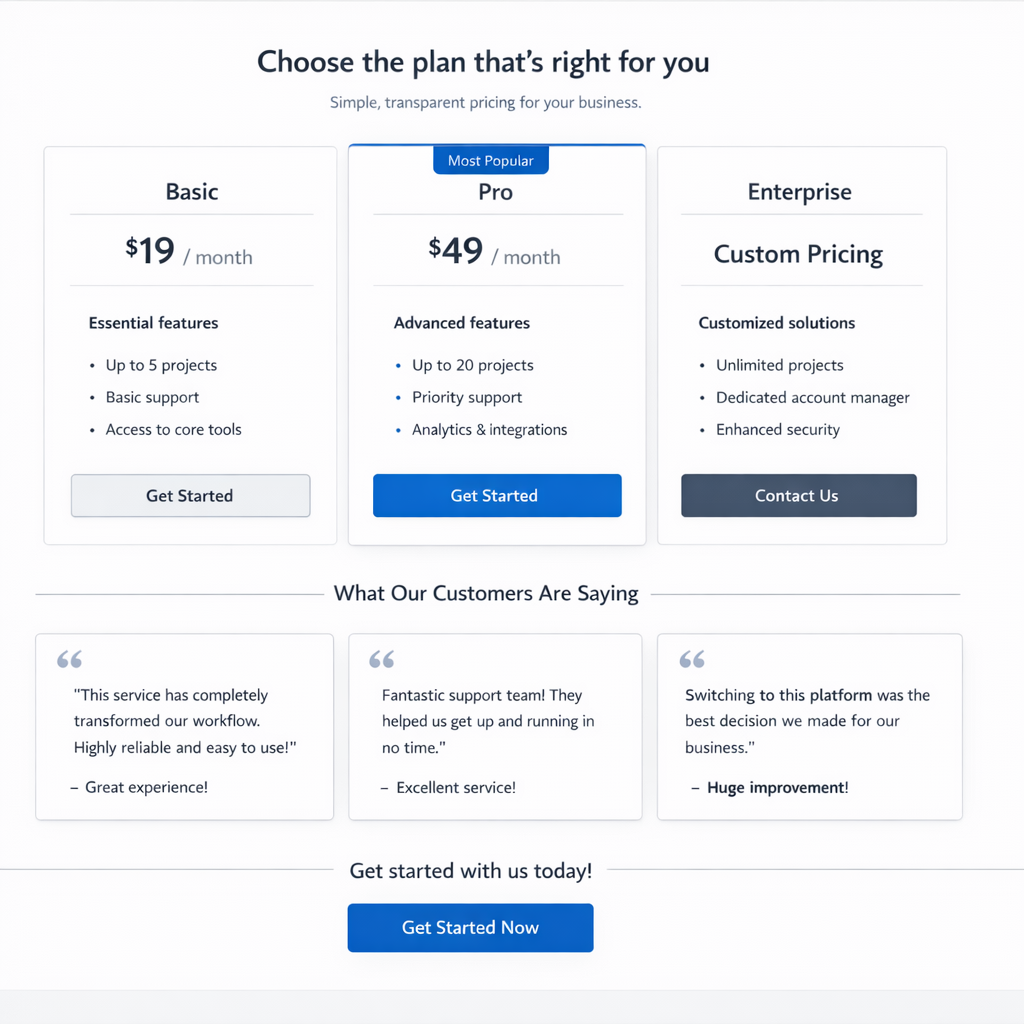
The second is your pricing page. This is the highest-anxiety page on most business websites. The buyer is interested enough to look at pricing, which means the primary barrier to conversion is hesitation, not awareness. A review that speaks directly to value — the ROI was visible within 30 days” or “switching from our previous tool saved us eight hours a week — placed near your pricing tiers addresses that hesitation at exactly the right moment.
The third is your checkout or sign-up flow. Last-second abandonment is driven by doubt. A single strong review placed near your final conversion button gives the buyer social permission to complete the action. They are not alone in this decision — someone else already made it and it worked out.
How to use customer reviews for marketing on your website is ultimately about mapping your best social proof to the moments of highest decision friction in your buyer’s journey.
Embedding social proof into your email marketing funnel
Email is the channel where most entrepreneurs have the most direct access to prospects at every stage of consideration — and it is the channel where review marketing is most consistently underused.
Three points in a standard email funnel benefit most from embedded review content.
The welcome sequence is the first. When a new subscriber joins your list, they are in an evaluation mindset. They want to know if this business is worth their attention. Including one or two specific customer outcomes in your second or third welcome email — not as a brag, but as evidence — accelerates trust faster than any amount of brand storytelling.
The nurture sequence is the second. For longer sales cycles, where a prospect may take weeks or months to convert, periodic emails that feature a detailed customer story or a before-and-after outcome keep the purchase intent alive. These emails should read like case studies, not testimonials — specific problem, specific solution, specific result.
The cart abandonment or trial expiration sequence is the third. This is the moment of highest purchase intent and highest hesitation simultaneously. An email that leads with a review from a customer who almost did not sign up — and is glad they did — speaks directly to the psychology of that moment.
Automating the distribution of review content through these sequences means your social proof is working in your email funnel continuously, not just when you remember to update it manually.

Using reviews in paid advertising and social media
Review content is some of the highest-performing raw material for paid advertising, and it is almost entirely free to produce. A customer who describes a specific result in a review has already written your ad copy — you just need to format it correctly.
For paid social advertising on platforms like Meta or LinkedIn, review-based creative consistently outperforms brand-generated copy because it does not sound like an ad. A quote from a real customer, presented cleanly with a name and context, carries the authenticity that brand messaging cannot manufacture. Test a direct quote from your strongest review against your current best-performing ad creative. The result will tell you more about your buyers than any focus group.
For organic social media, reviews serve two functions simultaneously. They provide a consistent content source that requires no creative ideation — a new review is a new post. And they signal to your audience that real customers are actively engaged with your product or service, which builds credibility through social proof at the awareness stage.
The format matters. Do not screenshot a review and post it as an image. Design it. Put the quote in clean typography, include the reviewer’s first name and relevant context, and brand it consistently with your visual identity. A well-designed review post performs significantly better than a raw screenshot and communicates that your business takes its presentation seriously.
Collecting reviews consistently through a systematic process gives you a continuous supply of fresh content for this channel — which is one of the most underappreciated operational benefits of a strong review collection system.
Reviews as sales enablement tools
Beyond marketing channels, reviews have a direct role in the sales process that most entrepreneurs never fully exploit. A well-curated review library gives your sales team — or you, if you are the sales team — a set of objection-handling tools that are more persuasive than any pitch deck slide.
Build a segmented review library organized by customer type, use case, and objection addressed. When a prospect says we tried something similar before and it did not work, you have a review from a customer who said exactly the same thing before becoming a client. When a prospect questions your pricing relative to a competitor, you have a review that speaks directly to return on investment.
This library does not need to be complicated. A shared document or folder organized by category is sufficient. The discipline is in the curation — regularly reviewing new feedback, identifying which reviews address common sales objections, and making those reviews accessible to whoever handles your sales conversations.
For entrepreneurs running longer B2B sales cycles, a one-page social proof document featuring four to six highly specific reviews — segmented by industry or company size — is one of the most effective pieces of sales collateral you can produce. It costs nothing beyond curation time and it works at the exact moment a prospect is comparing you to alternatives.
Knowing how to handle negative reviews professionally is equally important in the sales context — because a prospect who finds a negative review during due diligence will evaluate your response as part of their decision criteria.
Building a review marketing calendar
The final step in turning reviews into a sustained marketing asset is building a simple calendar that ensures your social proof is refreshed and redistributed consistently throughout the year.
A review marketing calendar does not need to be elaborate. Four quarterly actions are enough to keep your review content working across all channels.
At the start of each quarter, audit your review library. Identify the ten strongest reviews collected in the previous 90 days. Flag which ones address your most common sales objections, which ones come from your most recognizable customer types, and which ones describe the most specific outcomes.
Mid-quarter, update your website placements. Swap in fresher reviews on your homepage, pricing page, and checkout flow. Recency signals relevance — a review from six months ago is less persuasive than one from last month, even if the content is similar.
Toward the end of each quarter, refresh your email sequences. Replace older testimonials in your welcome and nurture flows with the strongest recent reviews from your audit. Update your paid ad creative with new quote-based variations.
And throughout the quarter, maintain a consistent cadence of review-based social media posts — at minimum two per month — to keep social proof visible at the awareness stage of your funnel.
How to use customer reviews for marketing is not a one-time project. It is a recurring discipline that compounds in value as your review library grows and your distribution system matures.
Conclusion
Customer reviews are the most credible marketing asset most businesses already own and consistently fail to deploy. The gap between collecting reviews and using them for marketing is not a resource gap — it is a systems gap.
Build the curation habit. Build the distribution calendar. Format for each channel deliberately. And treat every strong review as a piece of marketing infrastructure that works around the clock without any additional budget.
That is how customer reviews for marketing stop being a passive reputation metric and start being an active revenue driver.