
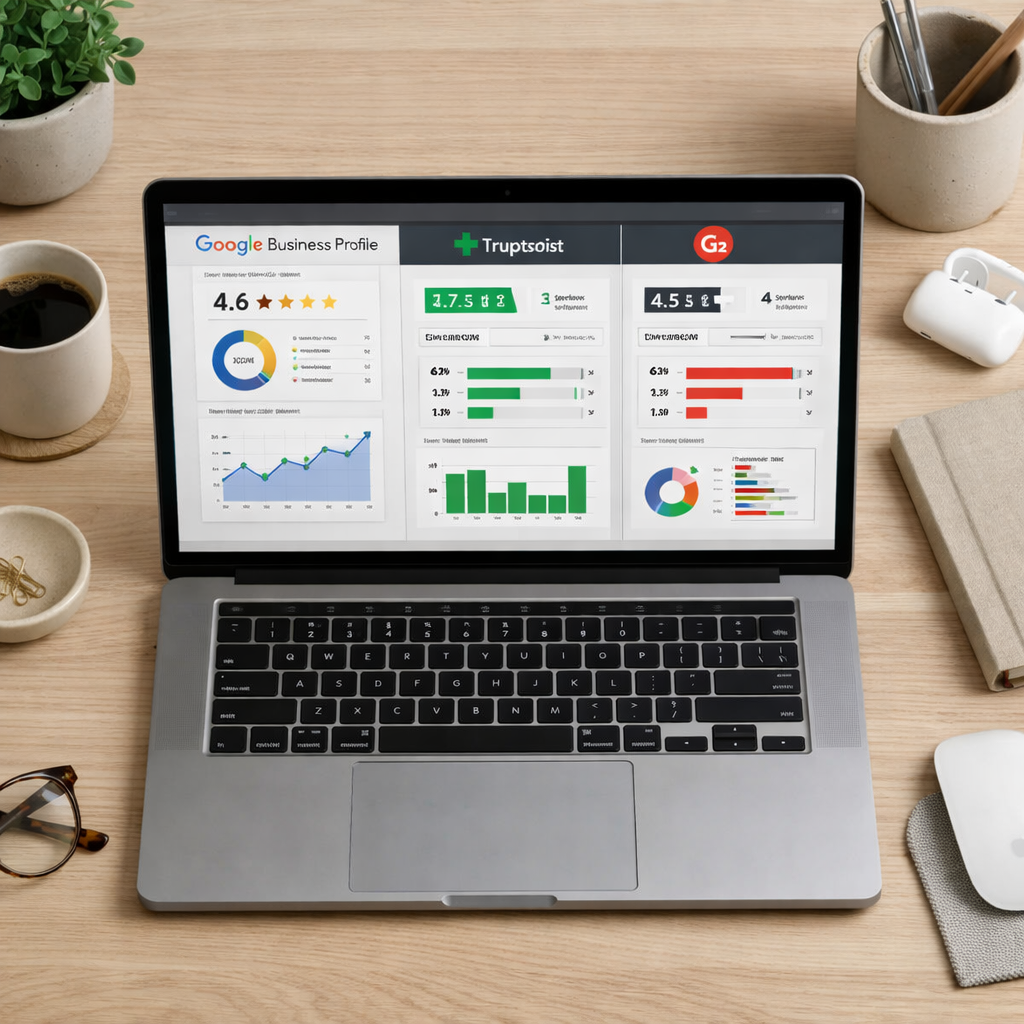
Collecting strong reviews means nothing if they live on a platform your buyers never visit. The best review platforms for small business are not necessarily the most popular ones — they are the ones your specific audience actually checks before making a purchase decision. Platform selection is one of the most underestimated decisions in a review strategy, and getting it wrong means your social proof is working in a vacuum. This choice sits inside a larger system — our complete guide to amplified reviews — where platform distribution is one of five interconnected layers that turn customer feedback into consistent revenue.
Why platform selection determines the reach of your social proof
Most entrepreneurs default to Google because it is familiar. That instinct is not wrong — Google is almost always part of the answer. But it is rarely the complete answer, and for many business types it is not even the most important platform in the mix best review platforms for small business.
The best review platforms for small business owners are determined by one variable above everything else: buyer behavior. Where does your ideal customer go when they are researching a purchase in your category? That is your primary platform. Everything else is secondary.
A local restaurant owner and a B2B SaaS founder have almost nothing in common when it comes to platform priority. The restaurant lives and dies on Google and Yelp. The SaaS founder needs to own G2 and Capterra. Treating these two scenarios identically is one of the most common and costly mistakes in review strategy.
Before you invest time building a presence on any platform, answer two questions. First, where do your last ten customers say they found you or validated their decision to buy? Second, where does your strongest competitor have the most visible review presence? The overlap between those two answers tells you exactly where to focus.
Understanding how to collect reviews efficiently becomes far more actionable once you know which platforms you are collecting for — because the request, the link, and the timing all change depending on the destination.
Google Business Profile — the non-negotiable starting point
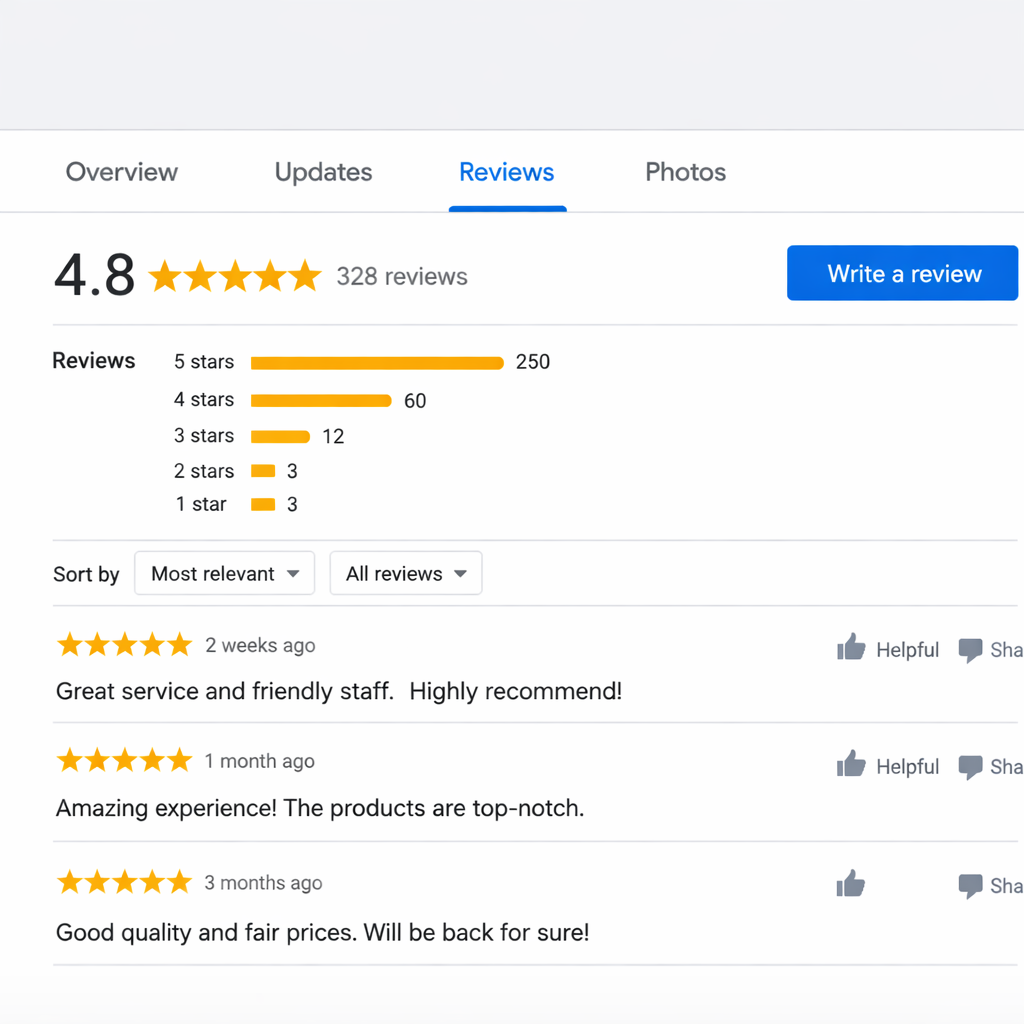
For any business that serves customers in a specific geographic area, Google Business Profile is not optional. It is the foundation. When someone searches for your business name, your category, or a problem you solve with a local qualifier, your Google profile is often the first thing they see — before your website.
Google reviews influence two things simultaneously. They affect your local search ranking, which determines whether you appear in the map pack results at the top of a search page. And they affect conversion, because the star rating and review count are visible before the buyer clicks anything.
The compounding effect here is significant. More reviews improve your ranking. Better ranking brings more visitors. More visitors means more customers. More customers means more opportunities to collect reviews. The loop builds on itself, but only if you are actively feeding it.
For entrepreneurs who serve both local and national audiences, Google remains the starting point because of its sheer reach. No other platform puts your social proof in front of more potential buyers at the exact moment they are searching for what you offer.
The one limitation of Google is category specificity. A five-star Google rating tells a buyer you are reliable. It does not always tell them you are the best option for their specific use case. That is where specialized platforms fill the gap best review platforms for small business.
Trustpilot — credibility at scale for service businesses
Trustpilot occupies a specific position in the review ecosystem. It is platform-agnostic, meaning it works for any business type, but it carries particular weight for service businesses, e-commerce brands, and companies that operate primarily online.
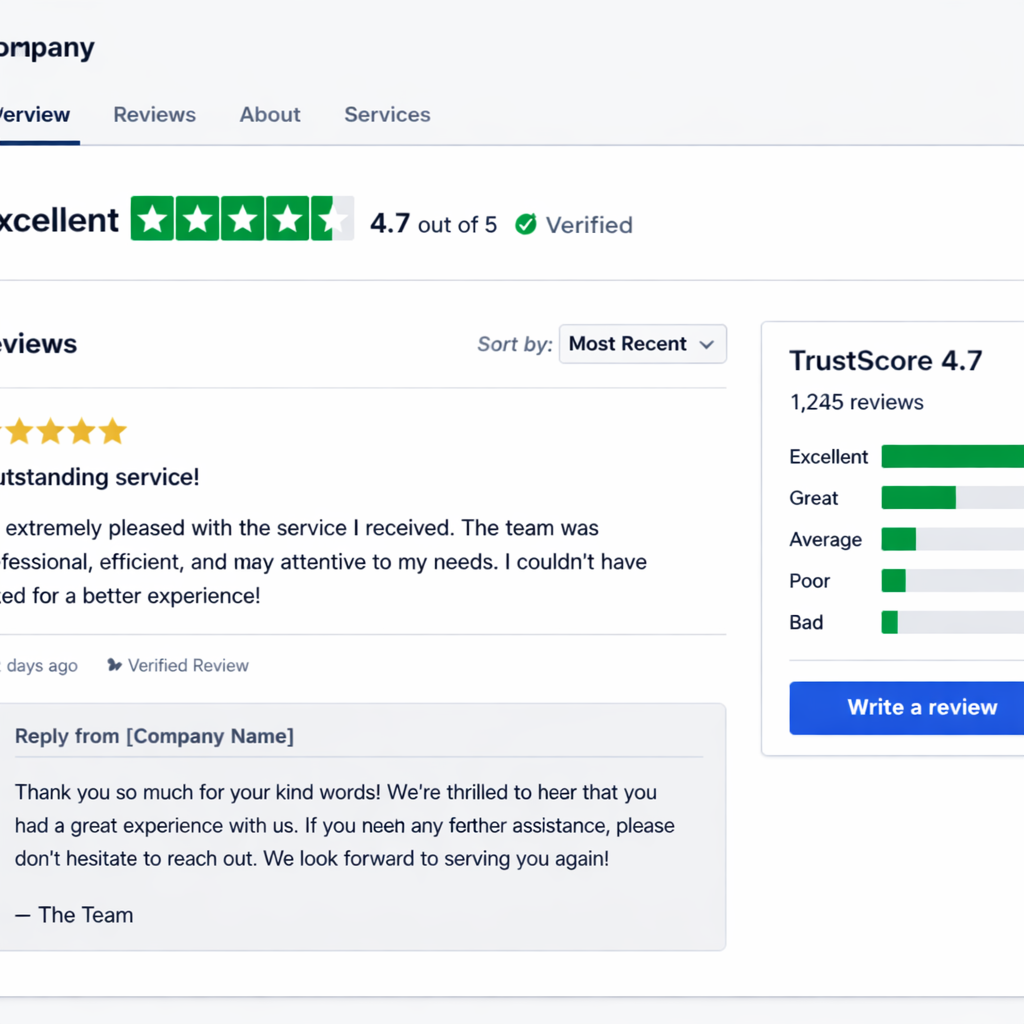
What makes Trustpilot valuable is its reputation for independence. Buyers who are skeptical of Google reviews — because they know businesses can solicit them — often turn to Trustpilot as a secondary validation source. The platform’s verification system and public response features make it feel more structured and accountable than a standard Google profile.
For entrepreneurs selling high-ticket services or running subscription businesses, a strong Trustpilot profile adds a layer of credibility that Google alone cannot provide. It signals that you are willing to be evaluated on a platform with stricter community standards and more visible accountability.
The practical consideration is that Trustpilot requires active management. Negative reviews are public and prominent. Response time and response quality are visible to every future buyer who reads your profile. This is not a platform you can set up and ignore — but handled correctly, it becomes one of your strongest trust signals.
Knowing how to respond to negative reviews professionally is especially critical on Trustpilot, where your response is often the first thing a skeptical buyer reads after the negative review itself.
G2 and Capterra — where SaaS buyers make decisions
If you run a software product, a SaaS tool, or any technology-based service, G2 and Capterra are not optional platforms — they are the primary battleground where buying decisions happen best review platforms for small business.
Buyers in the SaaS space are sophisticated. They do not just read star ratings. They read detailed feature comparisons, use-case breakdowns, and reviews that describe specific workflows. G2 and Capterra are built for exactly this kind of evaluation. They allow reviewers to rate individual features, describe their company size and industry, and compare your product directly against competitors.
A strong G2 profile does something Google and Trustpilot cannot do for a SaaS business. It puts you inside category-level searches. When a buyer searches “best CRM for small teams” on G2, they are shown a ranked list of products based on review data. That is a buyer who has already decided to purchase — they are just deciding who to buy from.
Capterra operates on a similar model and tends to attract slightly different buyer demographics, with a stronger concentration of small business owners and non-technical decision makers. Running both platforms in parallel gives you broader category coverage without significant duplication of effort.
The investment required to build a strong G2 or Capterra profile is higher than Google or Trustpilot, because the reviews need to be detailed and verified. But the quality of buyer you reach through these platforms justifies the effort. Automating your review collection toward these platforms is where the efficiency gain becomes significant for SaaS founders managing a growing user base.
Industry-specific platforms and when to prioritize them
Beyond the major generalist platforms, almost every industry has one or two review destinations that carry disproportionate weight with buyers in that specific category.
For legal and medical professionals, platforms like Avvo, Healthgrades, and Zocdoc are often the first place a potential client looks. For hospitality and travel businesses, TripAdvisor remains a dominant force. For contractors and home service businesses, Houzz and Angi drive significant purchase intent traffic.
The rule for industry-specific platforms is simple. If your buyers use it, you need to be on it. If your competitors have strong profiles there and you do not, you are losing deals at the research stage without ever knowing it.
The practical approach is to audit your competitor profiles across the major industry-specific platforms in your category. Look at where they have the most reviews, the most recent activity, and the highest ratings. That competitive map tells you exactly where to invest next.
How to build a multi-platform distribution strategy
The goal is not to be on every platform. The goal is to be dominant on the right two or three platforms for your business type and buyer profile.
A practical multi-platform strategy for most entrepreneurs looks like this. One primary platform where you concentrate the majority of your review collection efforts — usually Google for local businesses, G2 or Capterra for SaaS. One credibility platform that serves as a secondary validation source for skeptical buyers — usually Trustpilot or an industry-specific option. And one emerging platform in your category that your competitors have not yet saturated — which is where first-mover advantage in review volume pays off most.
Once you have identified your platform stack, build your collection sequences around them. Segment your customers by type and route each segment to the platform most relevant to how they buy. A enterprise customer goes to G2. A local service buyer goes to Google. A first-time e-commerce customer goes to Trustpilot.
The final step is making sure the reviews you collect do not stay confined to those platforms. Turning your best reviews into marketing assets that appear throughout your funnel is what transforms a strong platform presence into a revenue-generating system rather than just a reputation score best review platforms for small business.
Conclusion
Platform selection is a strategic decision, not a default one. The entrepreneurs who treat it as an afterthought end up with scattered social proof that reaches the wrong audience at the wrong moment. Pick your primary best review platforms for small business based on where your actual buyers leave feedback and read reviews before purchasing. Build your secondary platforms to fill credibility gaps that the top ones miss. Fill in industry-specific or niche review platforms for small business based on competitive pressure in your space. Then run a smart collection system that routes the right customers to the right best review platforms for small business every single time.