

Most SaaS founders discover the real cost of review platforms after they’ve already signed a contract. SaaS review platform pricing is rarely published transparently, and the gap between a free listing and a paid placement can run into tens of thousands of dollars annually. Knowing what each tier actually includes and what it won’t deliver — changes how you allocate your budget from the start. Before locking into any paid plan, reviewing the full breakdown of the best SaaS review platforms in 2026 helps you understand where each platform sits in the buyer journey and whether the spend is justified for your growth stage.
Transparency is not a core value of the SaaS review platform industry. G2, Capterra, and GetApp all offer free listings and all three have paid tiers that range from modest to significant depending on your category, your target buyer profile, and how aggressively you want to compete for visibility. The challenge is that most of the pricing information that matters is locked behind a sales conversation, which means founders often enter those conversations without the context they need to negotiate effectively.
Understanding SaaS review platform pricing before you talk to a vendor rep changes the dynamic entirely. You walk in knowing what the tiers typically include, what the common upsells are, and where the line is between features that drive real return and features that look compelling in a deck but deliver little in practice.
The free tier: what you actually get
Every major review platform offers a free listing, and for early-stage SaaS products, the free tier is genuinely useful as a starting point. But it is important to understand what free means on each platform — because the limitations are significant and deliberate.
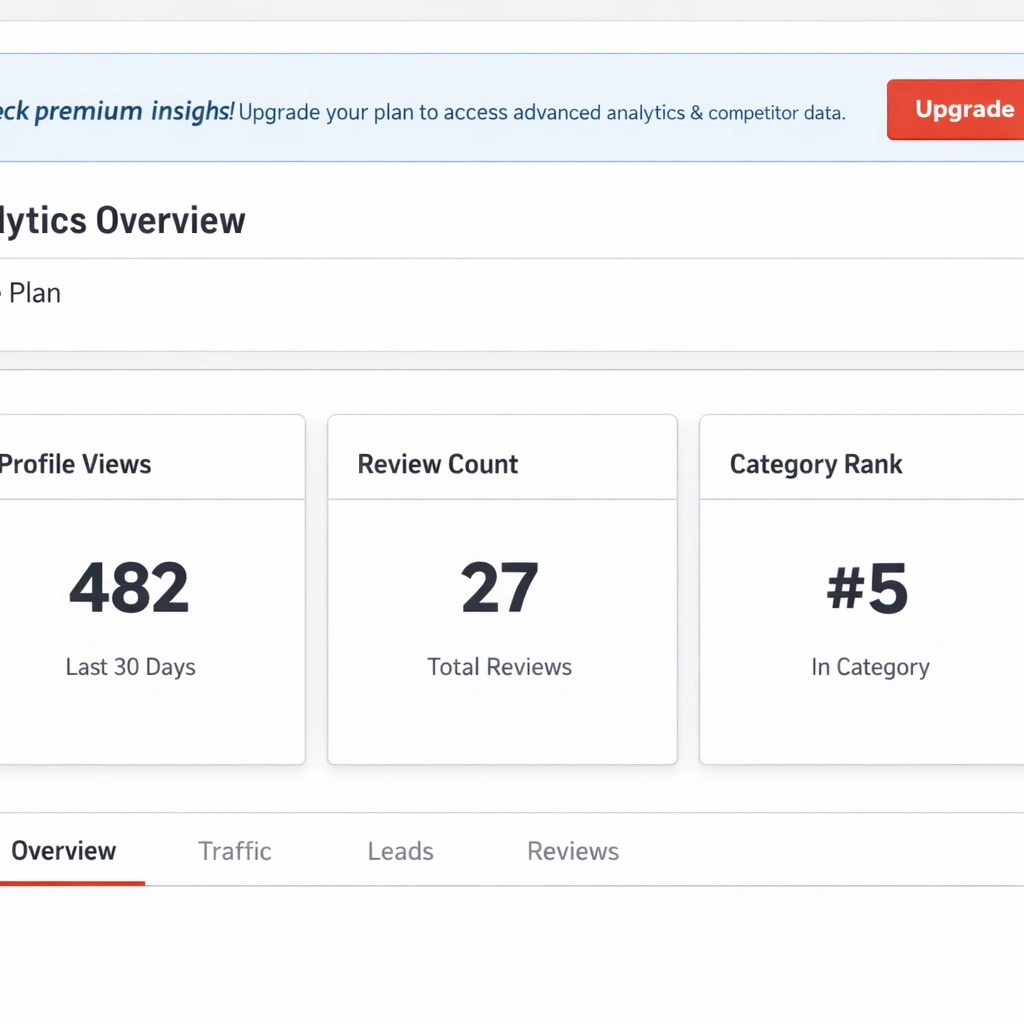
On G2, a free listing gives you a public profile page, the ability to respond to reviews, access to basic analytics showing how many people viewed your profile, and eligibility to appear in category search results. What it does not give you is control over your placement in those results, access to buyer intent data — information about which companies are researching your category — or the ability to run review generation campaigns through G2’s native tools at scale.
On Capterra, a free listing similarly gives you a public profile and the ability to appear in organic category results. The critical limitation is that Capterra’s category pages are heavily dominated by paid placements. In most categories, the top five to eight results are sponsored listings. A free profile can technically appear on page one, but in competitive categories it will consistently rank below paid competitors regardless of review quality.
GetApp mirrors Capterra’s free tier structure, which makes sense given their shared infrastructure. The organic ranking logic is similar, and the same paid placement dynamic applies.
For a product just entering the market with fewer than twenty reviews, the free tier on all three platforms is the right starting point. The goal at that stage is profile completeness and review accumulation — both of which are available without spending a dollar. The review generation system for G2 and Capterra is what you build during this phase to make the paid tier worth the investment when you eventually move to it.
G2 pricing: what the paid tiers include
G2 does not publish its pricing publicly, which is a deliberate strategy designed to push vendors into sales conversations where pricing is customized based on category competitiveness and company size. That said, the general structure of G2’s paid offering is well documented through vendor community discussions and industry reporting.
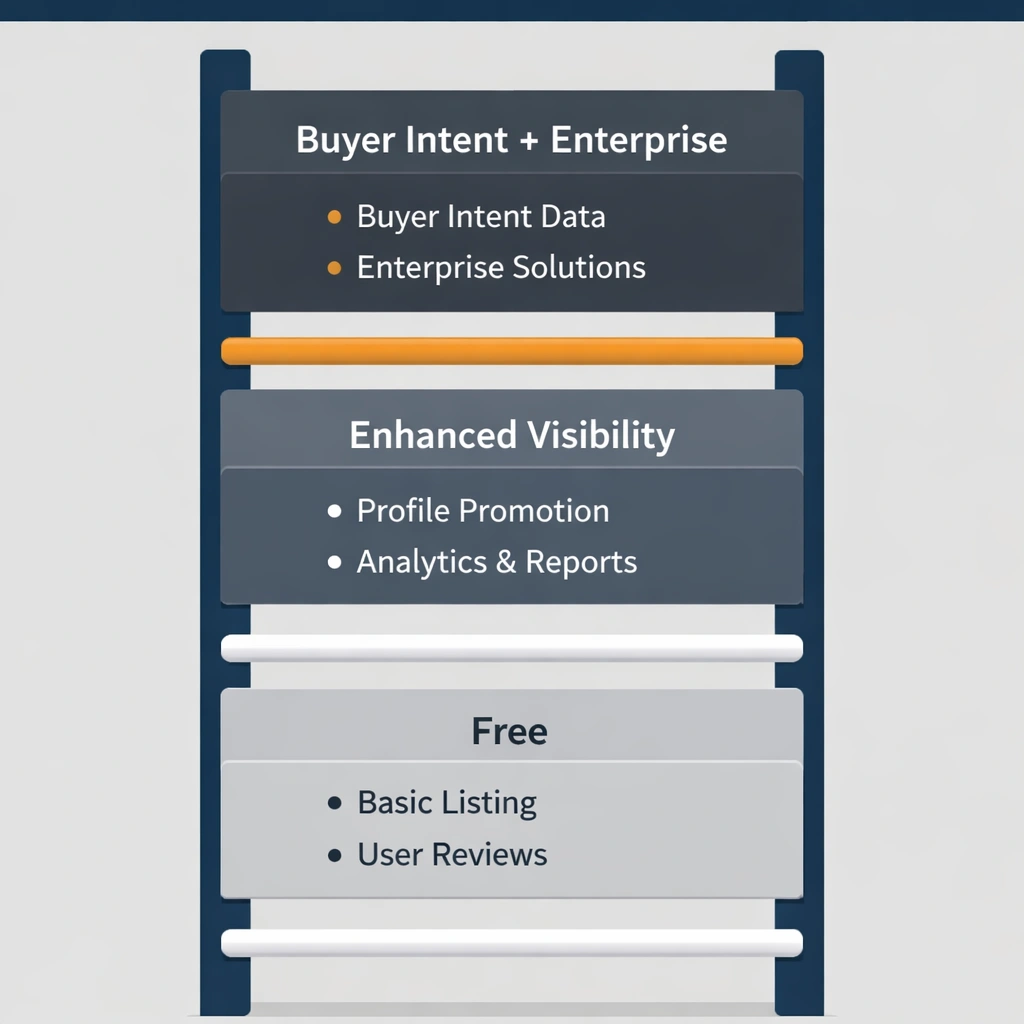
G2’s paid plans are organized around three primary value propositions: enhanced visibility, buyer intent data, and review generation tools.
Enhanced visibility on G2 means paid placement in category grids and search results, the ability to display competitor comparison pages where your product appears alongside rivals in a format G2 controls, and access to G2’s badge program — the Leader, High Performer, and Momentum Leader badges that vendors display on their websites and in sales materials. These badges carry genuine weight with enterprise buyers and are among the most cited reasons vendors invest in G2’s paid tier.
Buyer intent data is G2’s most powerful — and most expensive — offering. G2 Buyer Intent, the product name for this feature, shows vendors which companies have been researching their category, viewing their profile, or looking at competitor profiles on G2. For enterprise SaaS companies with an outbound sales motion, this data is genuinely transformative. It turns G2 from a passive review platform into an active pipeline intelligence tool. The cost reflects that value — buyer intent data typically sits in the higher end of G2’s pricing structure and is often sold as a separate add-on.
Review generation tools at the paid tier include access to G2’s review campaign infrastructure, the ability to send review requests through the platform at higher volume, and priority support for review moderation issues.
Ballpark figures that circulate in the vendor community suggest G2’s paid plans start around five thousand dollars annually for basic enhanced visibility in less competitive categories and scale to fifty thousand dollars or more per year for enterprise packages that include buyer intent data, competitive intelligence features, and premium placement in high-traffic categories.
Capterra pricing: the pay-per-click model explained
Capterra’s monetization model is structurally different from G2’s and understanding that difference is essential before you budget for it.
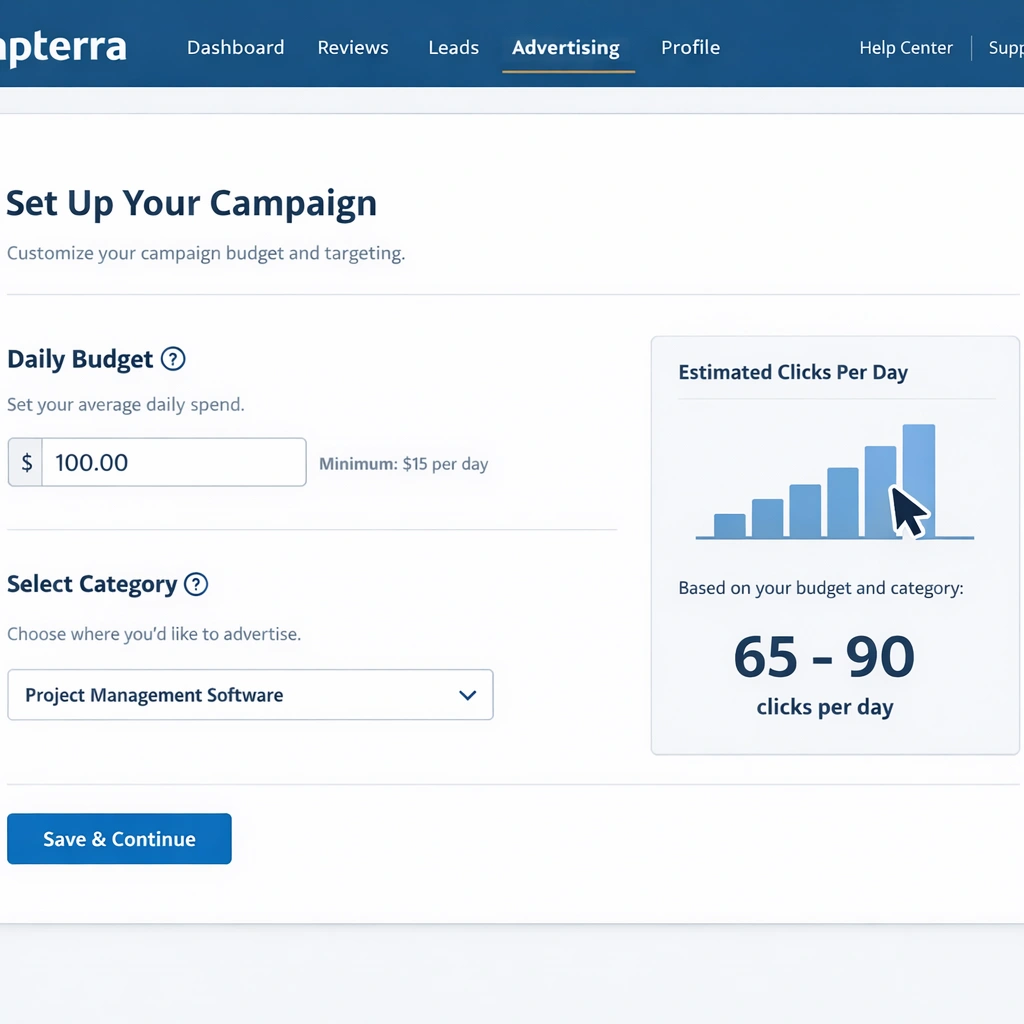
Capterra operates primarily on a pay-per-click basis for its paid placement program. Vendors set a daily budget and bid for placement at the top of category search results. When a buyer clicks on a sponsored listing, the vendor is charged a cost-per-click that varies based on category competition. In low-competition categories, cost-per-click can be as low as one to two dollars. In highly competitive categories like CRM, marketing automation, or project management, cost-per-click regularly exceeds ten to fifteen dollars.
The implication is that Capterra’s paid program has no fixed annual commitment in the traditional sense — you control your spend through your daily budget cap. But that flexibility cuts both ways. Your visibility is directly proportional to your ongoing spend. The moment you pause your campaign, your sponsored placement disappears and you fall back to organic results, which in competitive categories may be page two or beyond.
Capterra also offers a review collection incentive program where vendors can fund gift card rewards for customers who complete a verified review. This is separate from the pay-per-click placement program and is priced per review collected, with the vendor setting the incentive amount — typically ten to twenty dollars per review.
For SaaS products targeting small business buyers, Capterra’s pay-per-click model can deliver strong return if the category cost-per-click is low and the product’s conversion rate from profile visit to trial or demo is high. For products with longer sales cycles or higher price points, the math often favors G2’s buyer intent model over Capterra’s volume-driven click model.
GetApp pricing: the overlooked tier
Because GetApp shares infrastructure with Capterra, its paid placement model operates on similar pay-per-click mechanics. Vendors who run paid campaigns on Capterra through the Gartner Digital Markets platform often have the option to extend their campaign to GetApp and Software Advice — Gartner’s third directory property — within the same budget allocation.
This bundled approach is one of GetApp’s most practical advantages for vendors already investing in Capterra. The incremental cost of extending a campaign to GetApp is typically low relative to the additional category coverage it provides, particularly for buyers who use GetApp’s integration filtering to build their evaluation shortlist.
What GetApp does not offer is a buyer intent data product comparable to G2’s. Its value proposition is reach and discoverability, not pipeline intelligence. For vendors whose primary need is top-of-funnel visibility rather than account-level intent signals, GetApp as a bundled extension of a Capterra campaign represents good value for the marginal spend.
Knowing how SaaS review platform pricing works across all three platforms directly informs how you prioritize your profile optimization effort. A vendor paying for premium G2 visibility needs a profile that converts that traffic — and the G2 profile optimization guide covers exactly what needs to be in place before paid visibility is worth the investment.
How to decide what to spend and where
SaaS review platform pricing decisions should follow a simple logic sequence. Start with the platform where your ideal buyer is most active. Invest in the free tier first and use that period to build review volume and profile completeness. Upgrade to a paid tier only when you have enough reviews to compete credibly in your category and enough traffic data to understand your conversion rate from profile visit to qualified lead.
For most growth-stage SaaS companies, the right sequence is to start with G2’s free tier while running a structured review generation campaign, validate that G2 traffic converts to pipeline at an acceptable rate, then evaluate the paid tier based on actual return rather than projected return. On Capterra, the pay-per-click model allows for low-risk testing — a modest daily budget over thirty to sixty days will produce enough data to determine whether the cost-per-click in your category is sustainable relative to your customer acquisition cost.
The worst investment in SaaS review platform pricing is paying for premium visibility on a profile that is not ready to convert. Enhanced placement drives traffic. Profile quality — review volume, recency, completeness, and vendor responsiveness — determines what that traffic does when it arrives.
Spend with a clear return in mind
SaaS review platform pricing is not standardized, not always transparent, and not one-size-fits-all. But the framework for making a smart decision is consistent regardless of which platform you are evaluating: understand the pricing model, match it to your buyer profile, test before you commit to scale, and never pay for visibility on a profile that cannot convert the traffic it receives.
The platforms want your budget. Your job is to make sure they earn it.
Conclusion
SaaS review platform pricing is one of those decisions that looks straightforward until you are sitting across from a vendor rep with a contract in front of you. The free tier is a legitimate starting point on every platform — but understanding exactly where free ends and where paid becomes necessary is what keeps you from overspending before your profile is ready to convert.
The sequencing matters as much as the budget. Build your review volume first. Optimize your profile completeness before you pay for visibility. Then test paid placement with a defined budget and a clear metric for what success looks like at sixty and ninety days. Platforms are happy to sell you premium placement. Only you can decide whether the traffic that placement delivers is actually turning into pipeline.
Once your profile is generating consistent traffic — paid or organic — the variable that determines how much of that traffic converts is profile quality. A strong rating and a high review count get buyers to your page. What happens after they arrive depends entirely on how well your profile is built. The complete guide to optimizing your G2 profile walks through every element that separates a profile that converts from one that just gets visited.