
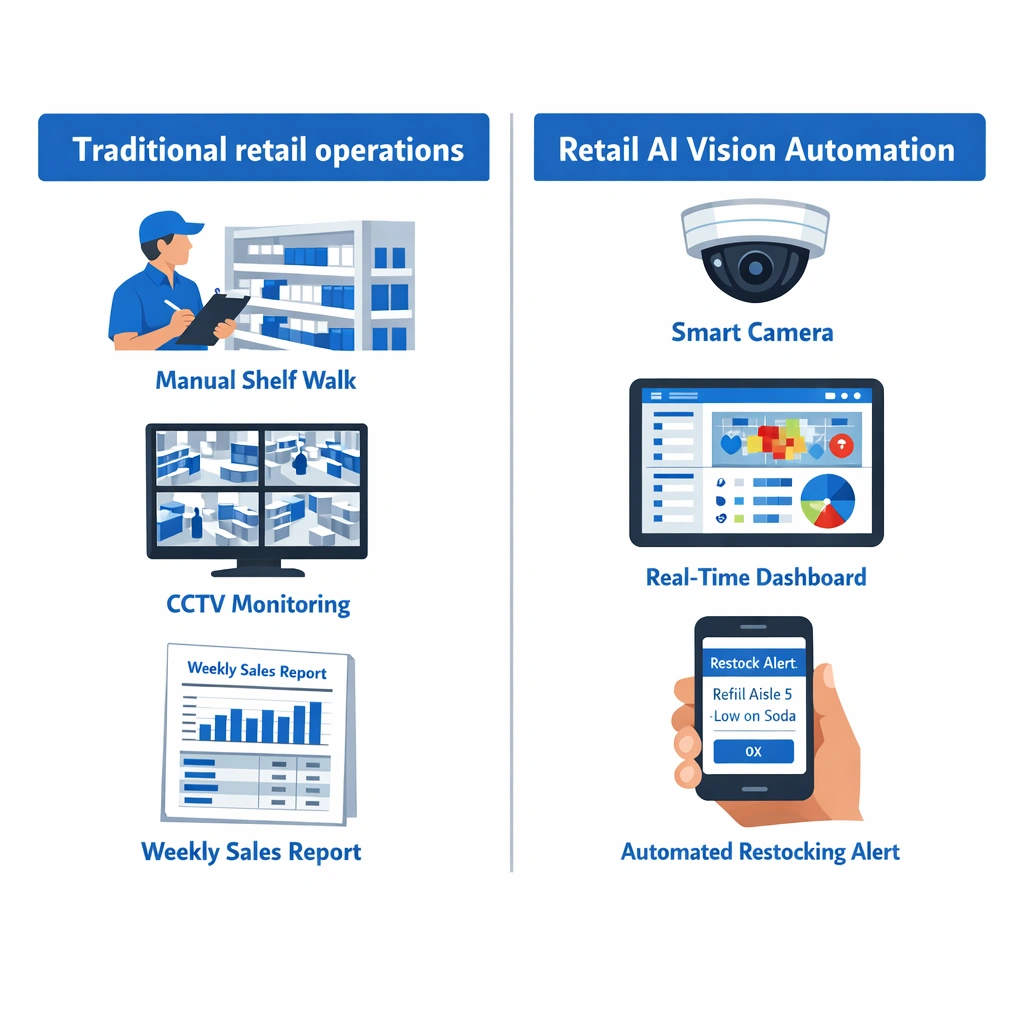
Physical retail is not dying. But the version of physical retail that runs on manual walkthroughs, gut-feel merchandising decisions, and passive security cameras is losing ground quietly, consistently, and at a pace that is accelerating.
The stores gaining ground are the ones that have built an information layer on top of their physical operations. They know which shelves are empty before a customer notices. They detect suspicious behavior before it becomes a shrinkage event. They understand how their shoppers move through the store well enough to make layout decisions based on evidence rather than intuition.
That information layer has a name: retail AI vision automation.
This is not a technology reserved for enterprise chains with eight-figure IT budgets. The current generation of platforms is accessible to independent retailers, regional operators, and entrepreneurs running anywhere from one to twenty locations. The hardware is affordable. The software is mature. The integrations with tools most store owners already use are built and documented.
What this guide covers is the full operational picture what retail AI vision automation is, which use cases deliver the fastest return, which platforms are worth evaluating, and how to deploy the technology in a way that produces measurable results rather than an expensive proof of concept that never scales.
What retail AI vision automation is and how it works
Most store owners already have cameras. The distinction that matters is the difference between a camera that records and a system that understands.
Retail AI vision automation is the use of machine-learning-powered camera systems to continuously observe, interpret, and act on physical activity inside a retail environment — in real time, without requiring a human to watch the feed. The camera captures a continuous stream of visual data. A software layer trained on retail-specific scenarios analyzes that stream and surfaces meaningful events: an empty shelf slot, a behavioral anomaly at checkout, a shopper spending unusual time in a high-value merchandise zone.
The operational result is a store that reports on itself. Exceptions surface automatically. Staff receive specific, actionable alerts rather than conducting scheduled sweeps that catch problems hours after they occur. Management gets a data layer that connects physical store activity to business outcomes — sales, shrinkage, conversion, and labor efficiency — in a way that manual observation never could.
The three foundational capabilities that every retail AI vision automation platform is built around are shelf and inventory monitoring, customer behavior analysis, and loss prevention. Each one addresses a different revenue leak. Each one generates a different category of operational insight. And when all three run together on a unified platform, the compounding effect on store performance is significant.
For entrepreneurs who are new to this technology and want a clear foundation before evaluating any platform or vendor, what retail AI vision is and why it is no longer optional covers the mechanics, the misconceptions, and the conditions that made 2026 the inflection point for adoption across store sizes and formats.
How AI shelf monitoring stops revenue from walking out the door
The average retail store loses between 2 and 8 percent of potential weekly revenue to shelf execution failures — stockouts, partial facings, and planogram violations that go undetected for hours between manual walks. For a store generating $60,000 in weekly sales, that range represents $1,200 to $4,800 in recoverable revenue sitting on an empty shelf somewhere on the floor right now.
AI shelf monitoring closes this gap by watching product placement continuously. Cameras positioned at shelf level or mounted overhead capture images of your displays at regular intervals. A vision model trained on your specific planogram analyzes each image, compares it against the reference state, and generates an alert the moment it detects a deviation — an empty slot, a misplaced product, a facing count below the planogram specification.
The operational impact is measurable and consistent across deployment types. Retailers who implement shelf monitoring report on-shelf availability improvements of three to seven percentage points within the first ninety days. In high-velocity categories — beverages, snacks, health and beauty — that improvement translates directly to recovered sales that were previously invisible in the data because the stockout prevented the transaction from occurring.
The three shelf execution failures that AI monitoring catches most reliably — and that manual walks miss most consistently are partial facings that look stocked from the aisle end, phantom inventory where the system shows units in stock but the shelf is physically empty, and planogram violations where products are present but placed in positions that suppress discovery and purchase.
Each of these failure types costs money in a different way, and each requires a slightly different camera configuration and model calibration to detect reliably. The full operational breakdown of how AI shelf monitoring works, what it measures, and how to connect shelf intelligence data to your inventory management system is covered in AI shelf monitoring retail: stop losing sales to empty shelves.
Why retail computer vision loss prevention outperforms every passive alternative
Shrinkage costs U.S. retailers more than $100 billion annually. The majority of that loss occurs not in dramatic robbery events but in the quiet, cumulative accumulation of concealment theft, checkout fraud, and employee sweethearting that passive camera systems record faithfully and prevent almost never.
The fundamental problem with traditional loss prevention infrastructure is that it is entirely retrospective. Footage exists. It is reviewed after an incident is reported. The incident has already occurred, the merchandise is already gone, and the footage serves primarily as documentation rather than deterrence.
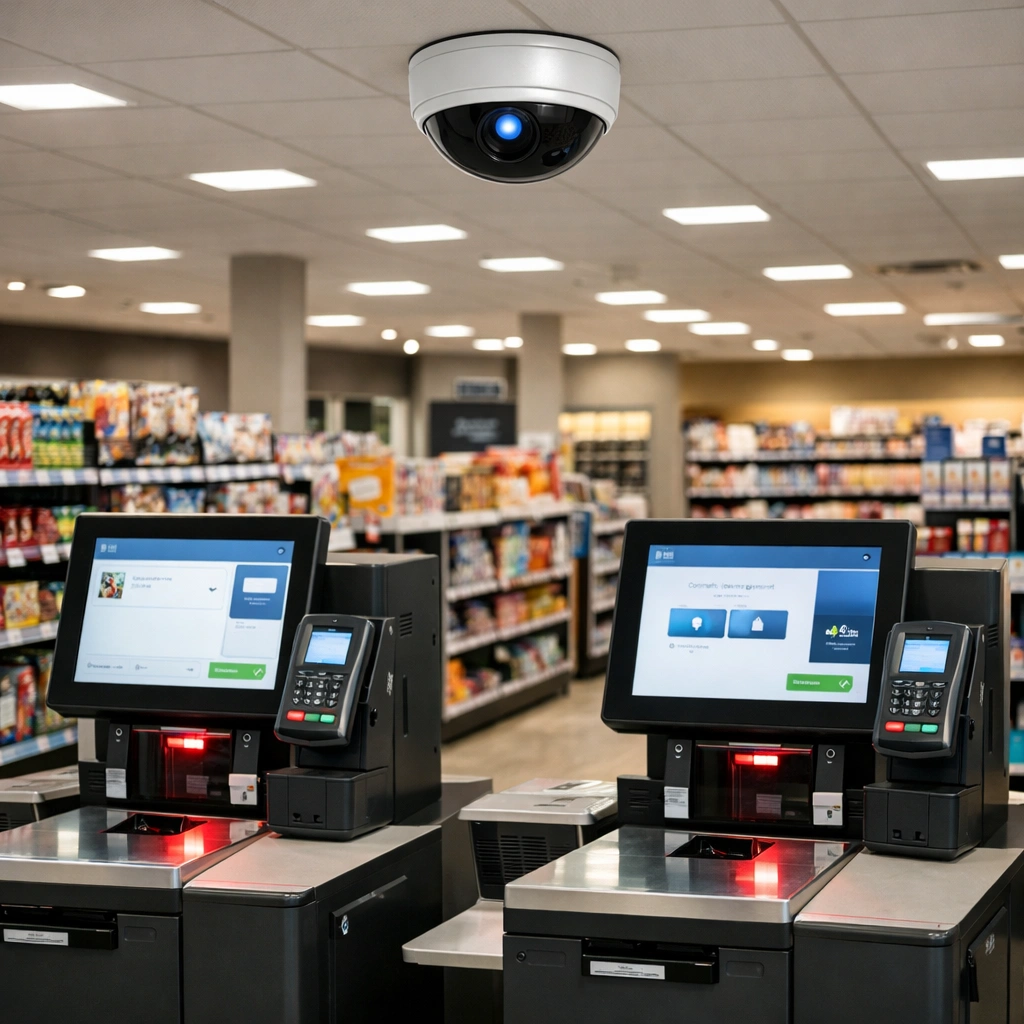
Retail computer vision loss prevention operates on a different logic. It does not wait for an incident to be reported. It watches continuously for the behavioral signatures that precede and constitute theft — concealment gestures, checkout anomalies, extended loitering in high-value merchandise zones — and generates real-time alerts that enable intervention before the loss occurs.
The behavioral detection capabilities that distinguish the current generation of platforms from earlier, less reliable systems are worth understanding in detail. Concealment detection models are trained on thousands of real theft events and can identify the specific body movement patterns associated with merchandise concealment — distinguishing them from normal shopping behavior with false positive rates low enough to maintain staff trust in the alert system. Checkout fraud detection monitors transaction patterns at point-of-sale stations and flags anomalies — unscanned items, obscured barcodes, unusual void or override patterns — that indicate potential fraud by customers or employees.
The ROI case for retail computer vision loss prevention is strongest in stores with measurable shrinkage above 0.8 percent and a defined staff alert response protocol. Without the response protocol, even the most accurate detection system produces limited operational value. With it, the combination of real-time detection and rapid staff response consistently outperforms every passive alternative at a fraction of the cost of dedicated loss prevention personnel.
The honest assessment of which systems work for stores of different sizes, what the realistic shrinkage reduction figures look like in production deployments, and how to navigate the privacy and compliance landscape in 2026 is covered in retail computer vision loss prevention: hype or real protection.
How AI customer behavior analytics turns your floor into a revenue map
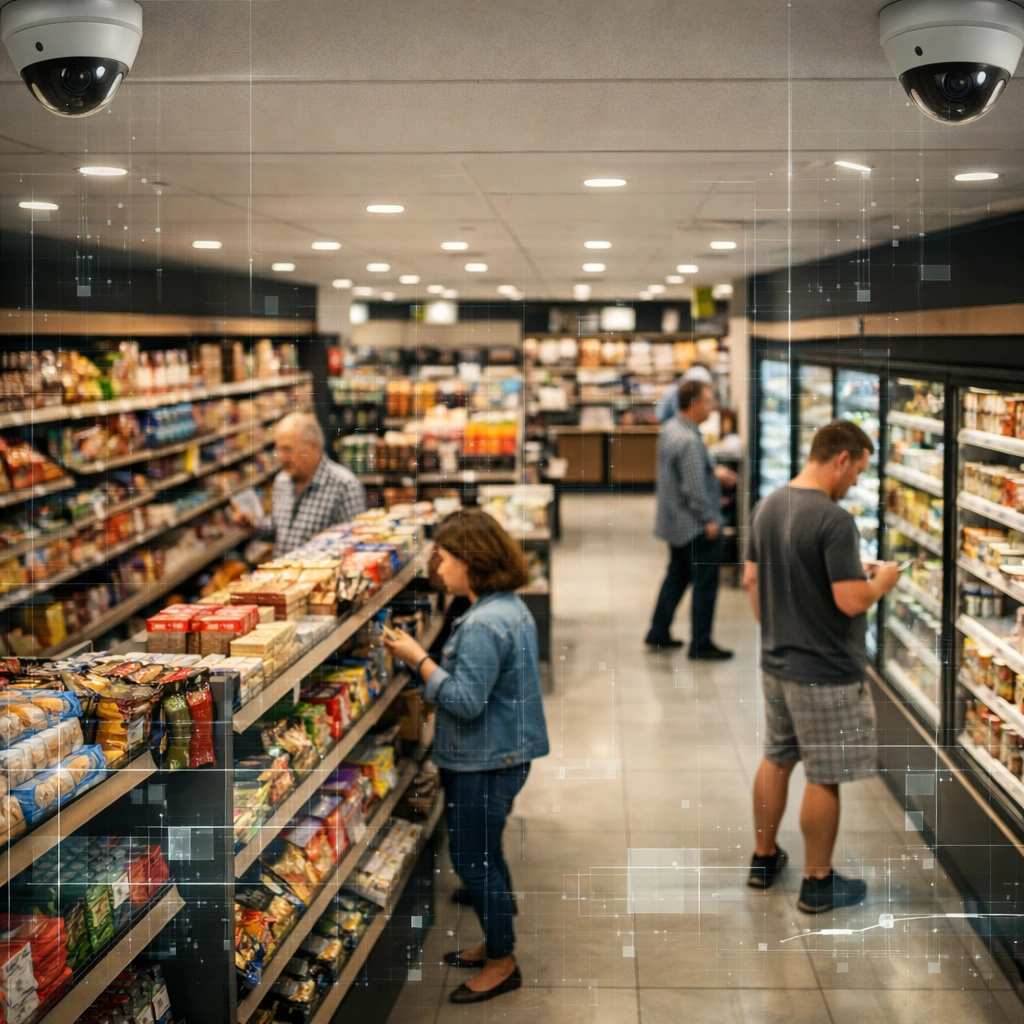
Every square foot of your store has a revenue yield. Most retail entrepreneurs do not know what that yield is for any specific zone, which zones are underperforming relative to their traffic volume, or which merchandising decisions are driving conversion and which ones are suppressing it.
AI customer behavior analytics retail systems answer those questions with data generated from your actual store, your actual shoppers, and your actual layout — not from industry benchmarks or vendor case studies built on stores that bear no resemblance to yours.
The core metrics these platforms generate are foot traffic flow patterns, zone dwell time, zone conversion rate, and checkout queue wait time. Each metric addresses a different dimension of store performance, and the combination of all four gives you a behavioral map of your store that is more operationally useful than any sales report your POS system currently produces.
Foot traffic flow patterns reveal which paths your shoppers actually take versus the paths your layout was designed to direct them through. The gap between those two things is often significant — and it is the gap where high-margin products get placed in zones that shoppers never reach, where promotional displays generate foot traffic without generating purchases, and where entire store sections underperform because the traffic that passes them never slows down enough to engage.
Zone dwell time combined with zone conversion rate creates the most powerful merchandising insight these systems produce. A zone with high dwell time and low conversion rate indicates friction — a product that is hard to reach, pricing that stops the transaction, or a display that generates interest without generating purchase intent. A zone with moderate dwell time and high conversion rate indicates a merchandising configuration worth replicating in other parts of the store.
The full methodology for using behavioral data to make measurable merchandising decisions — including how to connect customer analytics data to your POS and inventory systems for maximum operational impact — is in AI customer behavior analytics retail: know exactly what drives sales.
The platforms worth evaluating in 2026
The retail AI vision automation market in 2026 is no longer dominated exclusively by enterprise platforms with enterprise price tags. The mid-market has matured significantly, and there are now platforms purpose-built for independent and regional retailers that deliver production-grade performance at a cost structure that makes sense for operators running one to twenty locations.
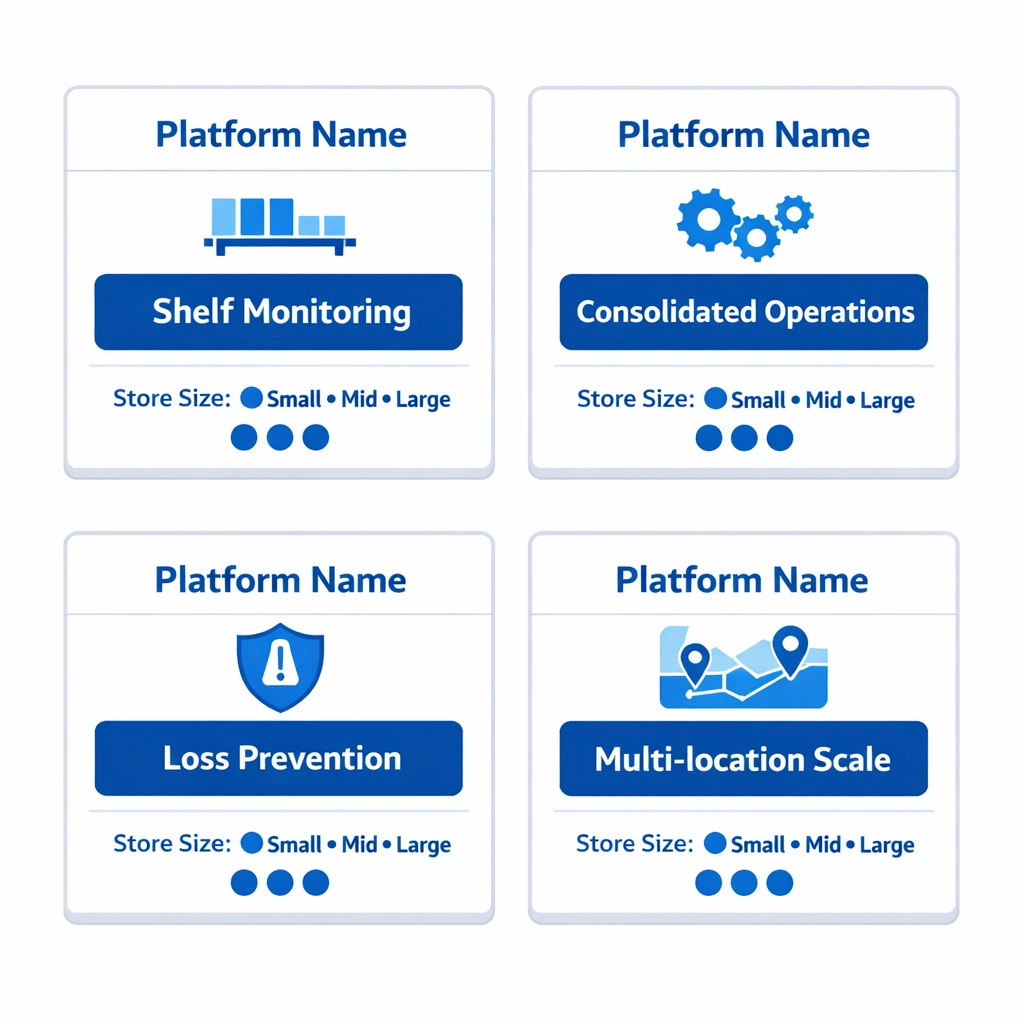
The evaluation framework that produces the best vendor match is built around four criteria: accuracy in your specific store environment, integration compatibility with your existing stack, edge processing capability that reduces both latency and data privacy exposure, and transparent pricing that holds up across your projected growth footprint over twenty-four months.
Focal Systems leads the shelf intelligence category for mid-size retailers, with a shelf-level camera configuration that delivers higher detection resolution than overhead systems for stockout and planogram compliance monitoring. Verkada offers the strongest consolidated platform for store owners who want to cover loss prevention and operational analytics through a single vendor relationship with a straightforward ceiling-mount installation. Standard AI is the most focused loss prevention option for operators where shrinkage is the primary concern and checkout fraud detection is the highest-priority capability. Trigo delivers the most integrated platform for operators building toward multi-location scale, with the strongest customer behavior analytics output of any mid-market system currently available.
The detailed comparison — including how each platform handles integration, what the calibration period looks like in production, and which store formats each one is best suited for — is in the best AI vision systems for retail that actually deliver ROI.
How to implement retail AI vision automation without wasting your budget
The implementation failures that retail entrepreneurs experience with AI vision technology consistently trace back to decisions made or skipped before the first camera is installed. The technology performs. The deployment process is where the ROI is won or lost.
The implementation sequence that produces the fastest and most durable return follows six steps. Define your primary use case before contacting any vendor shelf monitoring, loss prevention, or customer analytics — and anchor every subsequent decision to that one operational problem. Audit your network infrastructure, existing camera hardware, and integration compatibility before evaluating platforms, so that the total cost of ownership calculation you build includes every line item, not just the vendor’s quoted price. Structure your vendor evaluation around production evidence from reference customers in your store category, not demo performance in controlled conditions. Design your camera placement strategy around your specific operational problems rather than accepting the vendor’s default configuration. Build your staff alert response protocol before go-live, with defined roles, response actions, and escalation paths for every alert type the system generates. And establish your measurement framework — with baseline data captured before activation — so that your ROI assessment is grounded in before-and-after comparisons rather than directional estimates.
The pilot-before-commit approach deserves specific emphasis. Most enterprise-grade platforms will negotiate a limited pilot deployment covering one zone or one store location before a full contract is signed. A four-to-six-week pilot in your actual store environment is the only reliable predictor of full deployment performance. Any vendor who declines to discuss a pilot arrangement should be treated with significant skepticism.
The complete step-by-step deployment guide covering infrastructure auditing, vendor evaluation criteria, camera placement strategy, staff training, and measurement framework design is in how to implement AI vision retail without wasting your budget.
Conclusion
Retail AI vision automation is not a future investment. It is a present operational decision with measurable consequences for store owners who act on it now versus those who wait for broader adoption to force the issue.
The technology is mature. The platforms are accessible. The use cases shelf monitoring, loss prevention, and customer behavior analytics each address a revenue problem that manual operations have never been able to solve with consistency or scale.
The store that knows which shelf is empty right now, which behavioral pattern at checkout is costing it margin, and which zone of the floor is converting at half the rate it should is operating with a structural advantage that compounds over time. Every decision informed by real data makes the next decision more precise. That precision builds a store that is measurably harder to compete with.
The starting point is simpler than most entrepreneurs expect. Pick your most costly operational problem. Find the platform most specifically trained to address it. Deploy it correctly. Measure the return. Build from there.
The information layer that separates the stores winning in physical retail right now from the ones still running on intuition is available to you today. The decision is whether to build it.