
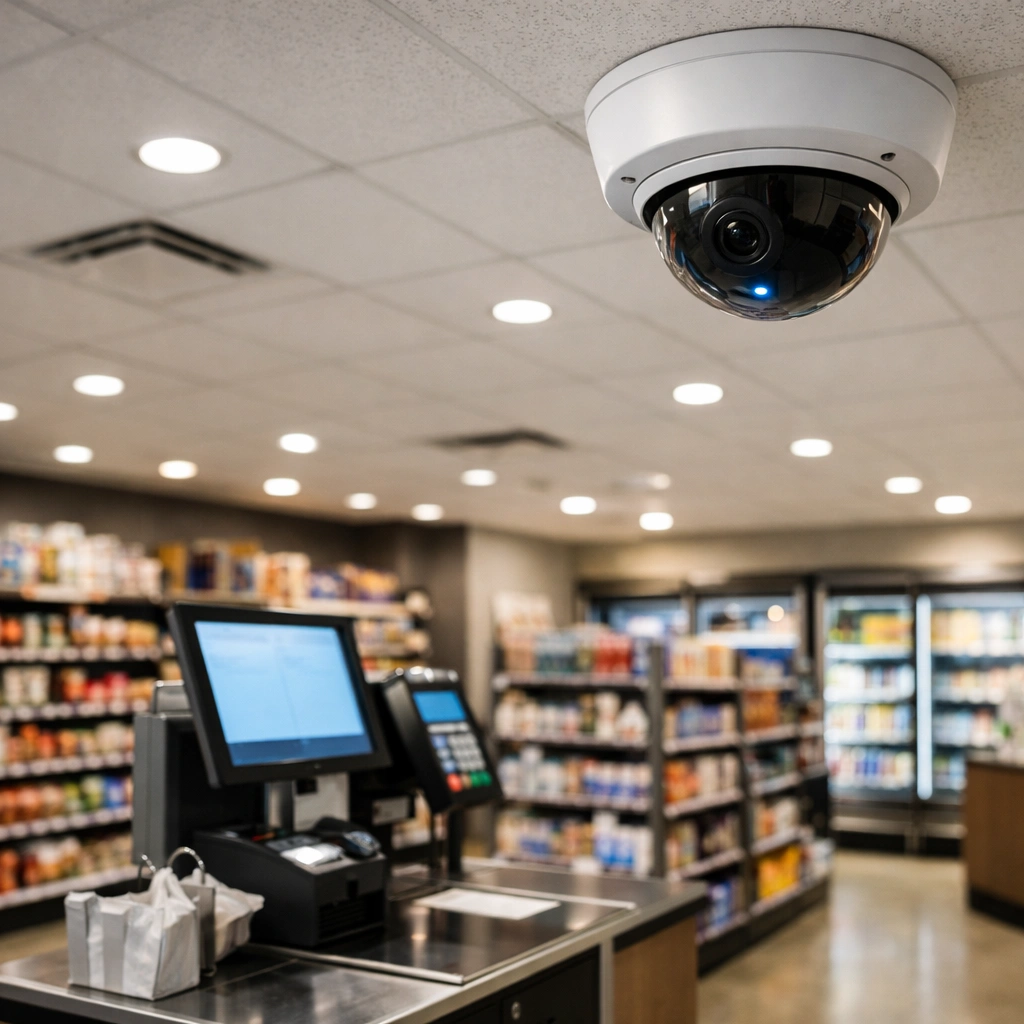
Shrinkage costs U.S. retailers over $100 billion a year, yet most small store owners still depend on legacy camera setups that record but never alert. Retail computer vision loss prevention flips that model by detecting suspicious behavior, unattended merchandise, and checkout anomalies as they happen — not after the fact. It’s one of the most discussed use cases within the wider shift toward retail AI vision automation that is redefining how store operations run in 2026. The real question is not whether the technology works, but whether the specific system you choose is calibrated for a store your size.
The shrinkage problem that passive cameras never solved
The traditional retail security camera is one of the most widely deployed and least effective loss prevention tools in the industry. It records everything and prevents almost nothing. A determined shoplifter knows that the footage will only be reviewed after the fact if it is reviewed at all and that the probability of real-time intervention based on camera footage alone is close to zero in most independent retail environments.
The result is a loss prevention model built entirely around post-incident documentation rather than pre-incident deterrence or real-time response. Retail computer vision loss prevention is a fundamentally different approach. It shifts the operational model from recording to responding and that shift has measurable consequences for shrinkage rates.
What retail computer vision loss prevention actually detects
The term loss prevention covers a wide range of theft and fraud scenarios, and not every retail computer vision platform addresses all of them with equal effectiveness. Understanding which behaviors a system is trained to detect is essential before evaluating any vendor.
Concealment behavior
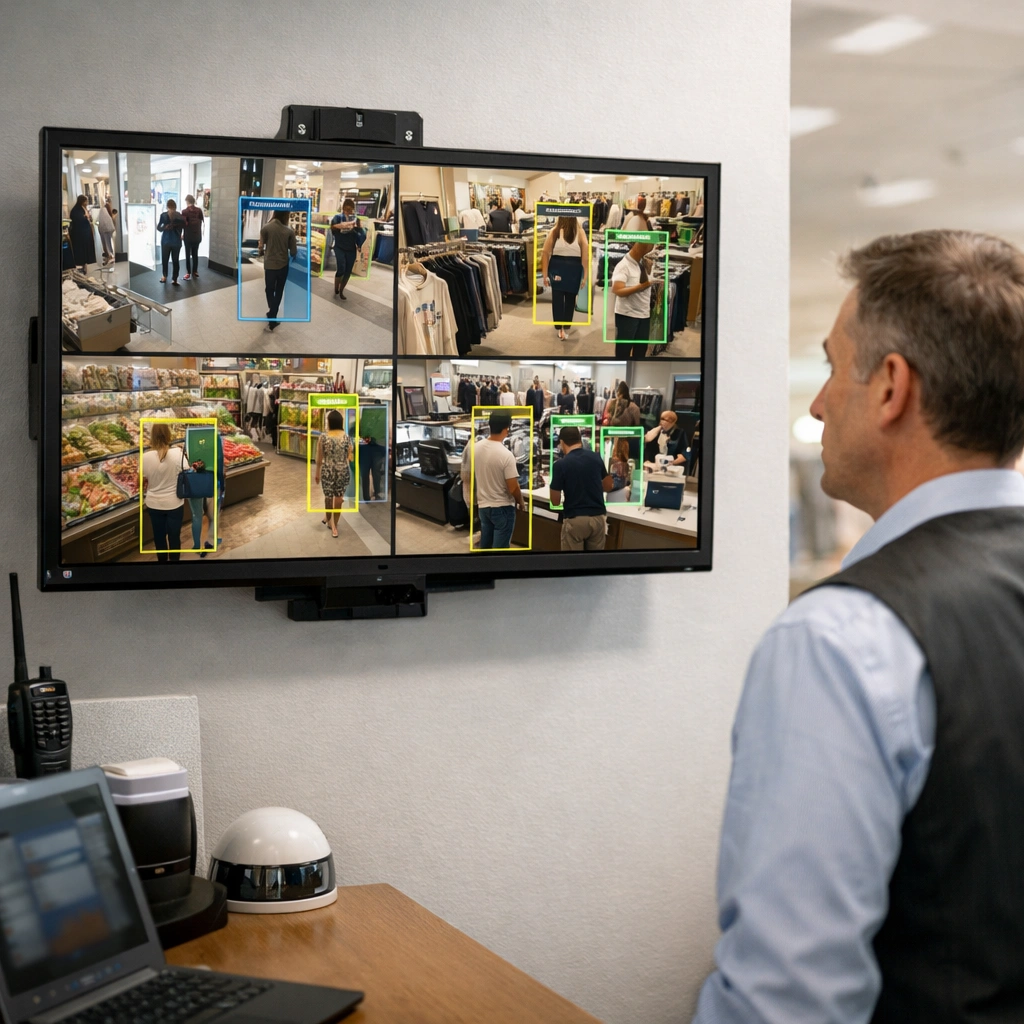
The most sophisticated retail computer vision loss prevention systems are trained to detect the physical gestures associated with merchandise concealment the specific body movements that occur when someone places a product into a bag, a pocket, or under clothing rather than into a shopping cart. These models are trained on thousands of real concealment events and can flag the behavior pattern in real time, triggering an alert to a staff member before the individual reaches the exit.
This is not motion detection. Motion detection fires every time someone moves in frame. A well-trained concealment detection model fires specifically when the movement pattern matches the behavioral signature of concealment — a meaningful distinction that determines whether your staff trusts the alerts the system generates.
Checkout fraud and sweethearting
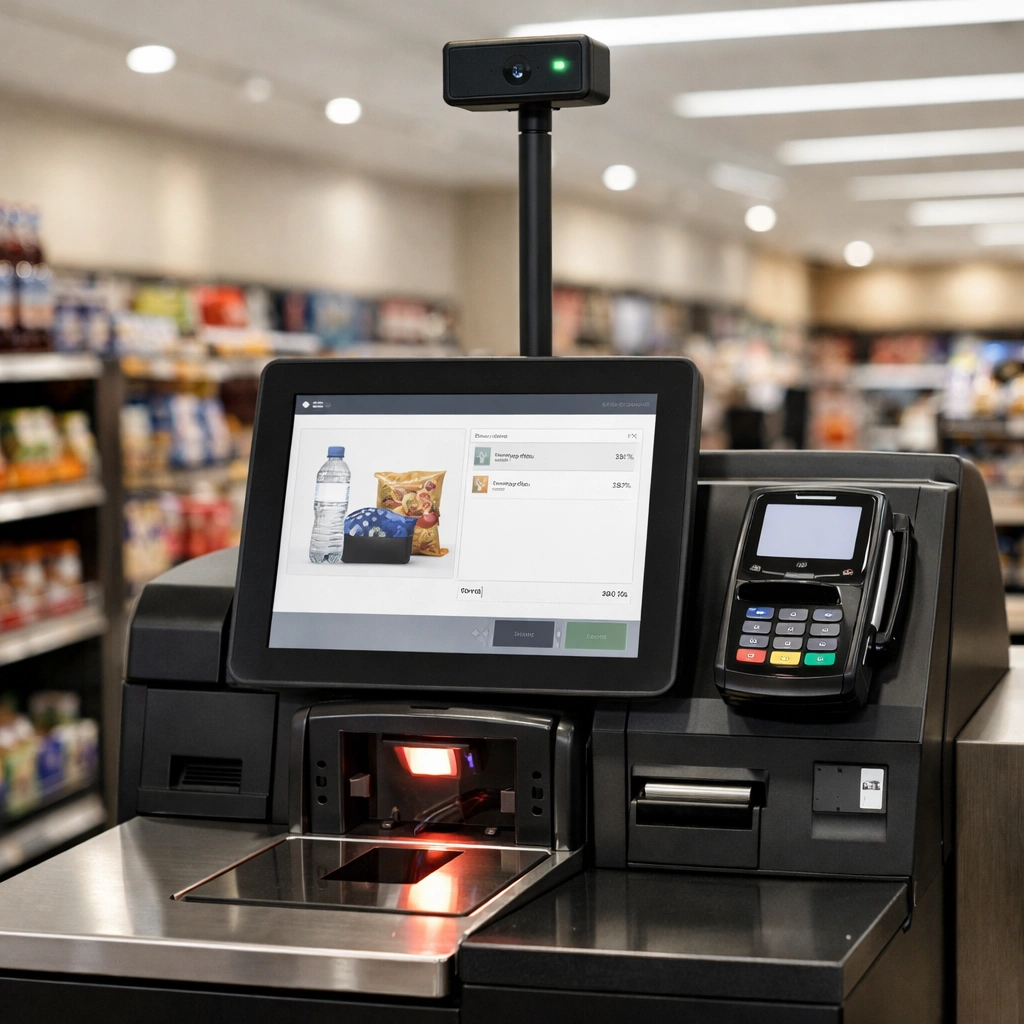
Checkout fraud where a cashier intentionally fails to scan items for a customer they know and sweethearting at self-checkout stations are among the most costly and least detected forms of retail shrinkage. Retail computer vision loss prevention systems positioned at point-of-sale stations can detect when a product passes through the checkout area without being scanned, when items are obscured from the scanner, or when transaction patterns deviate from normal baselines.
For entrepreneurs running stores with high self-checkout volume, this capability alone often justifies the platform cost within the first quarter of deployment.
Loitering and zone anomaly detection
Some theft events are preceded by a period of reconnaissance a person spending an unusual amount of time in a high-value merchandise zone without making purchase-oriented movements. Retail computer vision loss prevention systems that include zone dwell analysis can flag this pattern and alert staff to perform a non-confrontational floor presence check before any theft occurs.
This is one of the most underappreciated capabilities in the current generation of loss prevention platforms. Deterrence — the act of making a potential shoplifter aware that they have been noticed — prevents more incidents than any post-theft intervention.
The ROI question answered honestly
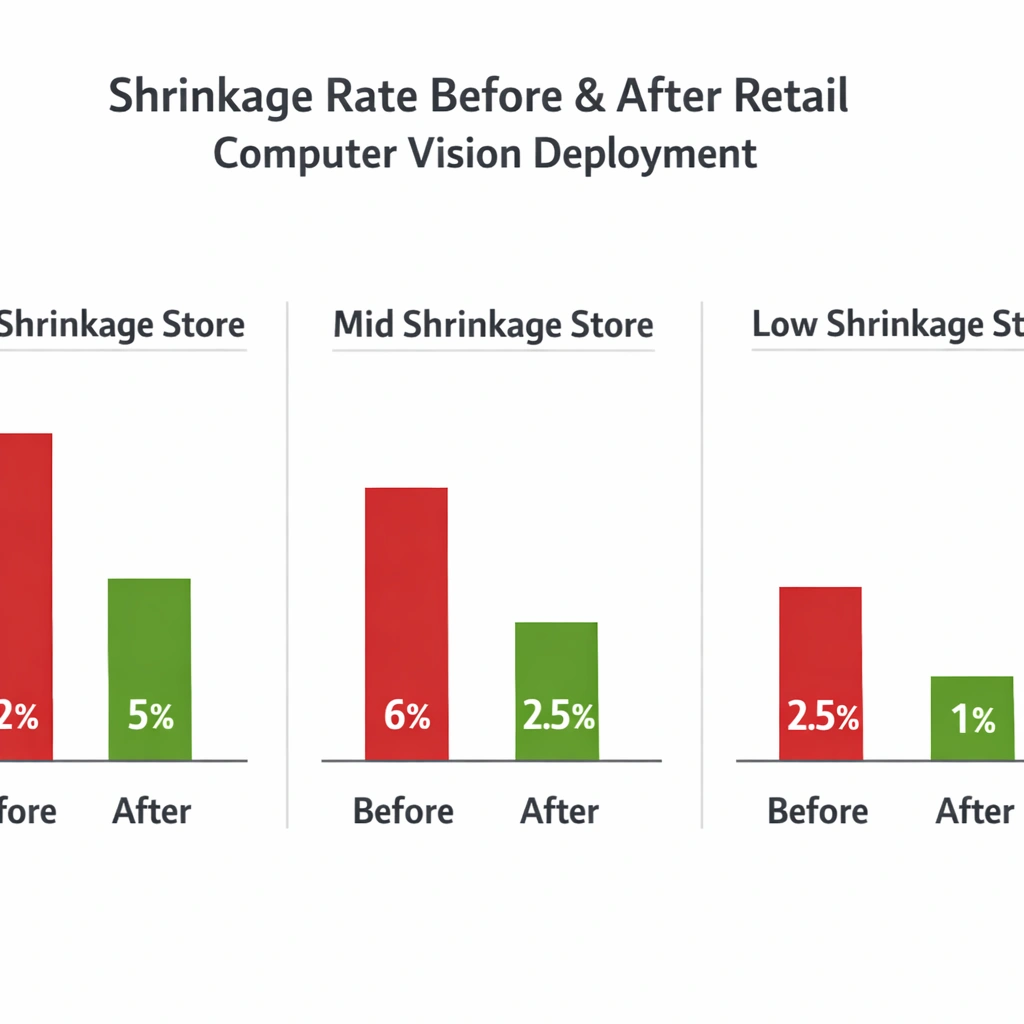
Loss prevention technology vendors are not always forthcoming about the conditions under which their ROI claims hold. The numbers look compelling in marketing materials — shrinkage reductions of 30 to 50 percent are commonly cited. The honest answer is that results vary significantly based on your current shrinkage rate, your store format, and how effectively your staff responds to the alerts the system generates.
A retail computer vision loss prevention system deployed in a store with a 2 percent shrinkage rate and a well-trained staff response protocol will perform very differently from the same system deployed in a store with a 0.4 percent shrinkage rate and no defined alert response workflow.
The stores that see the strongest ROI share three characteristics. They have a measurable shrinkage problem that existing controls are not solving. They invest in staff training on alert response before the system goes live. And they treat the platform as an operations layer rather than a set-and-forget security appliance.
For entrepreneurs who want to understand how loss prevention fits into a broader store operations deployment, the best AI vision systems for retail that actually deliver ROI covers how leading platforms handle the combination of loss prevention, shelf monitoring, and customer analytics in a single deployment.
Privacy, compliance, and the legal landscape in 2026
Retail computer vision loss prevention operates in a regulatory environment that has become significantly more complex over the last three years. Several U.S. states have enacted or are actively advancing legislation that governs how commercial entities can collect, process, and retain biometric data — which in some interpretations includes facial geometry captured by in-store camera systems.
The practical implication for retail entrepreneurs is that the platform you choose needs to be evaluated not just on performance but on data architecture. Specifically, you need to understand three things before deployment.
First, does the system store identifiable video footage or process visual data ephemerally — meaning it analyzes and discards without retaining raw footage that could constitute biometric data collection under applicable law.
Second, does the vendor provide documentation of their compliance posture for the states in which you operate, and do they update that documentation as regulations evolve.
Third, what are your notification obligations — some jurisdictions require visible signage informing customers that AI-based monitoring is in use on the premises.
None of these questions should disqualify a platform automatically. They should be part of your vendor evaluation conversation, and any vendor unwilling to answer them clearly should be removed from your shortlist.
How retail computer vision loss prevention compares to traditional alternatives
The alternatives to computer vision loss prevention security guards, EAS tags, traditional CCTV, and audit-based inventory controls each address a narrow slice of the shrinkage problem and carry their own cost and operational overhead.
Security guards are effective deterrents but expensive, inconsistent across shifts, and unable to monitor more than a fraction of the store floor simultaneously. EAS tags prevent some walk-out theft but do nothing about checkout fraud or employee theft and add labor cost at the detagging station. Traditional CCTV provides post-incident documentation but zero real-time response capability.
Retail computer vision loss prevention does not replace all of these tools in every scenario. But it addresses the gaps that each of them leaves real-time behavioral detection across the entire store floor, automated alert generation without human monitoring fatigue, and a data layer that improves over time as the model accumulates more store-specific training data.
What to look for in a retail computer vision loss prevention vendor
The vendor selection process for loss prevention technology deserves more rigor than most entrepreneurs apply to it. The following criteria separate platforms that deliver in production from those that perform well only in controlled demonstrations.
Store-specific model training is the most important technical differentiator. A platform using a generic shoplifting detection model will generate more false positives in your specific store environment than one that has been calibrated on footage from stores with similar layouts, lighting conditions, and customer demographics. Ask every vendor how their model is customized for your environment and what the calibration period looks like after installation.
Alert response workflow integration matters as much as detection accuracy. A system that generates an alert but delivers it through a separate app that your staff does not consistently monitor is not solving your problem. The alert needs to reach the right person through the channel they already use, with enough contextual information — camera location, detected behavior type, timestamp — to enable a fast and appropriate response.
For entrepreneurs who are planning a full store technology deployment that includes loss prevention alongside shelf monitoring and customer analytics, how to implement AI vision retail without wasting your budget covers how to sequence these use cases so that each deployment stage builds on the previous one without creating integration complexity that slows your team down.
Conclusion
Retail computer vision loss prevention is not hype. In the right store environment, with the right platform and a defined staff response workflow, it delivers measurable shrinkage reduction that passive camera systems have never been able to match.
The technology has moved well past the experimental stage. The platforms available in 2026 are accurate, integrable, and deployable in stores that bear no resemblance to the enterprise environments where the technology was first developed.
The question worth asking is not whether it works. The question is whether your current shrinkage rate justifies the investment and for most independent retailers running above 0.8 percent shrinkage, the answer is yes.