

Choosing the wrong industrial automation software locks you into a platform that either underperforms or overcomplicates your operations for years. The market has matured significantly, and the gap between enterprise-grade systems and mid-market solutions has narrowed in ways that actually favor lean operations. Before evaluating any vendor, it helps to understand where each tool fits within the full scope of AI in industrial automation: what actually works in 2026. This comparison cuts through the marketing noise and focuses on what industrial automation software actually delivers at each price industrial automation software.
The industrial automation software market in 2026 looks nothing like it did five years ago. What was once a landscape dominated by a handful of expensive, rigid enterprise platforms has opened up significantly. Mid-market solutions have matured. Deployment models have diversified. And the assumption that you need a six-month implementation and a systems integrator on retainer to go live has stopped being universally true.
That evolution is good news for entrepreneurs. It also makes the evaluation process harder. More options with more claims require a sharper framework for cutting through the noise and identifying which industrial automation software is actually built for your operation — not for a Fortune 500 manufacturer with a dedicated IT department and an 18-month implementation budget.
This comparison is built around that framework.
What industrial automation software actually covers
Before comparing platforms, it helps to be precise about what the category includes — because vendors use the term loosely and the overlap between adjacent categories creates genuine confusion during evaluation industrial automation software.
Industrial automation software, as a category, refers to platforms that manage, coordinate, and optimize the operational processes of a production or logistics facility. This includes:
Manufacturing execution systems (MES): Software that sits between your enterprise planning layer and your shop floor, managing production orders, tracking work-in-progress, recording quality data, and providing real-time visibility into what is happening on the line.
Supervisory control and data acquisition (SCADA): Systems that monitor and control industrial equipment and processes in real time, collecting data from sensors and PLCs and presenting it in operator interfaces that allow both monitoring and intervention.
Industrial IoT platforms: Software layers that connect physical equipment — through sensors, edge devices, and gateways — to cloud or on-premise analytics environments, enabling the data collection that powers predictive maintenance, energy optimization, and process intelligence applications.
Process optimization platforms: Higher-level software that uses operational data to recommend or automatically implement adjustments to production parameters, scheduling, and resource allocation to improve throughput, quality, or cost.
Many modern platforms span more than one of these categories, which is both a feature and a source of evaluation complexity. Understanding which functional layer you actually need to address first is the starting point for any honest platform comparison.
The evaluation framework that cuts through vendor claims
Every industrial automation software vendor will tell you their platform is flexible, scalable, and easy to implement. That language is not useful for making a decision. The questions that are useful are more specific:
What does your current data infrastructure look like? Platforms that require clean, structured data from well-instrumented equipment will underperform in facilities where machines are older, data is siloed, or connectivity is limited. Know your starting point before you evaluate any vendor’s claims about ease of deployment.
What is the primary operational problem you are solving? Industrial automation software that excels at production scheduling may be mediocre at quality data management. A platform built for discrete manufacturing may be poorly suited to process manufacturing environments. Match the platform’s documented strength to your specific problem first.
What does the integration path look like with your existing systems? Your ERP, your existing PLC infrastructure, your quality management system — every integration point adds time, cost, and risk to a deployment. Vendors who cannot give you a specific answer about how their platform connects to your existing stack are not ready for a serious evaluation conversation.
What does the total cost of ownership look like over three years? License cost is one line item. Implementation services, ongoing support, training, and the internal resource cost of managing the platform are the others. A lower license cost with a higher services dependency can easily become a more expensive platform over a three-year horizon.
enterprise industrial automation software
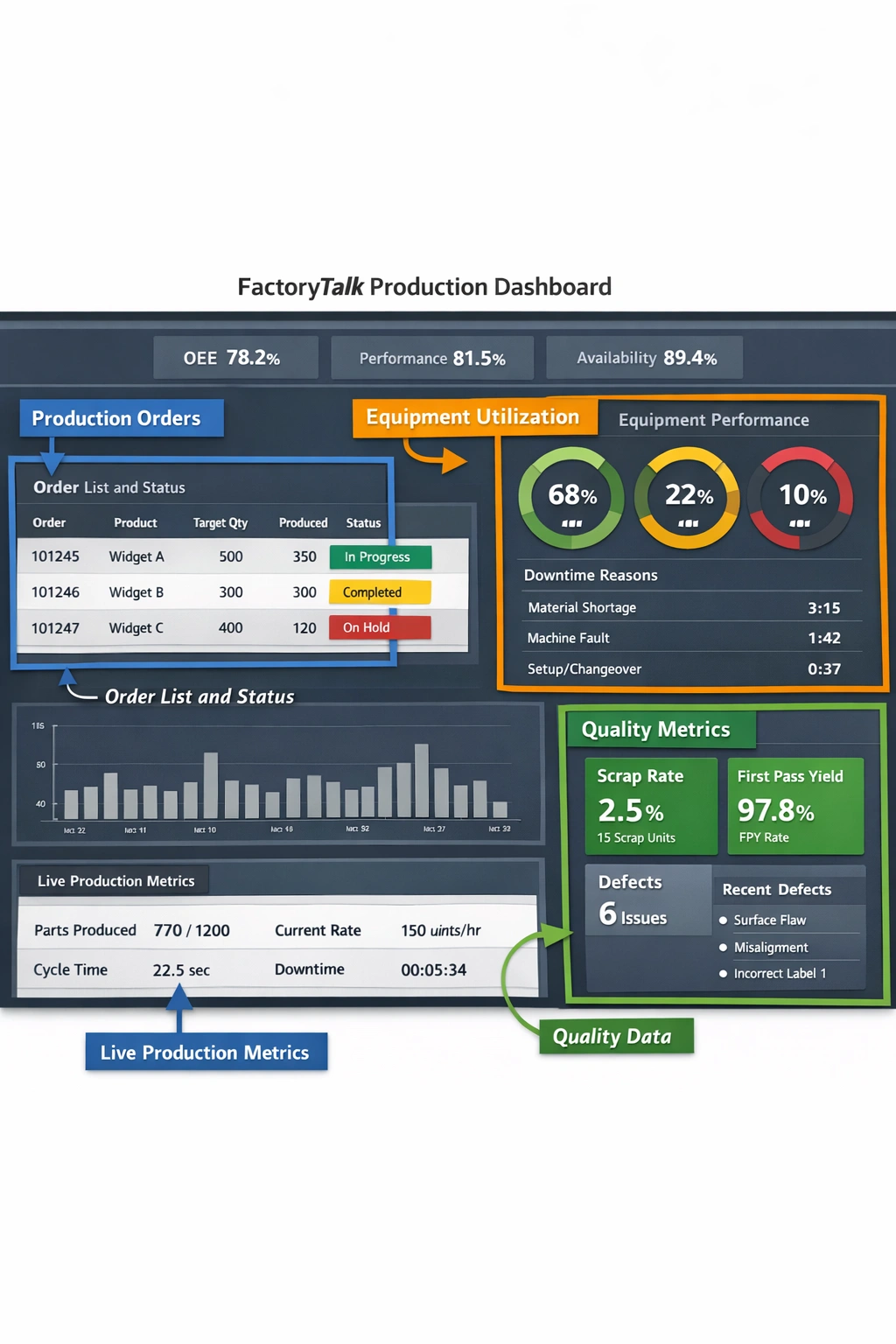
Enterprise platforms are built for complexity at scale. Multi-site operations, highly regulated industries, global supply chains, and facilities with thousands of connected assets are the environments these platforms are designed to handle. The trade-off is implementation complexity, cost, and the organizational commitment required to deploy and operate them effectively industrial automation software.
Siemens Opcenter is one of the most comprehensive MES platforms available. Its depth across production management, quality management, and genealogy tracking makes it a strong fit for pharmaceutical, medical device, and automotive manufacturers where regulatory compliance and full traceability are non-negotiable. Implementation timelines typically run six to eighteen months depending on scope.
Rockwell Automation FactoryTalk is the dominant platform in North American discrete manufacturing. Its deep integration with Allen-Bradley PLC infrastructure — which is the installed base in a large percentage of North American factories — makes it a natural fit for operations already running Rockwell hardware. The platform covers MES, SCADA, analytics, and IIoT connectivity in a unified environment.
GE Digital Proficy has a strong position in process industries and utilities, with SCADA and historian capabilities that handle the continuous process data volumes and real-time control requirements of those environments.
These platforms are not wrong choices for the right operation. They are wrong choices for operations that do not have the implementation budget, the internal technical resources, or the operational complexity that justifies their cost structure.
mid-market industrial automation software
The mid-market tier has expanded significantly and now offers capabilities that were exclusive to enterprise platforms five years ago. For entrepreneurs running single-site or small multi-site operations with moderate complexity, this tier typically offers the best balance of capability, deployment speed, and total cost.
Ignition by Inductive Automation has become one of the most widely adopted mid-market industrial automation software platforms globally. Its licensing model — unlimited tags, unlimited clients, unlimited connections for a flat annual fee — removes the per-tag and per-seat costs that make enterprise SCADA platforms expensive to scale. The platform covers SCADA, MES, and IIoT connectivity, and its large developer community means that integration modules for almost every PLC brand and enterprise system are already built and available.
AVEVA System Platform (formerly Wonderware) occupies the upper end of the mid-market tier. Its strength is in process manufacturing environments — food and beverage, chemicals, water treatment — where its process historian and alarm management capabilities are mature and well-documented.
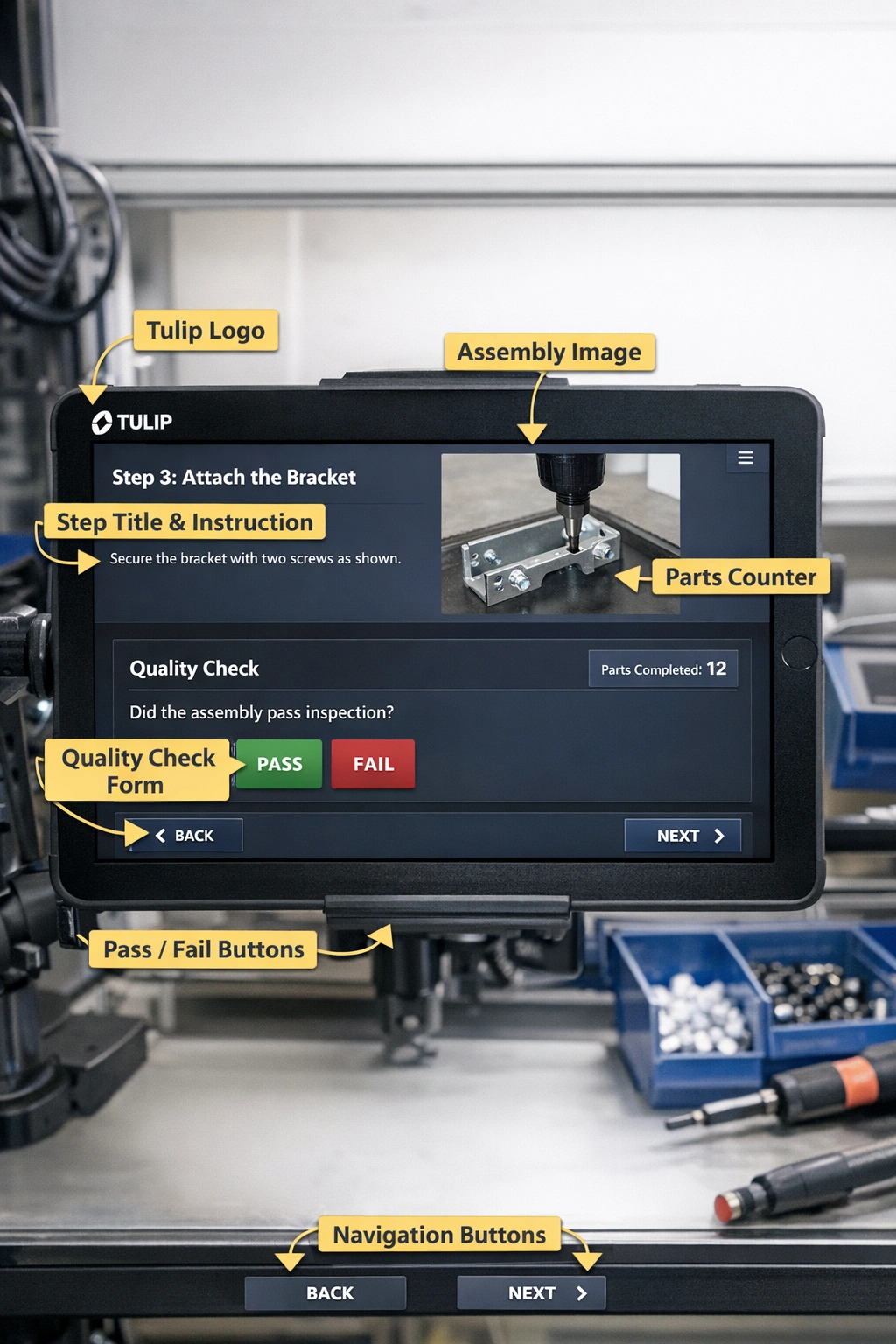
Tulip is a newer entrant that has built a strong position specifically with operations that want to digitize manual processes without deep IT involvement. Its no-code app-building interface allows operations teams to create digital work instructions, quality forms, and production tracking applications without writing code. For entrepreneurs whose primary need is getting paper-based processes into a digital, connected format, Tulip is one of the fastest paths to visible operational improvement.
For entrepreneurs who have already worked through their demand forecasting infrastructure usingAI supply chain optimization: end the guesswork for good, the mid-market MES tier is typically the next logical layer to evaluate it connects shop floor execution data to the planning inputs that supply chain optimization depends on.
specialized and emerging industrial automation software
Beyond the MES and SCADA categories, a set of specialized platforms address specific industrial automation problems with depth that general platforms cannot match.
Sight Machine focuses on manufacturing analytics — taking data from existing production systems and applying machine learning to identify the process variables that most strongly influence quality and throughput outcomes. It is not an MES replacement; it is an intelligence layer that sits above existing operational data to surface insights that general reporting tools miss.
Plex Systems (now part of Rockwell) has built a cloud-native MES specifically for automotive and industrial manufacturers, with strong quality management and supply chain visibility capabilities that appeal to suppliers operating within complex OEM quality systems.
Parsable addresses the connected worker side of industrial automation — digitizing the work that people do on the floor through guided digital procedures, real-time collaboration tools, and operational data capture from human activities rather than automated equipment. For operations where a significant portion of variability comes from human execution inconsistency, this is a high-value, fast-to-deploy intervention.
The deployment model question: cloud, on-premise, or hybrid
Industrial automation software deployment models have diversified, and the choice between cloud, on-premise, and hybrid has real operational implications that vendor sales conversations often gloss over.
Cloud deployment offers faster implementation, lower upfront infrastructure cost, and easier access to platform updates. The concerns are latency — for real-time control applications, round-trip cloud latency is genuinely problematic — and data sovereignty requirements in regulated industries or geographies where operational data cannot leave a physical location.
On-premise deployment addresses latency and data sovereignty concerns but requires internal IT infrastructure, adds implementation complexity, and places the burden of platform maintenance and updates on your team.
Hybrid deployment — edge computing for real-time control and local data processing, cloud for analytics, reporting, and cross-site visibility — is the architecture that most mature industrial operations are converging on. It captures the benefits of both models while managing their respective limitations.
The right deployment model for your operation is determined by your latency requirements, your regulatory environment, your IT capabilities, and your connectivity infrastructure — not by what the vendor defaults to in their standard sales presentation.
What the selection process should actually look like
The entrepreneurs who make the best industrial automation software decisions follow a process that most vendor evaluation guides skip entirely. Before requesting a single demo or issuing an RFP, they complete three internal steps.
Define the operational problem in measurable terms: Not “we want better visibility” but “our production schedule adherence is running at 67 percent and we need to understand why.” Not “we want to improve quality” but “our customer return rate for cosmetic defects is 2.3 percent and our target is below 0.5 percent.” Specific problem definitions produce specific platform requirements, which make vendor comparisons meaningful rather than theatrical.
Map your current data environment: What data do you have, where does it live, how clean is it, and what would it take to get it flowing into a new platform? This assessment frequently reveals that the first investment needs to be in data infrastructure sensors, connectivity, data cleaning rather than in the analytics or optimization layer sitting above it.
Set a realistic implementation budget that includes services: A common and expensive mistake is budgeting for license cost only. Implementation services for mid-market platforms typically run 1x to 2x the annual license cost for a first deployment. Enterprise platforms frequently run higher. Budget accordingly before you start comparing platforms on license price alone.
The full strategic context for sequencing these investments — including how industrial automation software connects to predictive maintenance, machine vision, and supply chain optimization — is covered inAI in industrial automation: what actually works in 2026.
Conclusion
The industrial automation software market in 2026 gives entrepreneurs more genuine options than at any previous point. The mid-market tier in particular has reached a level of maturity where operations that previously could not afford serious automation infrastructure now can. The risk is not a shortage of capable platforms — it is selecting one without the operational clarity and evaluation discipline to match the platform’s strengths to your actual problem.
Define the problem precisely. Assess your data environment honestly. Budget for the full cost of deployment, not just the license. And evaluate platforms against your specific operational requirements rather than against each other’s feature lists in the abstract. That process, executed without shortcuts, produces decisions that hold up over the three to five year horizon that industrial software investments actually operate on.